Starting An Online Business With $100: What Is Actually Possible

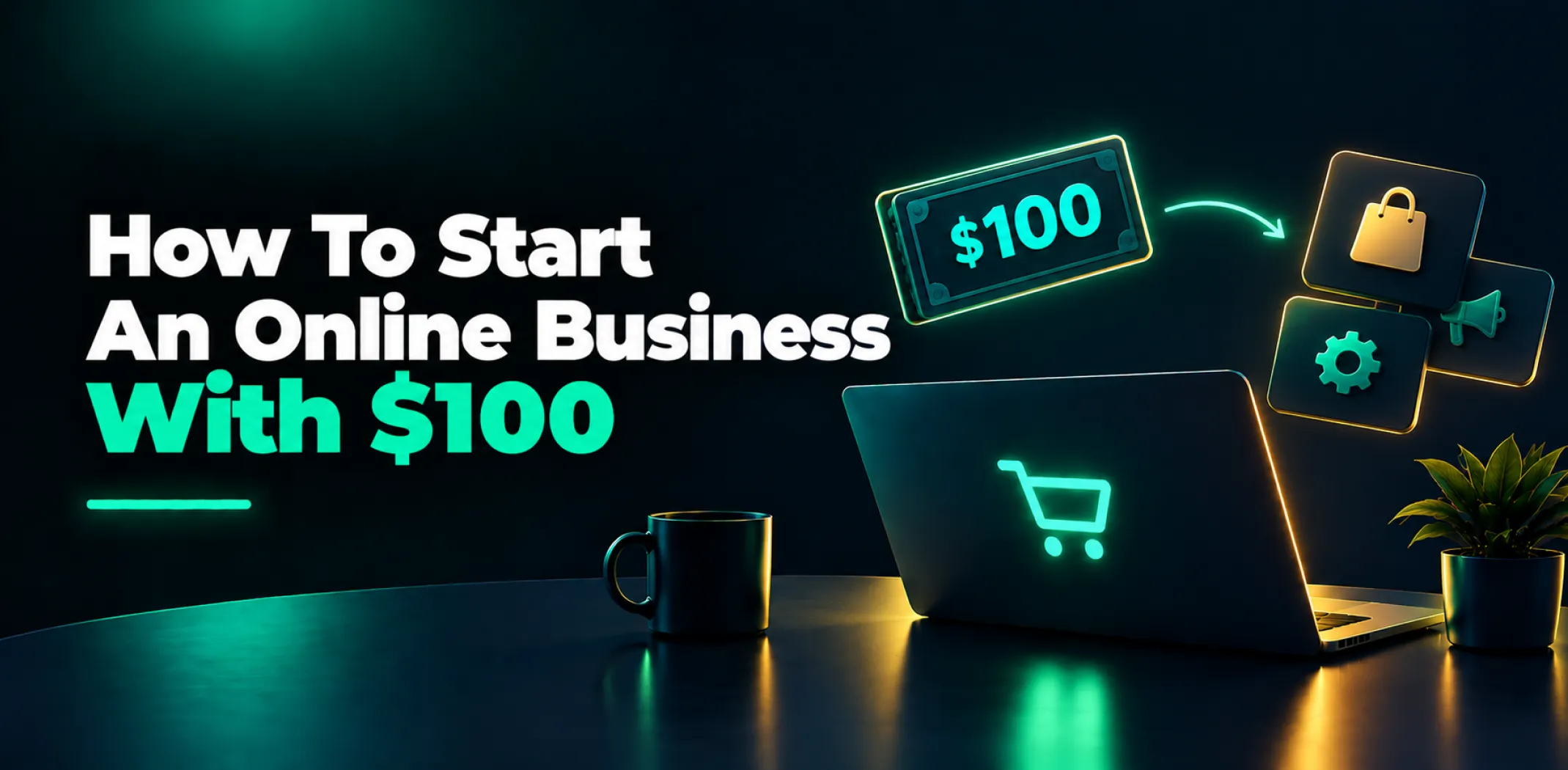
A $100 budget can pay for the 14-day free trial and then one month of the $39 plan, with $61 left over: 6 days of ads at the $10 daily minimum. That figure leaves out the $40 trial coupon and any order fees. It is a short first test, not a sustained campaign, and it covers one month of the plan, not an ongoing business.
If you have $100 set aside, you probably want to know two things: whether it is enough, and whether it will be wasted. This guide answers both with costs only. It shows what the trial and the $39 plan take, what ad money remains, and what that money can and cannot tell you. It makes no claim about results, because no budget can promise one.
The sections below cover the real costs, a first 14 days in sensible order, a plain look at a short ad run, and answers to questions you may have. If you want to know how to start an online business with $100 without spending it all at once, the plan is to treat it as a test. Every number below is a cost, never a prediction.
What it costs to start an online business with $100
The starting bill has two parts: a 14-day trial that costs $0, and a $39 monthly plan that begins on day 15. Ads are separate, run from $10 to $50 a day, and the amount is your choice. If you want to start an online store with $100, those figures are the ones to keep in mind, and the three below frame the rest of this guide.
All three figures are prices, not results. They show how a month adds up when you want to run ads, and they say nothing about what a store will bring in. The third figure matters most here: a $100 budget sits far below it, which is why this guide treats $100 as a first test and not as a full launch.
How your first 14 days can run before the plan fee starts
The trial gives you 14 days to look, set up, and test before the $39 plan begins. That is the right time to learn how the store and the ad tool work, because the coupon is there to fund your first ads. The three steps below show how the 14 days can run, from setup to a decision on day 14.
Nothing in these steps promises a result. They give you a built store, a way to test promotion, and a clear moment to decide. If your notes make a case for continuing, the plan and a short ad run are what $100 can fund. If they do not, you can cancel anytime and the plan fee never applies, so the decision stays yours.
Where your first dollars go: Do it yourself or done for you
Any budget goes further when you know what it has to pay for. With Shopify, you find the products, build the store, and learn marketing. With Etsy, you create or source your own products. A done-for-you store takes those jobs off your list, which leaves your money for the plan and for ads. The comparison below stays on who does what, not on prices.
A done-for-you store does not make a business easy in every way, and it does not remove the plan fee. What it does is shrink the list of things your money has to buy: you pay for the plan and for ads, and the setup work is already done. That is a useful simplification when the budget is $100 and every dollar has a job.
What $100 can actually fund
A $100 budget can fund the 14-day trial, one month of the $39 plan, and a short ad run with what is left. The cards below take those pieces one at a time: the trial, the plan fee, what a short run of minimum ads can and cannot show, and why to leave the rest unspent until that run is over.
Start with the 14-day trial
The trial costs $0 and includes a ready-made store, products already loaded, and a $40 ad coupon. The only cost during the trial is an order fee, and only if an order actually comes in.
Month one: the $39 plan fee
From day 15 the plan is $39 a month, which leaves $61 of a $100 budget. That figure leaves out the $40 coupon and any order fees.
What 6 days of ads can tell you
At the $10 daily minimum, $61 funds 6 days of ads, and that figure leaves out the coupon and any order fees. Six days can help you decide whether to keep going, but it cannot show how a store does over months.
Leave the rest unspent for now
Hold back extras and any higher daily budget until that first run is over. Spending all $61 would leave nothing for month two, which costs at least another $39. For scale, a full month of plan and minimum ads comes to $339, and that figure leaves out the coupon and any order fees.
In plain words, $100 funds a short ad run, not a sustained campaign. It sits far below the $339 line for a full month of plan and minimum ads, a figure that leaves out the coupon and any order fees. Month two and every month after it costs at least another $39, so this budget covers the trial and one short test, not an ongoing business.
That can sound modest, and it is meant to. A short, careful test is a sound use of $100 because it tells you something real without committing everything at once. It is not a launch, and it is not a promise. Treat day 14 as your checkpoint, and let what you have seen decide what comes next. Nothing here asks you to believe anything you cannot check.
Two examples of cautious first tests
These two examples are illustrative composites, not real customers, and they show habits rather than results. Both people wanted to try an online business without committing everything at once. What set them apart was how they planned the length of the test, and how firmly they kept to the plan once it began. Neither made a large decision in the first days.
These stories carry no sales figures, because a short run says little about where a business ends up. What both people did was decide the length of the test in advance, and that is something you can copy. Write down your own stopping point before the first ad goes live, and treat it as a rule rather than a suggestion.
Ways to make a $100 budget go further
With $100, the best plan is a deliberate first test, not an all-in. The four ideas below follow that rule, and every number in them is a cost or a timeframe, not a result. Together they keep each decision small, written down, and easy to review before you take the next one.
Treat it as a first test
Frame the whole budget as an experiment with a start and an end. Knowing what you are testing makes the day-14 decision clearer, and it stops you raising spend halfway through a run. The figures below leave out the coupon and any order fees.
Run the coupon ads first
The $40 coupon is the ad budget during the trial, so use it before touching your own money. Anything you learn from those first ads comes before the plan fee, which is the right order for a careful test.
Set a stopping point first
Decide in advance when the first run ends and what you will review. At the $10 minimum, the money left after the plan funds 6 days, so that is a natural stopping point for a first run.
Hold the rest until you review
After the run, look at your own numbers before spending anything more, and change one thing at a time. Extras such as product packs, domains, and themes are optional, so they can wait too.
These ideas are small on purpose. None of them needs experience, and none depends on spending more, which suits a first test. What they give you is a written plan, and a written plan is what separates a deliberate test from a hopeful guess.
If you would like to look at the store before settling on any of this, the 14-day trial is the place to start, and the plan fee waits until day 15.
What helps more than a bigger budget
Spending more is not what makes a first test useful. What helps is how clearly you set the limits, how honestly you read your own numbers, and how you handle the days when nothing seems to be happening. The five cards below cover habits and mistakes that matter at any budget, and none of them requires extra money. They apply whatever you have set aside.
Write the plan on paper
Before the trial starts, write what you will test, how long the first ad run will last, and the day you will review. A plan on paper is harder to bend when you feel impatient.
Keep the daily budget low at first
Ads run from $10 to $50 a day, and you choose the amount. Starting at the $10 minimum keeps a first run as long as it can be, because a higher daily budget uses the same money up faster.
Expect quiet days
Some days in a short run may look uneventful, and a few days cannot show a pattern. Judge by what you can actually see in your own store rather than by what you hoped to see.
Know what the plan fee covers
The plan is $39 a month and includes the store, the products, the built-in ads tool, and support. Ad spend is separate, so keep the two numbers apart when you count your money.
Leave optional extras for later
Product packs, premium domains, themes, and add-ons are optional one-off purchases, never a requirement. A first test is easier to read when you change one thing at a time, so add extras only after the first run.
None of these habits produces a result on its own, and any guide that says otherwise is selling something. What they do is keep you steady while a short test plays out, and that steadiness is the whole point.
If a worry is still left, the next block takes up three questions you may have, starting with whether the money will vanish before you see anything.
With the main worries answered, the choice is small and clear. You can look at a real store for 14 days, or you can leave it. The plan fee waits until day 15, and the one cost you control, ad spend, is yours to set between $10 and $50 a day. Either way, you decide with the numbers in front of you.
Whatever you decide, hold on to one rule: only the 14-day trial is free, and the $39 plan follows it. Ad spend and optional extras come from your own budget, and each is your choice. With that in mind, here is a short look at the platform behind the trial, so you know what you would actually be opening.
What is AliDropship and does it suit a small budget?
No experience? No problem. If you want the simplest way to start an online business in 2026, AliDropship is one of the most beginner-friendly platforms out there. It brings your store, your products, your fulfillment, and your marketing together in one place, so you can launch fast and grow with confidence.
Over 1,500,000 stores have already been built on AliDropship, and the platform has been featured by Forbes, Entrepreneur, Inc., NBC, Business, and Fox News.
A quick note on cost before the details. The store, the products, and the ad tool are all part of the 14-day free trial, and from day 15 the plan is $39 a month. Anything called free below means that trial only.
That is the platform in brief. If you carry on after the trial, set your daily ad budget before you switch the tool on, and keep a stopping point written down. Both are easier to hold when they are decided in advance.
The limit to remember: $100 covers the 14-day trial, one month of the $39 plan, and a short ad run, not an ongoing campaign. Anything beyond that comes from money outside this budget.
Look at what the platform asks of you at the start: a 14-day trial, a cancel-anytime option, and no inventory to hold. It does not ask you to take anything on trust. You can open the trial, look at the store, and walk away if it is not for you, which is how a careful test with limited money should work.
If this guide did its job, you now know what $100 really is: a trial, a month of the plan, and a short, deliberate ad test, with the decisions left to you. It is not a launch plan and not a promise of results. It is a careful way to find out whether this is for you before committing anything more.
Can you start an online business with 100 dollars?
How many days of ads does 100 dollars fund?
What does the plan cost after the free trial for an online business?
What happens to an online store after the 14-day free trial ends?
Do you need experience to start an online business with 100 dollars?