How To Make Money Online Selling DIY And Crafts Products In 2026

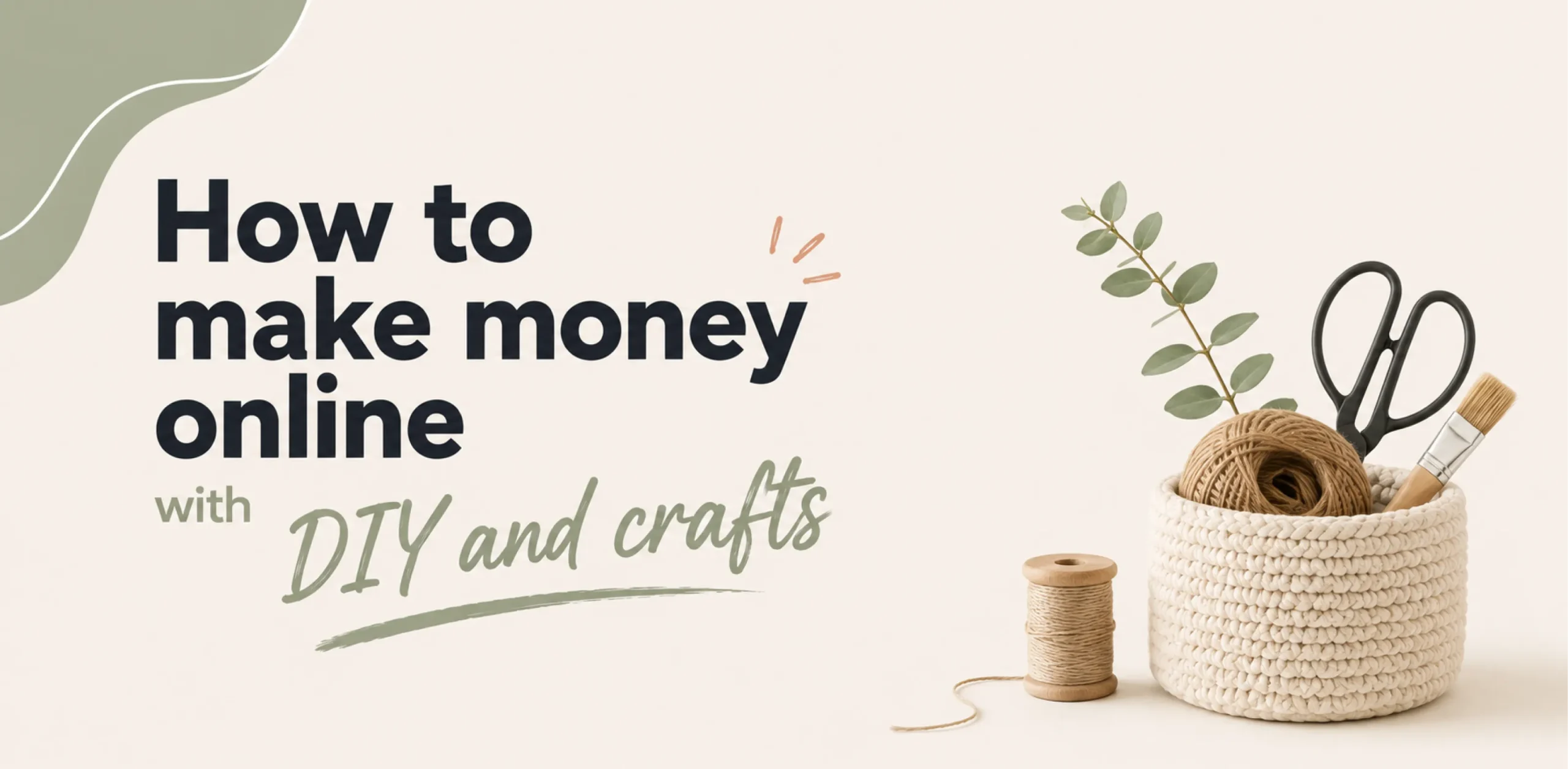
If your spare time already goes toward a hot glue gun, a sewing machine, or a workbench covered in half-finished projects, you have probably wondered whether that habit could earn you something back. Making money online with DIY and crafts is more realistic than it sounds, and you do not need a storefront, a craft fair booth, or a business degree to get started.
This guide walks through what an online business built around a hobby like DIY and crafts actually looks like in 2026, what a realistic earnings picture involves, and the concrete strategies people use to land their first customers. Along the way you will see how a platform like AliDropship removes a lot of the early friction: building a website, sourcing products, and figuring out how to reach the right buyers.
None of this requires turning a weekend hobby into a full time career overnight. Most people who make money online this way treat it as a side project that grows at its own pace, fits around a day job, and scales as they learn what their audience responds to.
What tends to separate people who stick with this from people who give up in the first month is not talent or luck. It is usually just a matter of picking a clear starting point instead of trying to cover every possible craft niche at once, and giving the first few weeks room to be a learning period rather than expecting instant results.
The real numbers behind an online business like this
Before getting into strategy, it helps to look at the actual numbers behind a platform like this rather than vague promises. AliDropship sellers keep a meaningful share of every digital sale, the platform has been used to launch stores at real scale, and it operates in a large number of countries, which says something about how portable this model is.
These numbers describe how the business model works, not what any individual seller will personally earn. Results depend on the products you choose, how much effort you put into finding buyers, and how consistently you show up over the first few months.
It also helps to understand the cost side before getting excited about the revenue side. A monthly plan, an ad budget you control yourself, and the occasional order fee are the main ongoing costs, and none of them require a large upfront investment to test the idea properly.
How making money online this way actually works
The mechanics behind this kind of business are simpler than most people expect. You are not designing a website from scratch, negotiating with suppliers, or learning ad platforms cold. The process breaks down into three moves, and each one is designed to remove a barrier that normally stops beginners before they start.
Once your store is live and your first products are loaded, most of your ongoing work shifts toward finding customers and refining your catalog, rather than rebuilding the plumbing underneath the business.
This is a meaningful difference from building a website from scratch, where the first month is often spent wrestling with a page builder or a hosting account before a single product is even listed. Here, that entire phase is already handled, which means your time goes toward decisions that actually move the business forward.
Guides versus checklists and trackers: Which sells better
Once you start building a digital catalog, you will notice two broad categories of products, and each one behaves differently once it is in front of buyers. Understanding the tradeoff helps you decide where to put your early effort, especially if you are choosing your first few products to list.
Neither format is strictly better. Most sellers who do well end up running both side by side, using one to attract new buyers and the other to keep them coming back.
The distinction matters most when you are deciding what to build first. A guide takes longer to write but can command a higher price, while a checklist or tracker is faster to put together and tends to get reused on a predictable schedule, which is worth factoring in if you are working with limited time each week.
What can you sell if you are into DIY and crafts?
This is where DIY and crafts specifically comes into the picture. A crafts-focused catalog does not need dozens of products to work. Three or four well-chosen digital items, aimed at a clear type of buyer, tend to outperform a scattered mix of unrelated guides.
Here are three concrete types of products a DIY-and-crafts-interested seller could stock, along with a rough sense of how each one tends to perform.
DIY and crafts has a natural advantage for this kind of catalog: it spans dozens of sub-niches, from woodworking to embroidery to resin art, which means there is almost always a fresh angle to build a new product around. That breadth gives you room to expand your catalog for years without running out of ideas.
With a sense of what could sit inside your catalog, the next question is how those products actually reach buyers, and what it usually takes to see your first order come through.
The honest answer is that a good catalog alone rarely sells itself. It takes a consistent way of reaching new shoppers, which is exactly what a built in ad system is designed to solve for a beginner who has never run a campaign before.
This is also the point where a lot of people quietly give up, not because their products were wrong, but because setting up an ad account, writing ad copy, and figuring out targeting felt like a second job on top of the one they were trying to build. Removing that specific barrier is worth spending a moment on before moving further into strategy.
Real examples of people making this work
Seeing how this plays out for real people makes the process feel less abstract. The two stories below are composite examples built from common patterns among people who launch a store like this, not a single verified case study, but they reflect what a realistic first few months tends to look like.
Neither person started with a following, a website, or prior experience running ads. What they had in common was picking a narrow starting point and sticking with it long enough to see what worked.
*Individual results vary and depend on the time you put in.
Strategies that actually move the needle
A lot of advice about starting an online business is either too vague to act on or too complicated to actually finish. The four strategies below are deliberately narrow, and each one is something you could realistically start this week.
None of these require you to become an expert marketer first. They are meant to be applied in order, roughly, since each one builds on the foundation the last one creates.
It is worth resisting the urge to do all four at once in your first week. Trying to perfect your catalog, your ads, your bundles, and your email list simultaneously usually means none of them get the attention they need, while tackling them one at a time gives you a clear signal about what is actually working before you add the next layer.
Pick one clear starting point
Instead of listing everything at once, choose 3 to 5 products aimed at one type of buyer, then expand once you see what actually sells. A focused catalog is easier for a new visitor to understand in the first 10 seconds on your site.
Turn on ads before you overthink content
A lot of new sellers spend weeks polishing their store before showing it to anyone. Turning on a small daily ad budget early gives you real data about what people click on, instead of guessing in a vacuum.
Bundle related products together
Pairing a pattern with a related checklist or material list at a small discount raises how much each customer spends per order, without needing to find a new buyer to do it.
Build an email list from day one
Every customer who buys once is a warm lead for the next project idea. Collecting emails from your first sales lets you reach past buyers directly instead of paying for a new ad every single time.
These four moves compound on each other over time. A focused catalog makes ads perform better, ads generate the first customers your email list needs, and bundles raise how much each of those customers is worth.
Once the basics are in motion, most people find the biggest lever left is simply staying consistent through the slower weeks, rather than adding more complexity to the business.
What affects how fast you get your first sale
Not every store performs the same way in its first month, and the difference usually comes down to a handful of controllable factors rather than luck. The list below covers the ones that show up most often when comparing a store that gets early traction to one that stalls.
None of these factors require special skills. They mostly come down to decisions you make in the first few weeks, before the business has had time to build any momentum of its own.
It can help to think of the first month less as a launch and more as a series of small experiments. Each factor below is really a lever you can adjust, and adjusting even one of them partway through your first few weeks can change how quickly the rest of the business starts to move.
How focused your catalog is
A store with 4 to 6 tightly related products tends to convert visitors faster than one with 20 unrelated items, since a focused store is easier to understand at a glance.
Whether you turn ads on right away
Stores that switch on ads within the first week of launch usually see their first visitor data within days, while stores that wait can spend a month with zero traffic to learn from.
How you respond to early questions
A quick, helpful reply to a customer question in the first few days can turn a hesitant browser into your first sale, and that early trust often carries into repeat purchases.
How often you add new products
Adding even one new pattern or checklist every 2 to 3 weeks keeps your store looking active and gives repeat visitors a reason to check back in.
Whether you treat month one as a test
Sellers who expect their first 30 days to be about learning, not earning, tend to stick with the business past the point where impatient sellers give up.
Before moving into how AliDropship fits into all of this, it is worth addressing a few honest concerns that come up again and again from people considering this kind of business for the first time.
These are not rhetorical questions meant to sound reassuring. They are the same three things almost every new seller asks before they commit to signing up.
Where AliDropship fits into all of this
Everything covered so far describes the general shape of a business like this, and AliDropship is the platform built specifically to remove the setup friction from it. Rather than piecing together a website builder, a payment processor, a supplier relationship, and an ad account separately, everything ships together from day one.
Here is a closer look at what that actually includes once you sign up. Each piece below addresses one of the specific friction points that normally slows a beginner down before they ever list their first product.
Numbers like these are useful context, but the more practical question is what happens after you sign up. That is where a lot of hesitation tends to live, so the section below lays out exactly what is included to make starting feel low-stakes.
Every safety feature below is stated plainly, without vague reassurances, so you can weigh it against your own situation before deciding anything.
Taken together, these features are designed to lower the cost of finding out whether this business is right for you, rather than to convince you it definitely is. That distinction matters, since the goal here is an honest test, not a sales pitch dressed up as reassurance.
If most of your questions have been answered by this point, the last thing standing between you and a live store is simply signing up and loading your first few products.
There is no perfect moment to start, and waiting for one tends to cost more time than it saves. The trial exists specifically so you can test the idea before deciding whether it deserves a bigger commitment.
Whatever you decide, treating the first two weeks as a genuine test rather than a final verdict tends to produce a more honest read on whether this kind of business fits your schedule and your interests, DIY and crafts included.
How can I make money online with DIY and crafts without a big budget?
Do I need to hold inventory or ship products myself?
What kind of DIY and craft products can I sell online?
How long does it take to get my first sale?
Is AliDropship a legitimate way to start an online crafts business?