How Gustav Made $500,000+ In Two Months With High-Ticket Dropshipping

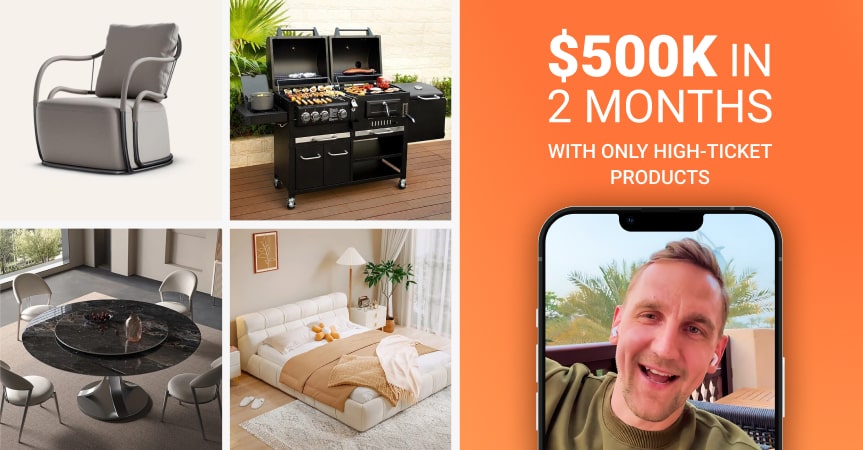
Can selling fewer, more expensive products work better than selling lots of cheap ones? Let’s look at Gustav, an entrepreneur who rebuilt his business after his logistics company closed, this time focusing on high-priced products instead of low-cost items. His story shows how he approached suppliers, logistics, and advertising in high-ticket ecommerce – and what challenges came with it.
Please note: Gustav is not an AliDropship client and is not affiliated with AliDropship. This case study is based on his own account of his independent business, which he runs with his own suppliers, logistics, and payment providers. His results are not typical and are not a prediction of what you will achieve. Individual results vary and depend on the work you put in.
Gustav’s early business challenges

Before Gustav moved into high-ticket ecommerce, he went through some tough times that really shaped how he does business today. He started off in the logistics industry, running a company with around 40 to 50 employees.
At first, things were going well, and according to Gustav, the business was running at a 7-9% margin. But then, everything changed when one of their major clients didn’t pay up – half a million dollars just vanished. This hit was so hard that it erased what the company had earned over the past two years, and it was suddenly in big trouble.
During this hard time, Gustav realized he made a big mistake by not dealing with the payment issue sooner. He waited three months before trying to sort things out, and by then, it was too late – the company just couldn’t be saved. This was a tough lesson for him, but it taught him how important it is to act fast when problems come up.
With no way to turn things around, Gustav had to make the hard call to shut the company down. In his country, going bankrupt can really complicate things, like freezing all business activities, which made wrapping things up even tougher. Despite these obstacles, Gustav did his best to settle all accounts and take care of his employees and partners as fairly as he could.
This whole experience was a turning point for Gustav. He learned a lot from his mistakes, and with a new determination, he was ready to start fresh. This time around, he brought his resilience and adaptability with him into the ecommerce world.
Gustav’s ecommerce evolution: Embracing high-ticket sales
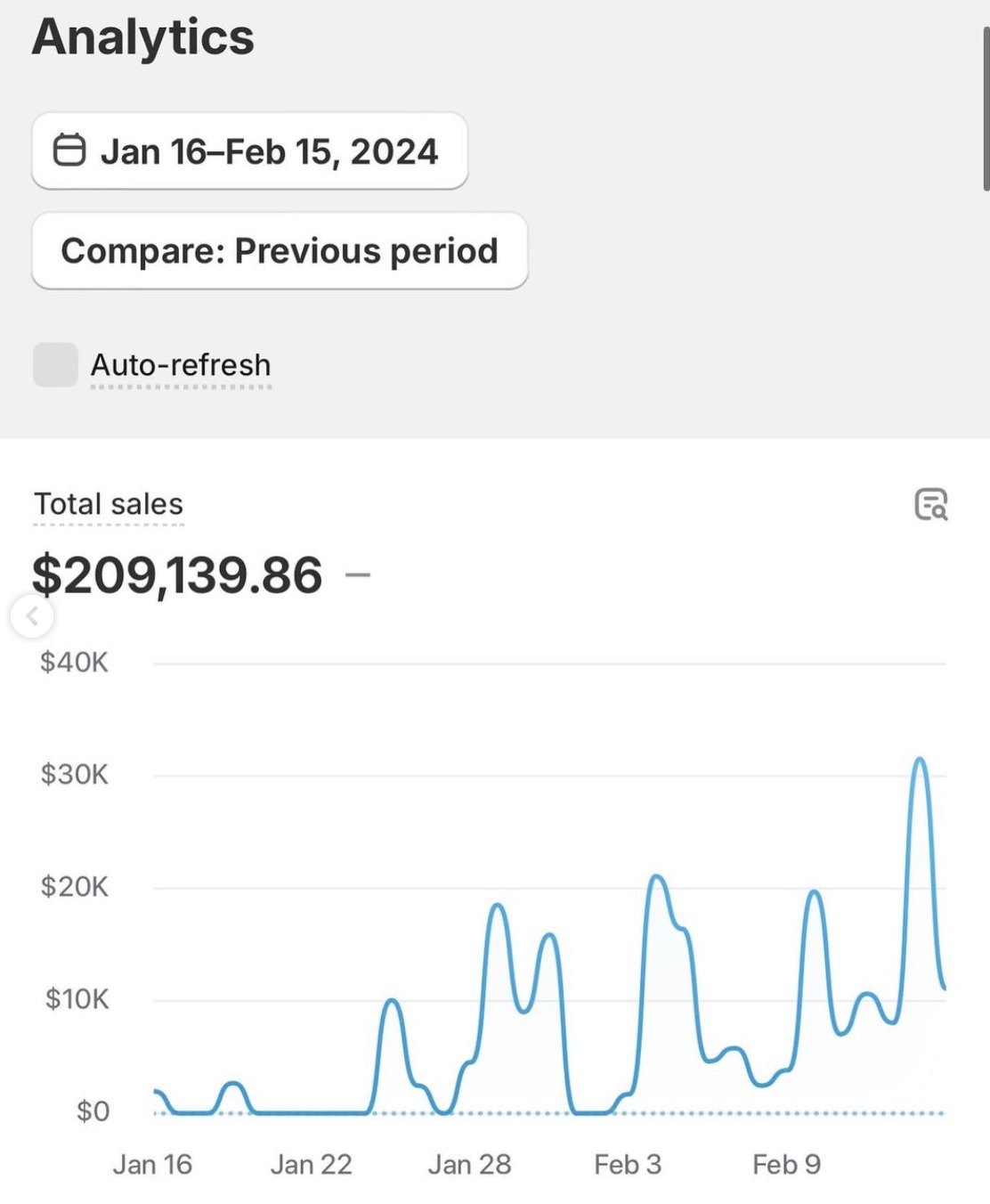
*Results of Gustav’s independent business. Not typical. Individual results vary and depend on the work you put in.
After his logistics company closed, Gustav was determined not just to recover, but to completely redefine his approach to business. He began his ecommerce venture with modest ambitions, initially selling low-cost items like sunglasses.
This initial step quickly highlighted the limitations of low-ticket sales, sparking a significant shift in his business strategy.
His entrepreneurial journey took a pivotal turn when he met a fellow entrepreneur who introduced him to a product that suited ecommerce well. Gustav shifted his focus to high-ticket items. Together with his new business partner, he says they grew their venture from about $4,000 to about $200,000 in monthly sales.
For Gustav, this pivot showed the difference between selling fewer, higher-value items and selling a high volume of cheaper products.
-
Using Logistics Expertise in High-Ticket Dropshipping
Gustav’s extensive background in logistics proved to be a crucial asset in overcoming one of the major challenges of high-ticket dropshipping: the high cost of transporting expensive items. Drawing on his expertise and industry contacts, he says he negotiated shipping rates about three times lower than the typical quotes he received from standard logistics companies.
This allowed him to offer competitive deals on premium European products in the U.S. market. In his view, European products combine strong craftsmanship with production costs that worked well for his business, so he didn’t need to source from China.
Gustav continues to refine his logistics strategies to make European goods more accessible in the U.S. His efforts are focused not only on cost reduction but also on facilitating the smooth flow of high-quality goods across continents.
-
Overcoming Financial Hurdles with Resilience
The early growth of Gustav’s new ecommerce venture came with its own set of challenges. According to Gustav, within the first few weeks the payment platforms he used placed holds on significant amounts of his revenue – around $50,000 on Shopify in seven days, $40,000 on Stripe after 15 days, and another $50,000 on PayPal after 25 days. Payment holds like these are a known risk for new stores with sudden sales spikes. Instead of viewing them only as obstacles, Gustav treated them as a push to strengthen his business.
He adopted a mindset that treated these difficulties as part of building a robust business. This approach helped him patiently navigate periods of frozen funds.
-
Mastering High-Ticket Sales
Gustav focuses on selling high-ticket items, with an average order value of about $2,600 to $2,700. His product range, primarily centered around household goods that diverge from conventional furniture yet remain essential to home living, gives him flexibility in pricing.
At the same time, Gustav faces considerable logistics costs, which he says account for about 25-30% of his total costs.
“All my margins are eaten right now by logistics,” Gustav points out, highlighting a common challenge in high-ticket dropshipping related to the size and value of the products, which often result in higher shipping costs.
To address this, he is actively refining his logistics strategies, such as optimizing packaging for more efficient stacking and storage. These adjustments aim to reduce the space required during transport, which can lower shipping expenses.
Key strategies in high-ticket dropshipping: Insights from Gustav

High-ticket dropshipping isn’t just about choosing the right products; it also depends on several strategies that support sustainability and growth. Gustav, a seasoned entrepreneur in this field, outlines the tactics that have worked for his own business.
-
Finding the right suppliers
One of the most critical aspects of high-ticket ecommerce is establishing strong personal connections with suppliers. Gustav emphasizes the importance of face-to-face interactions, which are often most accessible at networking events and trade exhibitions.
“Go to any networking event for business owners, and you’ll find many who are still looking to expand their client base,” Gustav advises. These venues are perfect for introducing yourself, discussing your online business, and exploring potential partnerships.
However, Gustav warns of the pitfalls of unclear agreements, sharing a personal experience where vague terms led to the end of a promising partnership. He stresses the importance of having clear, written agreements to avoid misunderstandings and disputes.
-
Using digital marketing
Gustav has experimented with various digital marketing platforms, with mixed results. Initially, the cost-per-acquisition (CPA) with Google Ads was too high for him, which was particularly challenging during off-season periods. This led him to pivot towards Facebook Ads, which offered lower entry costs and targeting options that worked better for his products. He recalls one sale of $2,500 that came after spending $150 on Facebook Ads.
He also noticed strong engagement early on, with a bounce rate under 50% and an average session duration on the homepage of more than two minutes. After some days without sales, Gustav decided to double the ad budget and restart the campaigns, and he reports that one day brought over $30,000 in sales. For him, this experience reinforced the value of persistence in marketing and the timing of customer purchase decisions. Results like these depend heavily on the product, niche, budget, and market, and are not typical.
-
Enhancing business through customer insights
Understanding customer needs is another cornerstone of Gustav’s strategy. He actively seeks feedback to identify potential upsells and additional services that complement his primary offerings. This continuous feedback loop helps him refine his product selection and align it more closely with what customers want.
-
Building a long-term, scalable business
Gustav’s approach shows that entrepreneurship involves long-term investment and strategic planning, not chasing quick wins.
At the time of the interview, Gustav said his business was bringing in over $500,000 in monthly sales, and that he was looking for additional capital to reach his goal of growing annual revenue from $5 million to $20 million. His path from closing a logistics company to running a larger ecommerce business took years of work, industry experience, and significant investment.
*Results of Gustav’s independent business, which is not affiliated with AliDropship. Not typical. Individual results vary and depend on the work you put in.
How AliDropship helps with logistics and sourcing for high-ticket products
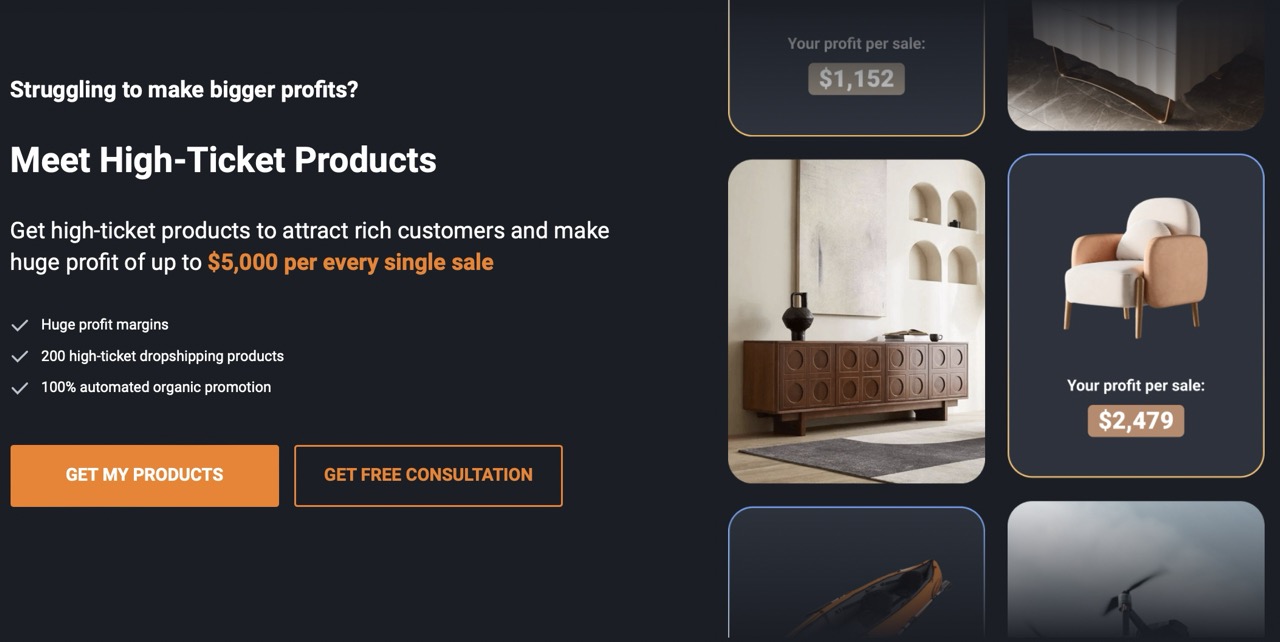
Unlike Gustav, most beginners don’t have their own logistics network or supplier contacts. For those looking to enter high-ticket dropshipping without building sourcing and logistics from scratch, AliDropship offers ready-made high-ticket product packages with fulfillment included.
How It Works
The process is straightforward:
- Product Upload: We upload high-ticket products directly to your store’s catalog.
- Customer Purchase: A customer buys a product from your store at the retail price you set.
- Ordering: You order the same product from AliDropship at the supplier price.
- Fulfillment: AliDropship packs and ships the product directly to your customer.
- Margin: The difference between your retail price and the supplier price is your gross margin, before advertising, payment processing fees, platform fees, returns, and taxes.
For example, if you sell an item for $3,000 and its supplier price is $1,000, your gross margin on that order is $2,000 before those other costs. This is an illustrative example, not a typical result or a guarantee of sales.
No Ecommerce Store? No Problem!
Don’t have an online store yet? No worries! AliDropship will build one for you for FREE. We will also import your chosen products into the store’s catalog. Simply complete your product package purchase, and await an email from our team with all the necessary details.
Selling High-Ticket Items
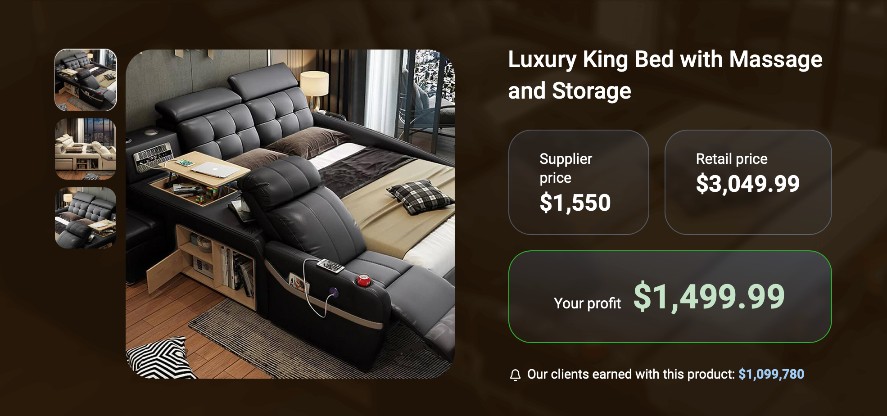
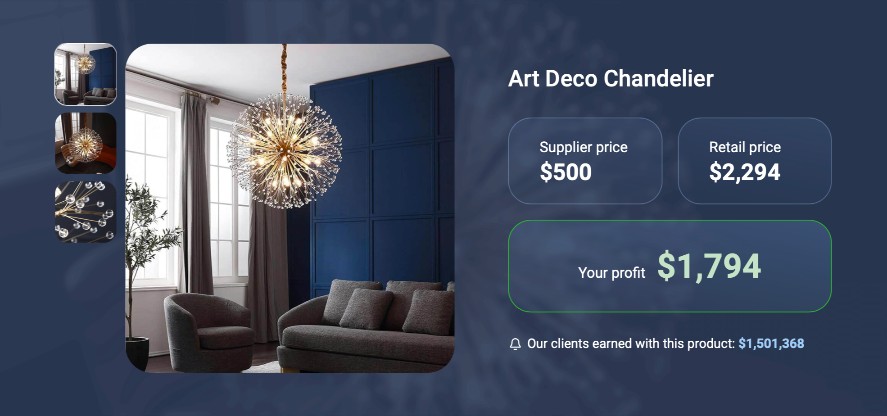
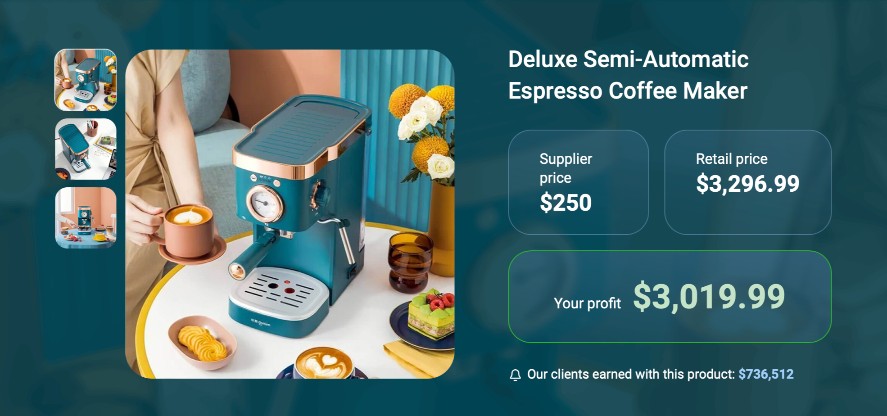
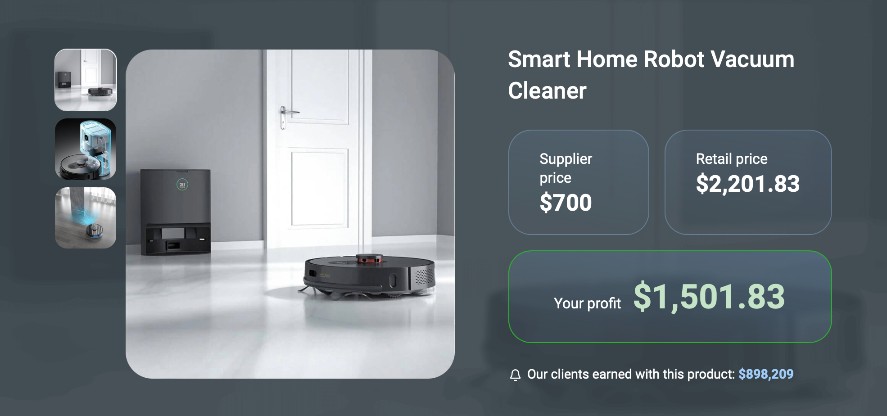
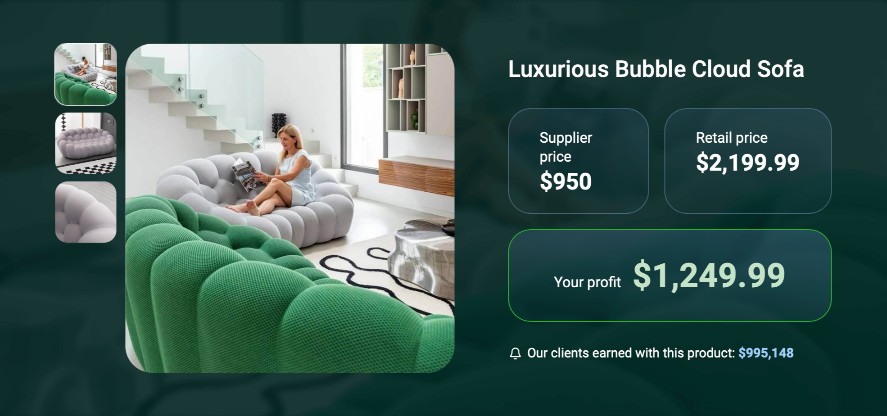
Here’s what AliDropship provides for high-ticket dropshipping:
- Curated Product Selection: Our catalog is selected to include in-demand products that fit your store’s niche.
- Higher Order Value: Each high-ticket order carries a higher value, so fewer orders are needed to reach the same sales volume.
- Supplier Pricing: You order products at supplier prices only after your customer has paid, without buying inventory upfront.
- Streamlined Fulfillment: From the initial packaging to the final shipment, we handle fulfillment and ship orders directly to your customers.
By stepping into high-ticket dropshipping with AliDropship, you get a ready-made starting point for a store built around premium products. Like any business, it takes time, marketing effort, and investment to grow.
Curious about high-ticket products? Explore high-ticket dropshipping with AliDropship and see if it fits your goals.
*Individual results vary and depend on the work you put in.


Recommended for You