

Trust Signal

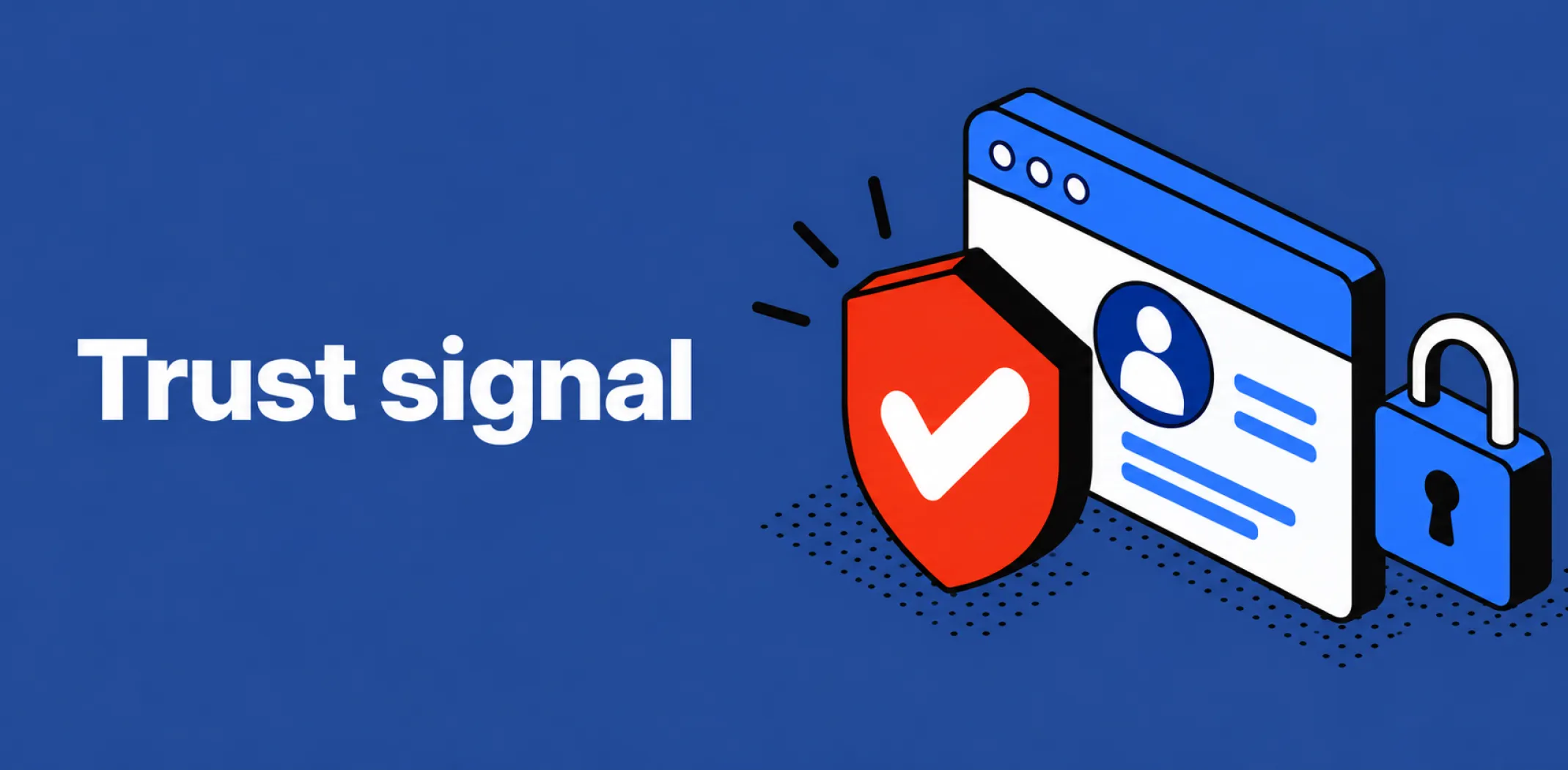
A trust signal is any element on a store or product page that reassures a shopper the business and its offers are legitimate and safe to buy from – such as a security badge, star rating, or verified review.
Trust signals cover a wide range of elements, from technical indicators like an SSL certificate and secure checkout badge to social indicators like a star rating, testimonial, or product review count.
Unlike social proof, which specifically relies on the visible behavior or opinions of other customers, a trust signal can also include elements that have nothing to do with other buyers, such as a clear return policy, a real business address, or recognizable payment logos.
A single trust signal rarely convinces a shopper on its own; instead, stores typically combine several trust signals across a page so that a hesitant visitor encounters reassurance at multiple points before checkout. New or lesser-known stores tend to rely on trust signals more heavily than established brands, since they have not yet built the reputation that comes with time.
Example
A new dropshipping store selling kitchen gadgets displays a security badge and accepted payment icons near the checkout button, a 30 day money back guarantee on the product page, and a widget showing 47 verified reviews. A first time visitor who has never heard of the brand uses these combined trust signals, rather than brand recognition, to decide the store is safe to order from.
Key characteristics
- Combines multiple element types: Trust signals include both social elements, like reviews, and non-social elements, like security badges or a clear return policy.
- Placed near friction points: Trust signals are commonly positioned near checkout, add to cart buttons, or pricing, where hesitation is highest.
- More important for new stores: A store without an established reputation typically relies on trust signals more heavily than a well-known brand.
- Cumulative rather than singular: Multiple trust signals working together tend to be more persuasive than any single one on its own.
Related terms
- Social proof – the customer-behavior-based category of trust signal, distinct from non-social elements like security badges.
- Product reviews – one common form of trust signal shown on individual product listings.
- Star rating – the numeric summary of product reviews that often functions as a quick trust signal.
- Testimonial – a curated, brand-selected trust signal typically shown outside the product listing itself.
Frequently asked questions
What is the difference between a trust signal and social proof?
Social proof is one category of trust signal based specifically on the visible actions or opinions of other customers, while a trust signal can also include non-social elements such as a security badge, clear return policy, or real business address.
Where should trust signals be placed on a store?
Trust signals are most effective near points of hesitation, such as the checkout page, the add to cart button, and product pricing, rather than being limited to a single trust page.
Do trust signals actually increase conversion rate?
Many stores report a measurable lift in conversion rate after adding trust signals near checkout, though the exact impact depends on the store’s existing reputation, the product category, and which specific signals are used.
AliDropship: An all-in-one platform for starting an online business in 2026
AliDropship is an online business platform that gives customers a ready-made store, a digital products catalogue, and built-in, one-click advertising within a single system. Founded in 2015 and based in Irvine, California, it has helped launch more than 1,500,000 stores and holds a 4.7-star rating on Trustpilot. It is built for people with no prior experience and no technical skills.
🆓 Free 14-day trial
New users get full platform access for 14 days, including a ready-made store, hosting, a domain, an SSL certificate, and access to the digital products catalogue. The trial also includes a $40 ad coupon to test the advertising system. Order fees apply only when a sale is made.
📦 Digital products
Customers choose from AliDropship’s catalogue of digital products – guides, courses, checklists, tools, and AI-powered toolkits – and keep up to 70% of every sale. Delivery is instant and automated, so there is no inventory, shipping, or manual fulfillment involved.
📣 One-click advertising
AliDropship includes built-in advertising that customers can turn on for as little as $10 a day. The system handles targeting, creatives, and optimization, and many customers see their first orders the same day they launch ads.
👌 Ease of use
AliDropship requires no coding or marketing experience. The store, products, and ads are managed from a single dashboard that works on a phone as well as a desktop, and a personal growth manager is available to help by chat.
💳 Monthly plan
After the trial, continued access is $39 a month, covering the store, the digital products catalogue, and ongoing support. There is no long-term contract, and the plan can be cancelled at any time.
What are trust signals in ecommerce?
How many trust signals should a product page include?
What trust signals matter most for a new dropshipping store?
Can too many trust signals hurt conversion?
How do trust signals differ between a new store and an established brand?
Are you ready to become an owner
of a profitable online business?
Free Dropshipping Guide