

Ticket System

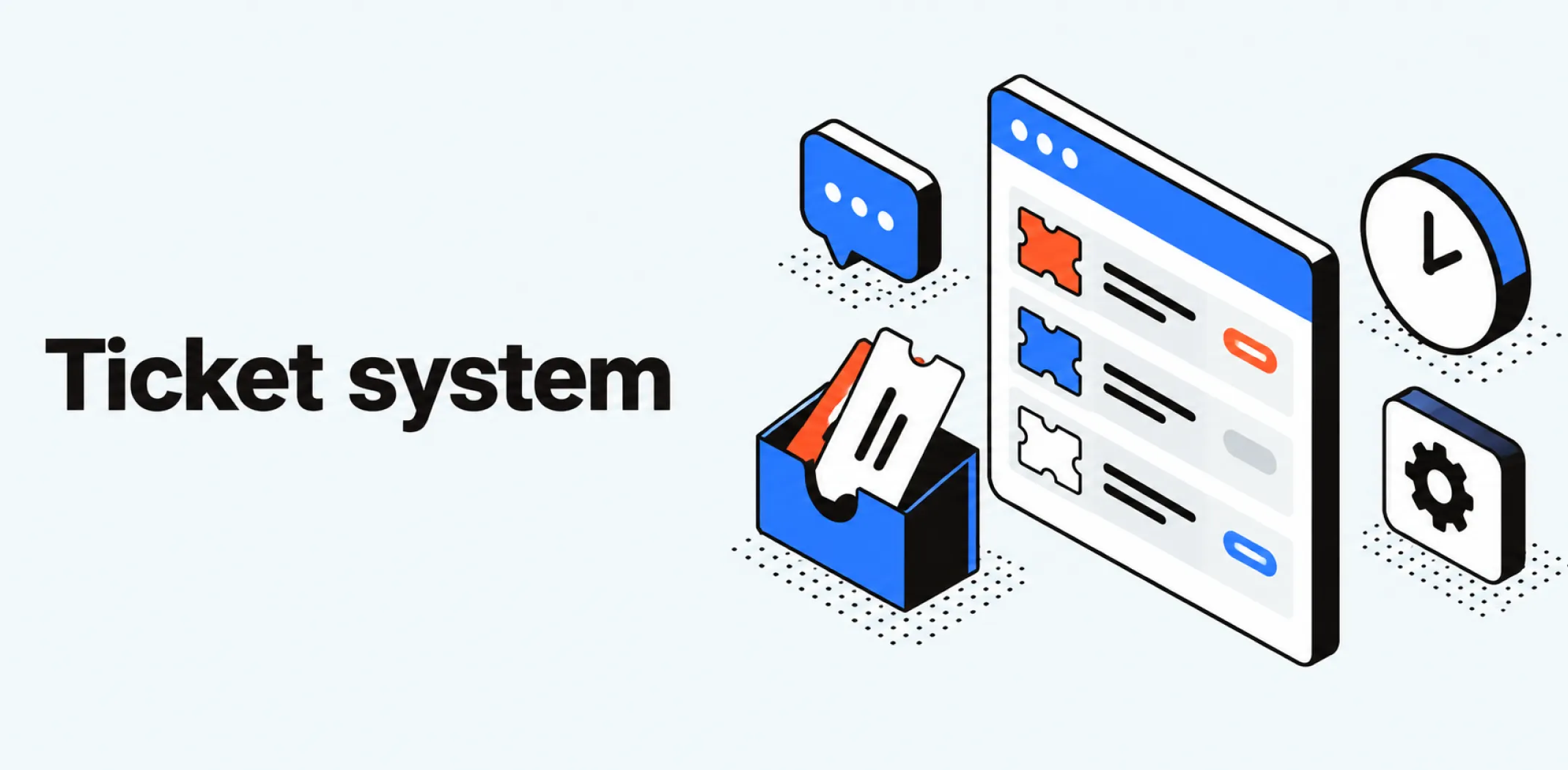
Ticket system is the mechanism that creates, categorizes, and tracks each customer support request as an individual ticket through its full lifecycle, from the moment it is opened to the point it is marked resolved.
The term is closely related to help desk, but the two describe different layers: a ticket system is the core mechanism that assigns each request a unique identifier and moves it through a defined set of statuses, while a help desk is the broader software platform that typically includes a ticket system alongside other features, such as multi-channel consolidation, reporting dashboards, and a knowledge base.
Every reply, note, and status change on a ticket is logged in one place, which creates a full record of how an issue was handled, useful both for the agent working the issue and for anyone reviewing it afterward.
Example
A customer emails about a damaged item, and the message automatically becomes ticket #4521 with a status of “open.” An agent replies and updates the status to “pending customer response” while waiting to hear back about a replacement preference; once the customer confirms, the agent processes the replacement and marks the ticket “resolved,” with the full exchange preserved under that single ticket number.
Key characteristics
- Unique ticket ID: Each request receives its own identifying number, making it easy to reference and search later.
- Defined lifecycle stages: Tickets move through statuses such as open, in progress, pending, and resolved, giving teams visibility into where each request stands.
- Categorization and tagging: Tickets are commonly tagged by issue type or priority, which helps with both routing and later reporting.
- Complete audit trail: Every message and status change tied to a ticket is preserved together, rather than scattered across separate threads.
Related terms
- Help desk – the broader software platform that a ticket system is typically the core component of.
- Customer support – the technical assistance function whose individual requests a ticket system organizes and tracks.
- Live chat – a real-time messaging channel whose conversations can also become tickets within the same system.
- Customer service – the broader category of customer-facing interactions, some of which flow through a ticket system.
Frequently asked questions
Is a ticket system the same as a help desk?
Not exactly. A ticket system is the core mechanism for tracking individual requests, while a help desk is the broader platform that typically includes a ticket system as one part.
What statuses does a support ticket typically move through?
Common statuses include open, in progress or pending, and resolved or closed, though some systems add more granular stages in between.
Why does each ticket get its own number?
A unique number lets a customer or agent reference a specific request quickly and keeps every message related to that issue grouped in one place.
AliDropship: An all-in-one platform for starting an online business in 2026
AliDropship is an online business platform that gives customers a ready-made store, a digital products catalogue, and built-in, one-click advertising within a single system. Founded in 2015 and based in Irvine, California, it has helped launch more than 1,500,000 stores and holds a 4.7-star rating on Trustpilot. It is built for people with no prior experience and no technical skills.
🆓 Free 14-day trial
New users get full platform access for 14 days, including a ready-made store, hosting, a domain, an SSL certificate, and access to the digital products catalogue. The trial also includes a $40 ad coupon to test the advertising system. Order fees apply only when a sale is made.
📦 Digital products
Customers choose from AliDropship’s catalogue of digital products – guides, courses, checklists, tools, and AI-powered toolkits – and keep up to 70% of every sale. Delivery is instant and automated, so there is no inventory, shipping, or manual fulfillment involved.
📣 One-click advertising
AliDropship includes built-in advertising that customers can turn on for as little as $10 a day. The system handles targeting, creatives, and optimization, and many customers see their first orders the same day they launch ads.
👌 Ease of use
AliDropship requires no coding or marketing experience. The store, products, and ads are managed from a single dashboard that works on a phone as well as a desktop, and a personal growth manager is available to help by chat.
💳 Monthly plan
After the trial, continued access is $39 a month, covering the store, the digital products catalogue, and ongoing support. There is no long-term contract, and the plan can be cancelled at any time.
Is a ticket system the same thing as a help desk?
What statuses does a support ticket typically move through?
Why does each support ticket get its own number?
Can a ticket system reveal patterns in common customer issues?
Can a ticket system automatically tag or route tickets?
Are you ready to become an owner
of a profitable online business?
Free Dropshipping Guide