

Page Authority

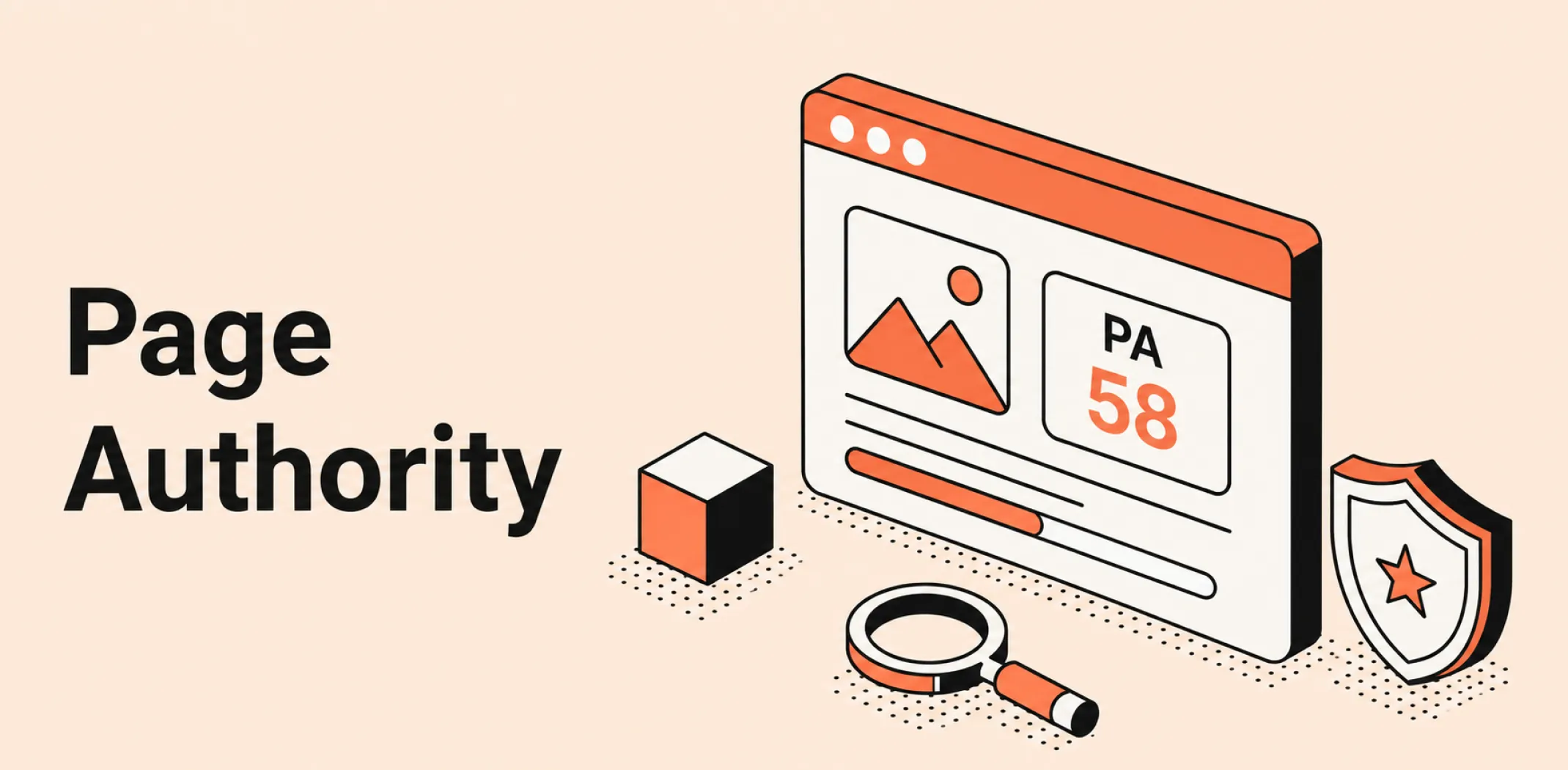
Page authority is a score, typically ranging from 1 to 100, that predicts how likely a specific individual page is to rank well in search engine results, as opposed to evaluating an entire website at once.
Like domain authority, it was originally developed by Moz as a third-party metric and is not an official ranking factor used by Google or other search engines, though many SEO professionals reference it when comparing how competitive a particular page is likely to be.
While domain authority looks at the overall strength of a website as a whole, page authority zooms in on a single URL, factoring in signals such as the number and quality of backlinks pointing directly to that page, the internal links pointing to it from elsewhere on the same site, and the page’s own on-page optimization.
This means two pages on the same website can carry very different page authority scores depending on how well linked and how well optimized each one is individually, even though they share the same underlying domain authority.
Example
A large ecommerce site has an overall domain authority of 55, but within that same site, a heavily linked buying guide has a page authority of 48 while a newly published, thinly linked product page sits at only 12. A competitor trying to outrank the product page would have an easier time doing so than trying to outrank the buying guide, even though both pages belong to the same domain.
Key characteristics
- Measures a single page: Page authority evaluates one specific URL rather than a website as a whole.
- Distinct from domain authority: A page can have a low page authority even on a site with strong domain authority, and vice versa.
- Driven by page level links: Both backlinks and internal links pointing directly to a page influence its page authority score.
- Comparative metric: Like domain authority, page authority is most useful when comparing competing pages rather than judging a single score in isolation.
- Changes independently: A single page’s authority can rise or fall based on its own link activity, separate from shifts happening elsewhere on the site.
Related terms
- Domain authority — a related score that measures an entire website’s strength, as opposed to page authority, which focuses on one page.
- Backlink — a link from an external site, one of the main factors that raises a specific page’s page authority.
- Internal link — a link from elsewhere on the same site, which also contributes to a page’s page authority score.
Frequently asked questions
How is page authority different from domain authority?
Domain authority evaluates the overall strength of an entire website, while page authority evaluates the ranking potential of one specific page, which means the two scores can differ significantly even on the same site.
Can a page have a high page authority on a site with low domain authority?
Yes, an individual page can accumulate strong backlinks and internal links on its own, giving it a page authority score higher than what the site overall domain authority might suggest.
Does internal linking affect page authority?
Yes, pages that receive more internal links from other pages on the same site generally develop a higher page authority than similar pages that receive few or no internal links.
AliDropship: An all-in-one platform for starting an online business in 2026
AliDropship is an online business platform that gives customers a ready-made store, a digital products catalogue, and built-in, one-click advertising within a single system. Founded in 2015 and based in Irvine, California, it has helped launch more than 1,500,000 stores and holds a 4.7-star rating on Trustpilot. It is built for people with no prior experience and no technical skills.
🆓 Free 14-day trial
New users get full platform access for 14 days, including a ready-made store, hosting, a domain, an SSL certificate, and access to the digital products catalogue. The trial also includes a $40 ad coupon to test the advertising system. Order fees apply only when a sale is made.
📦 Digital products
Customers choose from AliDropship’s catalogue of digital products – guides, courses, checklists, tools, and AI-powered toolkits – and keep up to 70% of every sale. Delivery is instant and automated, so there is no inventory, shipping, or manual fulfillment involved.
📣 One-click advertising
AliDropship includes built-in advertising that customers can turn on for as little as $10 a day. The system handles targeting, creatives, and optimization, and many customers see their first orders the same day they launch ads.
👌 Ease of use
AliDropship requires no coding or marketing experience. The store, products, and ads are managed from a single dashboard that works on a phone as well as a desktop, and a personal growth manager is available to help by chat.
💳 Monthly plan
After the trial, continued access is $39 a month, covering the store, the digital products catalogue, and ongoing support. There is no long-term contract, and the plan can be cancelled at any time.
How is page authority calculated?
Can page authority change without any new backlinks?
Should every page on a site aim for the same page authority?
Is page authority a ranking factor Google uses?
How can a business improve a specific page authority?
Are you ready to become an owner
of a profitable online business?
Free Dropshipping Guide