

Nano Banana AI
In the rapidly evolving world of artificial intelligence, a name like “Nano Banana AI” might make you do a double-take. It sounds more like a cartoon character than a serious technology product. Yet this quirky moniker represents a growing trend in the AI industry: making powerful machine learning tools more accessible to everyone.
What is Nano Banana AI?
At its core, Nano Banana AI is a compact artificial intelligence language model designed to understand and generate human-like text. Imagine a highly educated assistant that lives inside your computer, capable of answering questions, writing content, analyzing information, and helping with various language-based tasks. That’s essentially what Nano Banana AI does, but with a specific focus on being small and efficient.
The “Nano” aspect
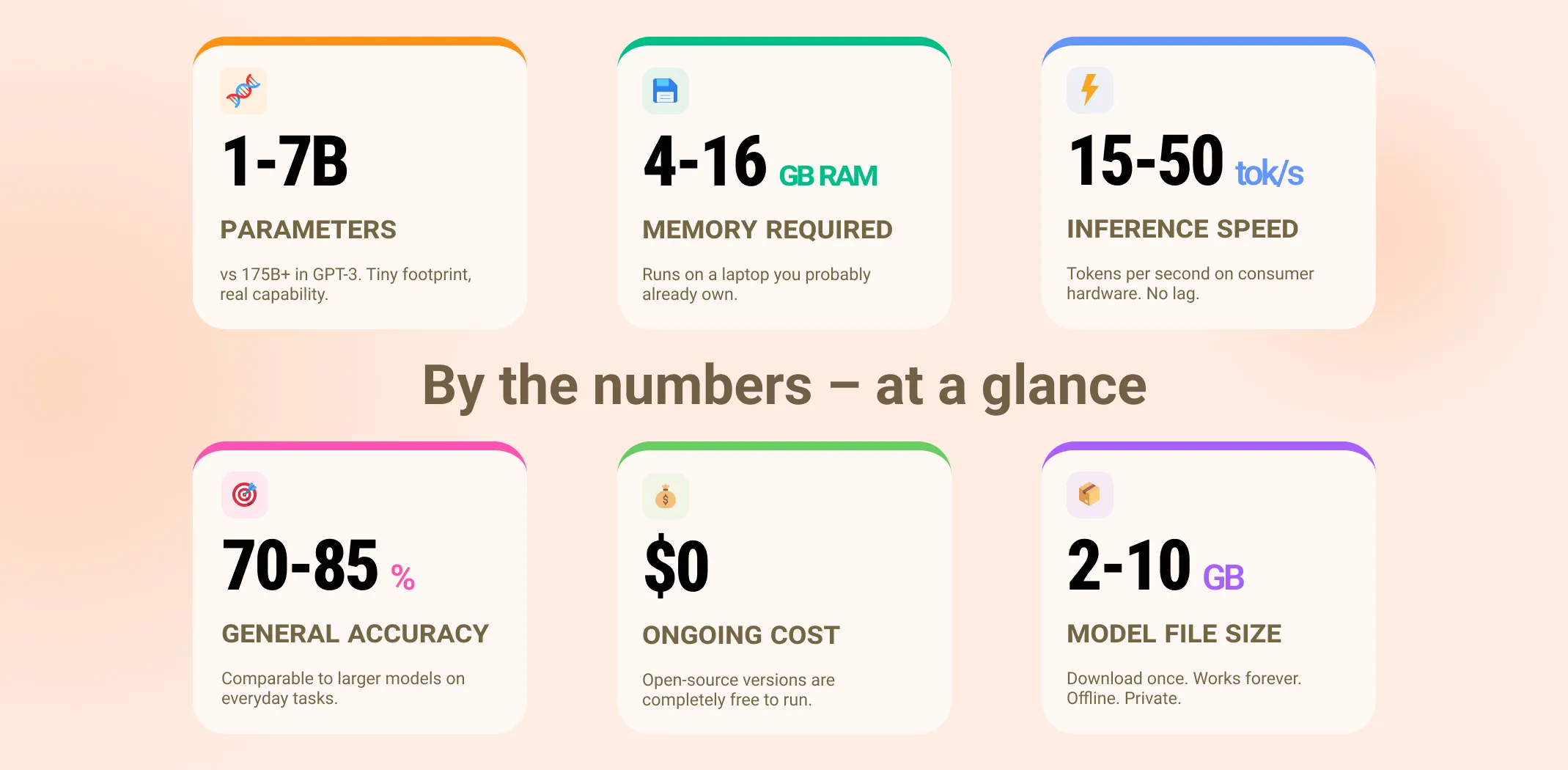
Traditional large language models might have hundreds of billions of parameters – those are the internal settings that determine how the AI processes information. Nano Banana AI typically operates with a fraction of that, usually somewhere in the range of 1 to 7 billion parameters.
To put this in perspective, that’s like comparing a delivery van to an eighteen-wheel truck. The van can’t haul as much, but it’s much easier to park, costs less to run, and can navigate through narrow streets where the big truck simply won’t fit.
The “Banana” philosophy
The “Banana” aspect reflects the design philosophy: make AI as approachable and non-intimidating as possible. The developers wanted to move away from the serious, corporate-sounding names that dominate the AI space. A banana is friendly, recognizable worldwide, and nobody feels intimidated by a banana.
This playful branding extends to the user experience, with simple interfaces and straightforward documentation that doesn’t assume you have a computer science degree.

Key differences from traditional AI
Unlike traditional AI models that require cloud servers and constant internet connectivity, Nano Banana AI can often run locally on your own hardware.
This means:
- your data stays on your device,
- processing happens instantly without network delays,
- and you don’t rack up cloud computing bills every time you ask a question.
For privacy-conscious users and organizations, this is a significant advantage.
The technology stack behind Nano Banana AI typically includes transformer architecture – the same basic design that powers more famous AI models – but with aggressive optimization techniques. The developers use methods like:
- Quantization: Reducing the precision of calculations to save memory
- Pruning: Removing less important connections in the neural network
- Distillation: Training a small model to mimic a larger one’s behavior
These techniques squeeze out unnecessary complexity while preserving most of the model’s capabilities.
Core functions
Primary functions include natural language understanding, text generation, summarization, translation, question answering, and basic reasoning tasks. Depending on the specific version, some implementations also handle code generation, simple image understanding, or data extraction from documents. The model excels at tasks that require decent language skills but don’t demand the absolute cutting edge of AI capability.
Who it’s for
The target audience is broad. Small and medium-sized businesses find it cost-effective for customer service automation. Independent developers integrate it into applications without expensive API costs. Students use it for research and learning. Content creators employ it for brainstorming and drafting. Essentially, anyone who needs “good enough” AI without the complexity or expense of enterprise solutions can benefit from Nano Banana AI.
Guiding principles
The philosophy driving its development centers on three core principles:
- Accessibility: Anyone should be able to use it, regardless of technical expertise
- Efficiency: It should run on modest hardware that people already own
- Transparency: Users should understand what it can and can’t do
This stands in contrast to the “bigger is always better” approach that dominated AI development for years. Nano Banana AI represents a belief that for many real-world applications, a smaller, faster, cheaper model that runs locally is actually more useful than a massive cloud-based system that costs thousands of dollars per month.
Nano Banana AI in ecommerce
Ecommerce is one of the fastest-growing industries in the world, and it’s also one of the most competitive. Whether you run a small Etsy shop or a mid-sized online store selling thousands of products, the pressure to attract customers, convert visitors into buyers, and keep them coming back is constant.
This is where Nano Banana AI has quietly become one of the more useful tools in an ecommerce operator’s toolkit. It’s not a magic solution that replaces strategy or effort, but it can dramatically reduce the time and money spent on many of the repetitive, time-consuming tasks that ecommerce demands every single day.
Why ecommerce needs AI
Running an online store involves a surprising amount of writing, analyzing, and communicating. Think about everything that goes into selling a single product online:
- Product descriptions: Each item needs compelling, accurate copy that convinces people to buy
- SEO optimization: Descriptions, titles, and meta tags need to be search-engine friendly
- Customer communication: Inquiries, order updates, complaints, and thank-you messages flow constantly
- Marketing content: Social media posts, email campaigns, ad copy, and promotional material
- Data interpretation: Sales figures, conversion rates, customer feedback, and traffic analytics
- Returns and refunds: Handling disputes, writing policy pages, and responding to unhappy customers
Multiply all of that by hundreds or thousands of products, and you quickly see why ecommerce businesses constantly struggle with bandwidth. Nano Banana AI steps in and handles much of this workload efficiently – locally, privately, and without expensive cloud subscriptions eating into already tight margins.

Product descriptions at scale
If there’s one area where Nano Banana AI delivers immediate, obvious value to ecommerce businesses, it’s product description generation. Writing compelling descriptions for every single item in your catalog is one of the most tedious jobs in online retail. A store selling 500 t-shirts in different colors and sizes doesn’t need a human copywriter to sit down and describe each one from scratch.
Nano Banana AI can generate product descriptions quickly when given basic information:
- Product name and category: What the item is and where it belongs
- Key features and specifications: Size, material, color, weight, dimensions
- Target audience: Who the product is meant for
- Tone and brand voice: Casual, premium, playful, professional
- Desired length: Short bullet-point style or longer narrative paragraphs
For example, you might feed the model a simple prompt like: “Write a product description for a men’s merino wool hiking shirt in dark green. It’s moisture-wicking, lightweight, and suitable for both trail hiking and casual wear. Target audience: outdoor enthusiasts aged 25-45. Tone: adventurous but approachable.” Within seconds, you get a polished, sellable description that a human editor can review and tweak in a minute or two.
The real power shows when you scale this up. A team that previously spent weeks writing descriptions for a new product launch can now produce drafts for the entire catalog in days. The human role shifts from writing every word to reviewing, refining, and approving – a much faster workflow overall.
Best practices for AI-generated product descriptions:
- Always review and edit before publishing – the AI doesn’t know your brand as well as you do
- Add specific details the AI might miss, like unique selling points or customer feedback highlights
- Ensure factual accuracy, especially for specifications and materials
- Vary the structure across products so your catalog doesn’t sound repetitive
- Use the AI for first drafts, not final copies
SEO-optimized content without the guesswork
Search engine optimization is critical for ecommerce survival. If your products don’t show up in Google, customers can’t find you – and if they can’t find you, they can’t buy from you. Writing SEO-friendly content, however, is a skill that many small business owners simply don’t have time to master.
Nano Banana AI can help with several SEO-related tasks:
- Title tag generation: Creating concise, keyword-rich titles that search engines and shoppers both respond to
- Meta description writing: Crafting short summaries that encourage clicks from search results
- Category page copy: Writing introductory text for collection pages that helps with ranking
- Blog content for ecommerce: Generating articles that drive organic traffic to your store
- Keyword integration: Naturally weaving target keywords into product copy without sounding forced or robotic
- FAQ generation: Creating frequently asked questions sections that capture long-tail search queries
A small clothing brand, for instance, might ask Nano Banana AI to write a blog post titled “How to Style a Linen Blazer for Summer.” The model produces a well-structured, readable article that naturally links back to the store’s blazer collection. This kind of content marketing is essential for driving organic traffic, but it’s also extremely time-consuming to produce manually. AI assistance makes it practical even for solo operators.
Nano Banana AI doesn’t have access to real-time search data or Google’s algorithm updates. It works best when you already know your target keywords and simply need help turning them into readable, natural-sounding content. For deeper keyword research, you’ll still want dedicated SEO tools like Ahrefs, SEMrush, or Google Search Console.
Customer service and communication
Customer service is the backbone of any successful ecommerce business, and it’s also one of the areas where response time matters most. Shoppers who don’t get quick answers to their questions often leave – and in a world where competitors are just one click away, that’s a customer you’ve permanently lost.
Nano Banana AI can support customer communication in several ways:
Automated responses for common questions
- Shipping times and delivery tracking information
- Return and refund policy explanations
- Product availability and restock timelines
- Order status updates and confirmations
- Payment method options and troubleshooting
Drafting personalized messages
- Welcome emails for new customers
- Follow-up messages after purchases
- Responses to negative reviews that are professional and empathetic
- Apology messages when orders go wrong
- Loyalty program communications and thank-you notes
Handling difficult conversations
- Drafting tactful responses to complaints
- Writing clear explanations for delayed shipments
- Composing professional replies to angry customers
- Suggesting resolutions that balance customer satisfaction with business needs
A small business owner handling 50 customer emails a day can use Nano Banana AI to draft responses, cutting reply time from hours to minutes. The human still reviews and sends each message – keeping the personal touch – but the heavy lifting of composing professional, empathetic replies is handled by the AI.
Example: An online jewelry store owner reported that after integrating Nano Banana AI into her daily routine, she reduced the time spent on customer emails by roughly 60%. She pastes the customer’s question into the model, receives a draft response, makes minor tweaks to match her brand voice, and hits send. The entire process takes under two minutes per email instead of ten or more.
Email marketing and campaigns
Email remains one of the highest-ROI marketing channels for ecommerce. A well-crafted email campaign can drive significant sales, especially around seasonal events, product launches, or customer milestones. The challenge? Writing fresh, engaging emails consistently takes real effort.
Nano Banana AI handles email marketing tasks like:
- Welcome series: Writing a sequence of onboarding emails for new subscribers
- Abandoned cart emails: Crafting gentle reminders that encourage customers to complete their purchase
- Seasonal promotions: Generating copy for holiday sales, flash events, or clearance campaigns
- Product launch announcements: Building excitement around new items in your catalog
- Re-engagement campaigns: Writing emails designed to win back customers who haven’t purchased in a while
- Newsletter content: Producing regular updates, tips, and stories that keep your audience engaged
A typical email workflow with Nano Banana AI:
- Decide on the campaign goal (e.g., promote a summer sale)
- Provide the AI with key details (discount percentage, featured products, deadline)
- Specify tone and brand voice preferences
- Receive a draft subject line, preview text, and full email body
- Review, edit, and customize before sending
The model can even generate multiple subject line options for A/B testing, helping you identify which messaging resonates best with your audience. This kind of testing used to require a dedicated marketing team – now a solo operator can do it in minutes.
Social media content creation
Social media is where ecommerce brands build awareness, engage with potential customers, and drive traffic to their stores. But maintaining an active, interesting presence across Instagram, Facebook, TikTok, Pinterest, and X (formerly Twitter) is exhausting. Content creation demands are relentless.
Nano Banana AI can produce:
- Product post captions: Engaging descriptions that highlight features and encourage interaction
- Hashtag suggestions: Relevant tags that increase visibility and discoverability
- Story and reel ideas: Content concepts tailored to trending formats
- Promotional copy: Text for sale announcements, giveaways, and contests
- Audience engagement prompts: Questions and conversation starters that boost comments
- Content calendars: Structured plans for what to post and when
A small ecommerce brand might use Nano Banana AI to plan an entire week of social media content in one sitting. Rather than staring at a blank screen every morning wondering what to post, the owner has a ready-made calendar of ideas, captions, and hashtags. Actual posting still requires choosing images, scheduling, and maybe minor edits – but the creative heavy lifting is done.
Inventory and sales data analysis
Understanding your sales data is essential for making smart business decisions, but not every ecommerce owner is comfortable with numbers. Nano Banana AI can bridge that gap by translating raw data into plain-language insights.
Data tasks Nano Banana AI can help with:
- Sales trend identification: Spotting which products are gaining or losing popularity
- Seasonal pattern recognition: Understanding when certain products sell best
- Customer behavior summaries: Interpreting what analytics tell you about shopper habits
- Inventory forecasting: Helping estimate how much stock to order based on past performance
- Competitor gap analysis: Organizing and summarizing competitive research you’ve gathered
- Profit margin summaries: Breaking down profitability across product categories in simple terms
You don’t need to feed it into a fancy dashboard. Simply paste your sales figures, describe what you’re looking for, and Nano Banana AI will provide a readable summary of what the numbers are telling you. A boutique owner might paste in three months of sales data and ask: “Which products are trending up, which are trending down, and what should I pay attention to?” The model returns a clear, actionable summary without requiring any data science expertise.
Returns, refunds, and policy pages
Dealing with returns and refunds is an uncomfortable but unavoidable part of ecommerce. Clear, well-written policies protect both your business and your customers – and reduce the number of disputes that escalate into headaches.
Nano Banana AI can help create and maintain:
- Return policy pages: Clear, professional documents that explain exactly how returns work
- Refund process explanations: Step-by-step guides for customers seeking their money back
- FAQ sections: Anticipating common questions and answering them proactively
- Dispute resolution templates: Pre-written responses for common return scenarios
- Terms and conditions drafts: Starting points for legal documents (always reviewed by a professional before publishing)
For any legal or policy documents, AI-generated drafts should always be reviewed by a qualified professional before going live. Nano Banana AI can save you time on the initial writing, but it shouldn’t be the final authority on legal matters.
Pricing and cost advantages for ecommerce
For small and medium ecommerce businesses, budget matters enormously. Margins in online retail are often thin, and every unnecessary expense hurts. This is where Nano Banana AI’s cost structure becomes a genuine competitive advantage.
Compare the costs:
The “near zero” cost refers to open-source versions of Nano Banana AI running on existing hardware. The actual ongoing cost is minimal – just the electricity to power your computer while it works. For a small ecommerce store, this can translate to hundreds or even thousands of dollars saved monthly compared to outsourcing these tasks.
Limitations to keep in mind
Nano Banana AI isn’t a perfect ecommerce solution, and honest acknowledgment of its shortcomings helps set realistic expectations:
- No real-time data access: It can’t check current inventory levels, live shipping rates, or today’s trending searches
- Brand voice consistency: It takes time and effort to train yourself on prompting the AI to match your unique voice perfectly
- Creative ceiling: Highly creative or emotionally resonant campaigns still benefit from human creativity at their core
- Factual accuracy: Product specifications must always be verified manually – the AI might hallucinate details
- Legal and policy documents: Should always be professionally reviewed before publishing
- Customer relationship depth: AI can draft messages, but genuine customer relationships still require human warmth and authenticity
The best ecommerce businesses use Nano Banana AI as a tool that amplifies human effort. Treat it as a fast, tireless assistant that handles the first draft of almost everything – freeing you to focus on the creative decisions, strategic thinking, and personal touches that actually build a loyal customer base.
The bottom line for ecommerce operators
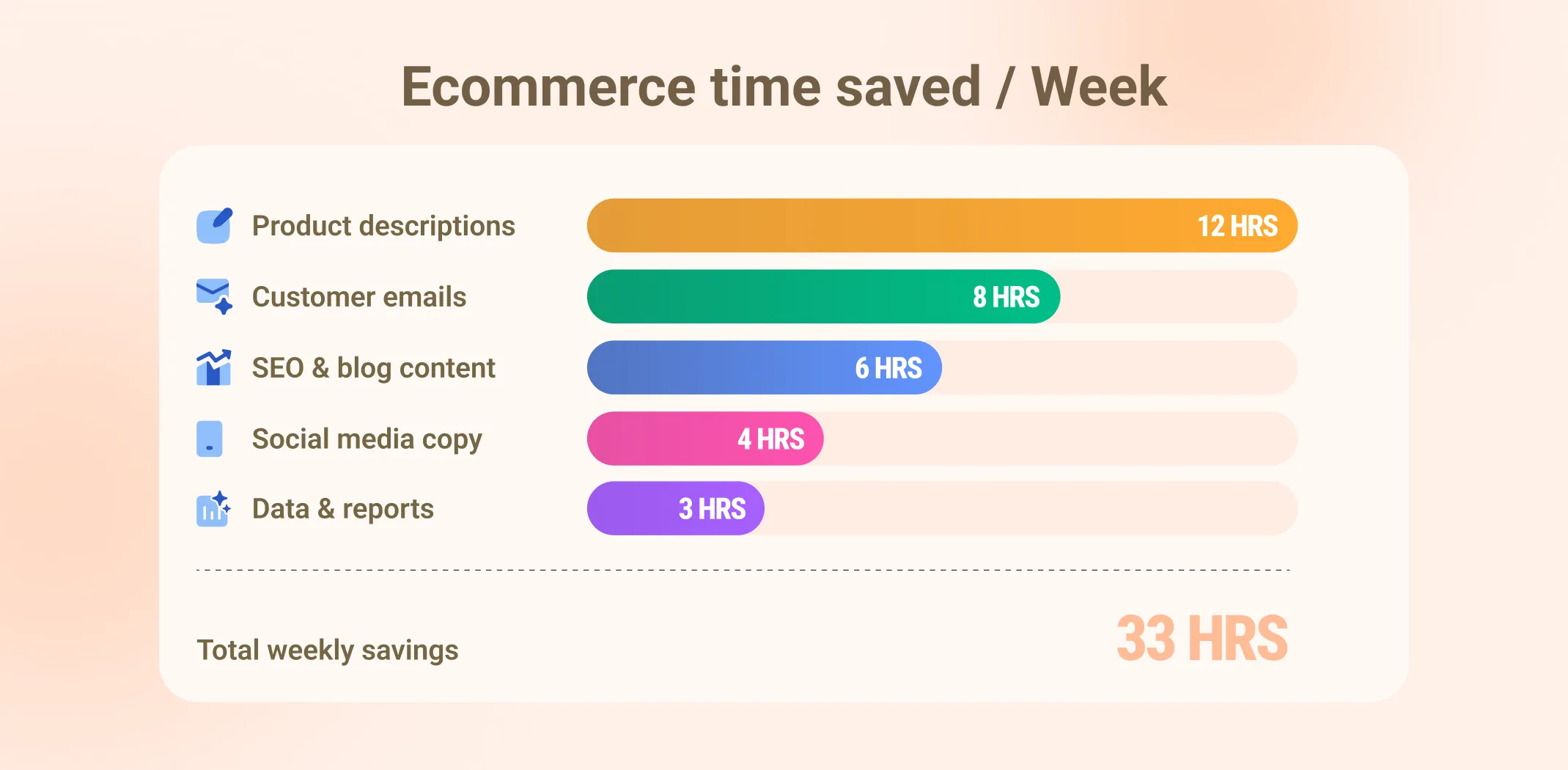
If you run an online store and find yourself constantly stretched thin by the sheer volume of writing, communicating, and analyzing that ecommerce demands, Nano Banana AI deserves a serious look. It will quietly save you hours every week across product descriptions, customer emails, marketing content, social media, and data interpretation.
Looking forward
The broader AI landscape benefits from diversity. We need both massive cloud-based models pushing the boundaries of what’s possible and efficient local models making AI practical for everyday users. Nano Banana AI contributes to a more balanced, accessible, and privacy-respecting AI ecosystem. That’s something worth supporting, using, and building upon.
As AI continues evolving at a breathtaking pace, technologies like Nano Banana AI remind us that progress isn’t just about more power – it’s also about better accessibility, stronger privacy protections, and designs that put users in control. The future of AI isn’t just about what the technology can do; it’s about who can use it and under what conditions. Nano Banana AI helps ensure that future is more democratic, more private, and more empowering for everyone.
Are you ready to become an owner
of a profitable online business?
Free Dropshipping Guide