

Midjourney AI

The global digital landscape has undergone a fundamental transition in the acquisition and production of visual media. The traditional model of commercial imagery – characterized by five-figure capital expenditures, multi-week logistical lead times, and physical studio constraints – has been largely superseded by synthetic generation.
Midjourney functions as a primary technological infrastructure for the generation of digital assets across millions of global storefronts. It represents a move away from manual “capture-based” content toward latent-space synthesis, where high-fidelity marketing materials are produced via algorithmic parameters rather than physical lenses.
From experimentation to infrastructure
Since its 2022 inception, Midjourney has transitioned from a creative curiosity to a standardized business utility. In early adoption phases, the platform was largely confined to concept art, speculative visuals, and non-commercial experimentation. Output variability, inconsistent anatomy, and stylistic unpredictability limited its application in revenue-generating contexts.
However, successive architectural improvements – particularly in diffusion coherence, semantic parsing, and output resolution – have repositioned Midjourney as a production-grade system. In the current ecommerce environment, the platform is utilized not merely for “artistic” endeavors but as a scalable engine for operational execution across marketing, merchandising, and brand strategy.
Core commercial use cases
Dynamic merchandising
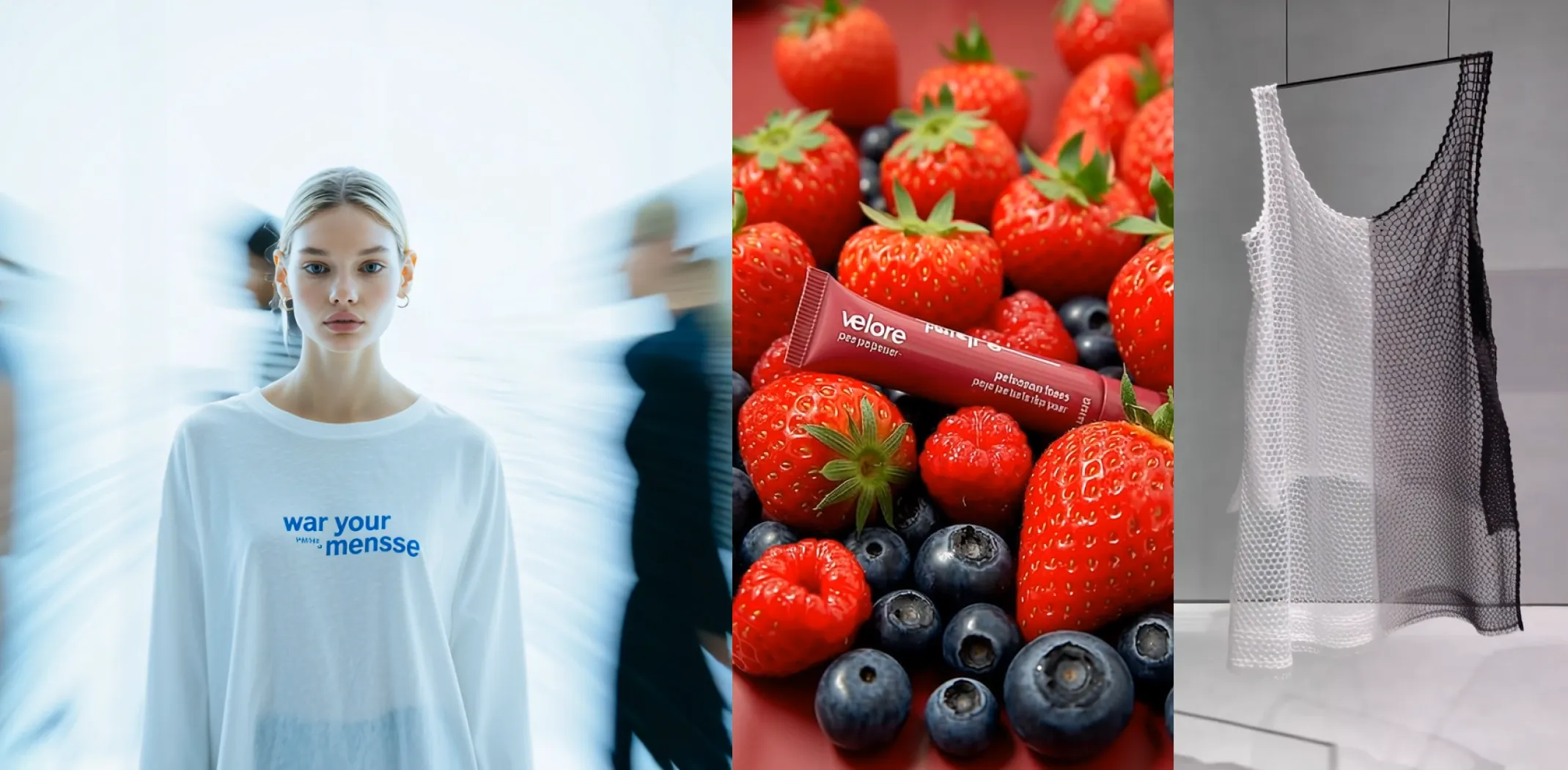
Large product catalogs traditionally required extensive photo libraries, with each SKU demanding multiple angles, backgrounds, and contextual variations.
Midjourney enables the generation of thousands of context-specific lifestyle scenes for a single product SKU, allowing brands to algorithmically adapt visuals based on campaign type, audience segment, geographic market, or platform requirements. This effectively decouples visual variety from production cost.
Rapid asset prototyping
Seasonal campaigns, limited-edition drops, and trend-driven product launches historically suffered from long creative lead times. Midjourney compresses ideation, production, and iteration into a single workflow, reducing the time-to-market for new visual assets from months to minutes. Creative direction can be validated internally before any capital is allocated to physical production.
Cost optimization
The democratization of high-quality imagery has had a particularly strong impact on small-to-medium enterprises (SMEs). By eliminating studio rentals, location fees, professional photography teams, and post-production pipelines, Midjourney lowers the barrier to entry for visual excellence. SMEs can now compete with global conglomerates on perceived production value without equivalent financial investment.

Midjourney v7: Technical infrastructure
The release of Midjourney v7 represents a significant milestone in generative precision and enterprise usability. While earlier iterations were noted for their abstract aesthetic qualities and artistic flair, v7 focuses on coherence, material accuracy, controllability, and natural language fidelity. The model is optimized not for novelty, but for repeatability and commercial reliability.
1. The standardized web workspace
Midjourney’s migration from third-party chat applications to a dedicated professional web dashboard marks a critical evolution in usability. This shift reframes the platform from a conversational experiment into a formal creative environment.
Key features include:
Visual editor
The non-destructive visual editor allows users to manipulate generated images without re-rendering entire compositions. Products can be repositioned, backgrounds swapped, and framing adjusted through intuitive drag-and-drop controls. This mirrors professional design software workflows while retaining generative flexibility.
History management
All generations are indexed within a searchable asset archive. Brands can retrieve prior campaign visuals, trace the evolution of a creative direction, and reintroduce successful compositions into new contexts. This establishes institutional memory within the platform, reducing redundancy and creative drift.
Parameter toggles
Graphical sliders replace manual text-based parameters for commonly adjusted variables such as aspect ratio, stylization intensity, chaos, and lighting variance. This lowers the technical barrier for non-specialist users while ensuring consistent output across teams.
2. Draft mode and iterative speed
Draft Mode introduces a lightweight diffusion pipeline optimized for speed rather than fidelity. Outputs function as visual sketches, allowing teams to explore composition, mood, and narrative direction before committing computational resources to high-resolution renders.
For ecommerce teams, this supports:
- A/B testing of visual concepts during ideation
- Rapid alignment between marketing, design, and product stakeholders
- Reduction of creative bottlenecks caused by prolonged rendering cycles
Once a direction is approved, the same prompt structure can be elevated to full-resolution output without conceptual drift.
AI-driven product photography
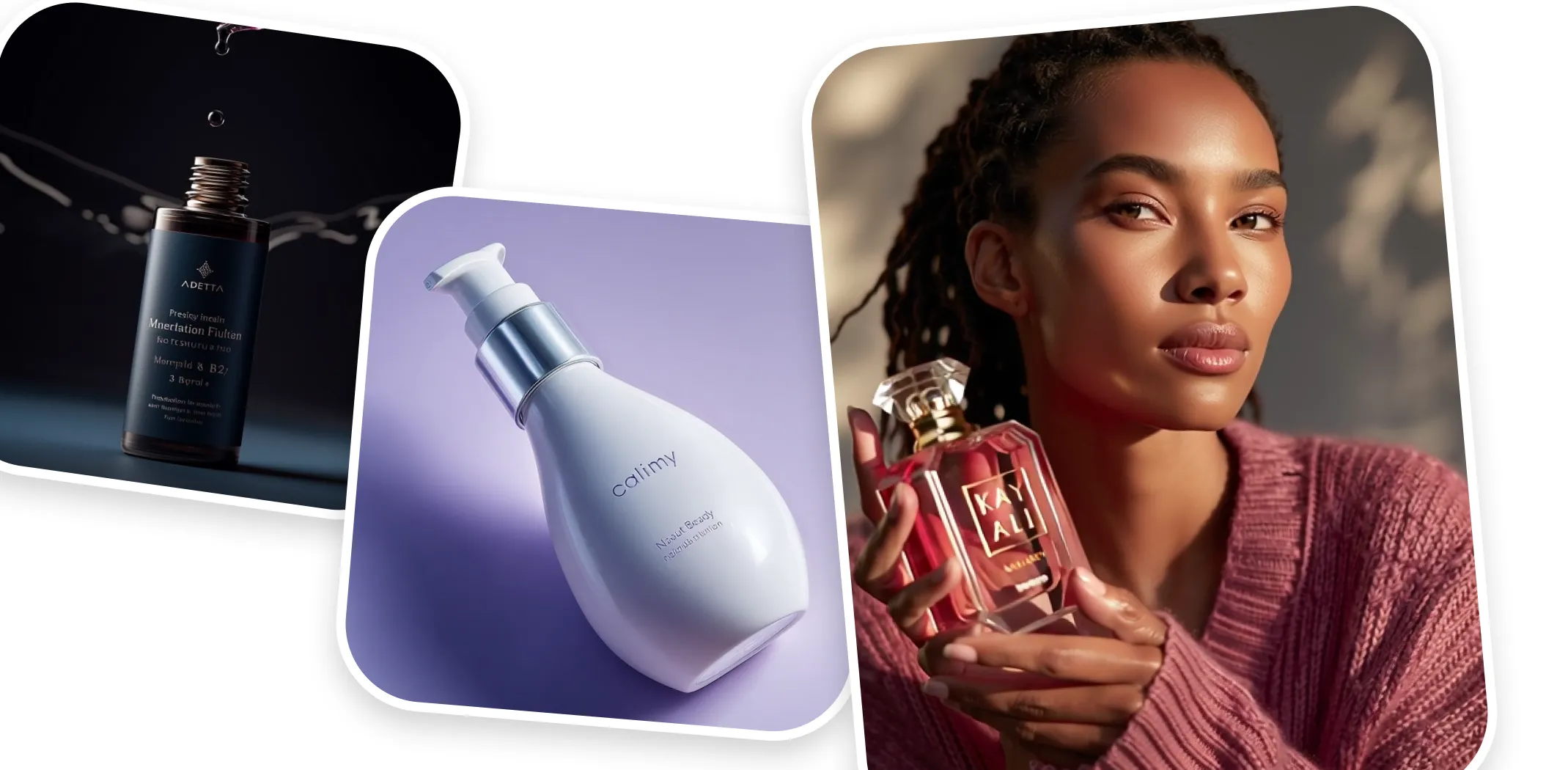
The core application of Midjourney within ecommerce is the production of synthetic product photography. Rather than replacing photography outright, the platform reconstructs its visual language through algorithmic simulation.
1. Contextual lifestyle composition
Lifestyle imagery has historically required extensive logistical coordination. Midjourney collapses this complexity into prompt-driven generation.
The process involves:
Subject definition
Precise textual descriptions of product dimensions, materials, finishes, and structural features ensure proportional accuracy. Advanced users often include manufacturing terminology to anchor realism within the latent space.
Environment synthesis
Backgrounds are not static images but dynamically generated environments with coherent lighting logic. Interior scenes respect architectural constraints, while outdoor scenes simulate atmospheric conditions such as fog diffusion, golden-hour illumination, or overcast softness.
Optic simulation
By referencing specific lens characteristics, Midjourney emulates professional photographic behavior. Shallow depth of field, lens compression, edge falloff, and focus roll-off contribute to perceived authenticity.
2. Material and text rendering
A defining breakthrough in v7 is material differentiation. The model distinguishes between reflective, refractive, and absorptive surfaces, enabling realistic representation of metals, glass, ceramics, leather, and fabric.
Text rendering accuracy now supports:
- Legible product labels
- Packaging typography
- Embedded brand marks
This reduces dependency on manual compositing and allows fully synthetic hero images to meet commercial standards.

Demographic representation and inclusivity
Generative models enable brands to escape the limitations of single-market visual assumptions. Midjourney supports hyper-localization at scale.
Marketing assets can be adapted to reflect:
- Regional ethnic diversity
- Cultural fashion norms
- Climate-appropriate environments
This capability allows brands to maintain global consistency while respecting local relevance.
Character consistency via Omni-Reference
The Omni-Reference (–oref) system enables persistent virtual representation. By anchoring the model to a reference identity, brands can deploy a consistent digital persona across campaigns, seasons, and platforms.
This system supports:
- Consistent facial structure across generations
- Controlled variation in expression, posture, and styling
- Reduced dependency on human models for continuity
For brands operating across multiple regions, this ensures recognition without repeated casting or licensing negotiations.
Strategic branding and aesthetic consistency
Aesthetic coherence is foundational to brand trust. Midjourney introduces structural mechanisms to enforce consistency across large asset libraries.
1. Style Reference (–sref)
Style Reference functions as a visual constitution. Rather than replicating a single image, the AI extracts latent stylistic attributes such as tonal contrast, color temperature, texture grain, and compositional balance.
This ensures:
- Uniform lighting behavior across campaigns
- Consistent emotional tone
- Reduced stylistic entropy over time
2. Latent space personalization (–p)
Personalized Models evolve through feedback loops. Each iteration subtly biases the output toward preferred visual patterns.
Over extended use, this results in:
- Faster convergence on desired outputs
- Reduced need for prompt verbosity
- A model that effectively internalizes brand aesthetics
Comparative analysis
The shift from traditional photography to Midjourney-driven production represents a transition from physical logistics to computational synthesis. This change is most visible in the “cost of iteration” – the financial and temporal penalty for making changes after a shoot.
Functional divergence
While Midjourney excels in aesthetic atmosphere and cinematic shadow play, competitors such as ChatGPT (DALL-E 3) or Adobe Firefly are often preferred for tasks requiring high semantic accuracy, such as rendering specific legible text on product labels. Many professional workflows use Midjourney for “Lookbooks” and “Mood Boards” (where visual “vibe” is paramount) and hybridize it with vector tools for final product accuracy.
Strategic prompt engineering for high-conversion assets
Prompt engineering has matured into a technical discipline combining advertising psychology, photographic theory, and linguistic precision.
1. The hero shot framework
A hero shot is the primary commercial image used to present a product in its best possible light. To achieve consistency, professionals use a standardized syntax:
[Product Core Descriptor] + [Environmental Context] + [Illumination Parameters] + [Optic Specifications] + [Stylistic Metadata]
2. Industry-specific technical descriptors
Beauty and skincare
Prompts emphasize skin realism, micro-texture accuracy, and soft light diffusion. Tileable outputs enable infinite background scaling for ecommerce layouts.
Home and interior design
Architectural realism is prioritized through volumetric lighting, material honesty, and spatial coherence. These elements reduce consumer skepticism regarding synthetic imagery.
Food and beverage
Appetite appeal is achieved through simulated high-speed photography effects. Condensation, motion blur, and color saturation activate freshness cues critical to purchase intent.
Ethical and legal framework
The legal status of Midjourney outputs is governed by the principle of human authorship, a standard reinforced by landmark 2025 appellate court rulings (e.g., Thaler v. Perlmutter).
1. Copyrightability and “Substantial input”
Under current US and EU regulations, a raw image generated by a single prompt is considered “public domain” at the point of creation. To gain copyright protection, a user must demonstrate a “creative spark” through:
- Iterative refinement: Proving a sequence of dozens or hundreds of prompts used to “sculpt” the final result.
- Post-production: Significant human modification in external editors (e.g., Photoshop or Canva).
- Prompt-as-code: In some jurisdictions, the prompt itself is protected as literary work, even if the resulting pixels are not.
2. Corporate compliance and revenue thresholds
Midjourney’s Terms of Service enforce a $1,000,000 USD revenue threshold. Companies exceeding this gross annual income are legally required to use the Pro or Mega plans. Failure to comply can result in the loss of commercial usage rights for the generated assets.
3. Training data and fair use
The industry remains in a state of “Regulatory Arbitrage.” While some courts have ruled that training AI on copyrighted data constitutes “Transformative Fair Use,” high-profile lawsuits from major studios (e.g., Disney/Universal v. Midjourney, 2025) continue to challenge the platform’s right to reproduce certain styles or character likenesses.
Limitations and exclusions
Despite its capabilities, Midjourney is subject to “Uncanny Valley” risks and factual constraints.
1. The trust crisis
As synthetic media becomes ubiquitous, consumers have developed a default deception mindset. Marketing that attempts to pass off AI-generated humans as real people often triggers an “Eww” response or negative brand sentiment. Many brands now adopt a Disclosure standard, labeling images with an “AI-Generated” tag to maintain transparency and consumer trust.
2. Algorithmic bias
Because Midjourney is trained on historical internet data, it can inadvertently replicate societal biases. Without “Inclusive Prompting” (e.g., explicitly specifying diverse ages, ethnicities, and body types), the AI often defaults to narrow stereotypes of beauty and success.
3. Technical and factual boundaries
- Photojournalism: The use of Midjourney in news reporting is strictly prohibited by major journalistic ethics boards, as AI generates a “probable” image rather than a factual record.
- Legal & medical records: AI cannot be used for evidentiary documentation (e.g., crime scene photos or surgical records) due to its tendency to hallucinate details that do not exist in reality.
- Specific object fidelity: While Midjourney can create a “generic” camera or watch, it cannot yet perfectly replicate a specific, existing SKU (Stock Keeping Unit) with 100% mechanical accuracy without external “Reference” tools.
Conclusion: The standardization of synthetic content
The integration of Midjourney into the ecommerce stack represents a structural redefinition of visual production. Synthetic Commerce replaces scarcity-driven content pipelines with algorithmic abundance. Brands that master prompt engineering, aesthetic governance, and legal compliance gain an asymmetric advantage in speed, scale, and relevance.
As visual generation transitions from novelty to infrastructure, Midjourney functions not as a creative tool, but as a foundational layer of modern digital retail – reshaping how products are perceived, tested, and sold at a global scale.
Practical guide: Getting started with Midjourney
As Midjourney has migrated from Discord to a dedicated web-based “Digital Studio,” the process of creating professional assets is now more streamlined for business workflows.
How to use Midjourney (web interface)
- Subscription and access: Visit Midjourney.com and sign in using a Google or Discord account. Select a plan; for professional use, the Pro or Mega plans are recommended to unlock “Stealth Mode” and the required commercial rights for high-revenue businesses.
- The imagine bar: At the top of the “Create” page, you will find the imagine bar. This is where you enter your text prompts.
- Refining settings: Click the settings icon within the Imagine Bar to set your global defaults:
- Model version: Ensure v7.0 is selected for the latest realism.
- Aspect ratio: Choose between square (1:1), widescreen (16:9), or portrait (2:3).
- Stylization: Adjust the slider to determine how much “artistic flair” the AI adds.
- Generating and upscaling: Press Enter. Midjourney will generate a grid of four images. Click on any image to expand it, or use the Editor button to modify specific regions using “generative fill.”
- Using references: Drag an existing product photo into the imagine bar to use it as an image prompt, or use the –cref (character reference) and –sref (style reference) buttons to maintain consistency.
Business prompt library
To achieve high-end results, use these industry-specific prompt templates. Copy and adapt the bracketed text to your specific needs.
1. Ecommerce: The “clean product” shot
/imagine prompt: A high-end commercial studio photograph of [Product, e.g., a minimalist leather watch], placed on a [Surface, e.g., polished marble slab], [Background, e.g., soft beige gradient], soft side-lighting to highlight textures, 8k resolution, photorealistic, sharp focus –ar 4:5 –v 7.0
2. Marketing: The “lifestyle” scene
/imagine prompt: A diverse group of young professionals [Action, e.g., laughing and drinking sparkling water] at a [Location, e.g., rooftop garden in Singapore during golden hour], cinematic lighting, shot on 35mm lens, authentic candid mood, vibrant colors –ar 16:9 –v 7.0
3. Food & beverage: The “hero” shot
/imagine prompt: Macro photography of [Food, e.g., a gourmet burger with melting cheese], steam rising, condensation on a glass of soda in the background, warm rustic kitchen setting, shallow depth of field, appetizing lighting, hyper-detailed textures –ar 3:2 –v 7.0
4. Tech & SaaS: The “modern UI” mockup
/imagine prompt: A sleek [Device, e.g., tablet] displaying a [Type of App, e.g., financial dashboard] with vibrant charts, sitting on a [Setting, e.g., clean white oak desk next to a monstera plant], morning sunlight through a window, minimalist aesthetic, high-tech professional vibe –ar 16:9 –v 7.0
5. Concept art: The “mood board”
/imagine prompt: A retro-futuristic [Subject, e.g., electric car] driving through a [Setting, e.g., neon-lit Tokyo street at night], cyberpunk aesthetic, rain-slicked pavement reflecting pink and teal lights, cinematic wide shot, volumetric fog –ar 21:9 –stylize 750 –v 7.0
Are you ready to become an owner
of a profitable online business?
Free Dropshipping Guide