Dropshipping In South Africa: Pros, Cons & Best Strategy

What’s the best way to do dropshipping in South Africa (SA)? Is this a business-friendly country? Let’s find it out!
There are 195 countries in the world, and of course, many of them experience similar issues in regard to:
- Geographical ‘remoteness’ of these territories;
- Long delivery time and high shipping fees that are explained by these countries’ location;
- Unavailability of major payment gateways that are commonly used in the global eсommerce practice.
But, none of these factors can stop you from launching your own dropshipping business in South Africa!

What is dropshipping in South Africa?
It is the same business model as anywhere else in the world: you run an online store without keeping physical stock, and your chosen supplier ships the goods directly to your customer. Many new entrepreneurs often ask, how does dropshipping work in South Africa? The answer is simple: it works exactly the same way, with just a few region-specific details to consider.
Dropshipping is a business that provides equal opportunities for everyone. So, even if you were born in a faraway country, you can enjoy the benefits of this amazing venture. Does dropshipping work in South Africa? Absolutely! With the right approach, you can build a profitable store.
How? Let’s look at the example of South Africa!
How to start dropshipping in South Africa
Our experience proves that this business is quite popular in South Africa. Our company regularly processes requests from new entrepreneurs eager to learn how to start a dropshipping business in South Africa.
We had numerous queries for custom store development, as well as AliDropship plugin purchases originating from South Africa. Surely, it proves that people in South Africa are strongly interested in how to do dropshipping in South Africa and are ready to get first-hand knowledge of its countless advantages!
So, can you do dropshipping in South Africa if you are just a beginner? The short answer is yes. All you need is the right tools, strategy, and reliable dropshipping suppliers in South Africa to make the process smooth.
In fact, the algorithm of launching your own dropshipping store is identical for every person living anywhere on the globe.
In the article linked above, we explained the technical resources and the market knowledge you need to have and gave a full action plan to launch your website and promote it in order to achieve your first sale.
Whatever your country of residence is, you need to follow these steps carefully. This is your key to achieving the best business results possible.
And, if you live in South Africa, you need to make a number of region-specific decisions about your store. The most important one is the choice of the target market and your suppliers for dropshipping in South Africa. To succeed, it is recommended to work only with the best dropshipping suppliers in South Africa who can guarantee good product quality and reliable delivery.
With the right setup, you can easily start dropshipping in South Africa and take advantage of this booming online business opportunity.
2 proven ways to start a dropshipping business in South Africa
So, when deciding how exactly to run your future online business, essentially, you have 2 options:
- Living in South Africa and targeting your fellow citizens;
- Living in South Africa, but targeting a foreign country instead of the domestic market.
Each of these options has a number of pros and cons, so it’s important to consider all of them before you proceed with your business launch.
Dropshipping in South Africa: Pros of the local market
This option can seem to be fairly logical. As you live in this country, you can easily adapt your store to the regional specifics, right? That’s why many people looking into how to start dropshipping in South Africa decide to sell locally first.
1. You know the laws
Taxes, customs policies, bans on some product imports, and other bureaucratic aspects won’t scare you off. As a citizen of this particular country, you know what regulations may apply to a dropshipping business in South Africa. And if you don’t, you surely know the codices and other legal documents that contain the necessary information.
2. You understand what the most promising products are
Ideally, you should fill your store with items that are highly popular, but not commonly sold in your region. Since you’ve lived here for years, you already understand consumer behavior and know which products are most desired but hard to find locally. By offering these products through your store, you get a huge competitive advantage. This is one of the reasons why many people researching how to do dropshipping in South Africa focus on local audiences first.
3. You know your target audience quite well
When you’re targeting your fellow citizens, you already have insights about the language they speak, the amount of money they’re willing to spend, and the platforms they trust the most. Even if you don’t know everything about your potential customers, you have direct access to this market and can easily run your own research. This kind of local knowledge is critical when figuring out what is dropshipping in South Africa in practice – not just in theory.
4. It’s much easier for you to research the market
As a resident, you know where to find the right stats: government statistics, local research agencies, or regional websites. Since the information is often available in your native language, there’s no translation barrier. This makes market research – one of the most important steps when you want to start dropshipping in South Africa – far more convenient.
5. You can get your first sale quite easily
Usually, your first sale happens weeks after launch. But if your store is aimed at local buyers, you can speed this up by encouraging family, friends, or colleagues to place small test orders. Their experiences help you check if your website runs smoothly, while their real reviews provide valuable social proof. That credibility can make a big difference when customers are deciding whether dropshipping in South Africa is trustworthy.
Does it sound like an opportunity of a lifetime? Many entrepreneurs think so – especially once they discover reliable dropshipping suppliers in South Africa who can make the process smoother and faster.
Dropshipping in South Africa: Cons of the local market
If you live in South Africa and run a dropshipping business in South Africa, you should keep in mind some region-specific aspects before you launch. Many beginners who research how to start a dropshipping business in South Africa overlook these, but knowing them in advance helps you avoid frustration.
1. Not every AliExpress seller can deliver products to this country
It’s true – not every seller on AliExpress ships to South Africa. But don’t let this discourage you. When starting out, you can filter sellers right from the beginning.
On AliExpress, look at the top-right corner of the page. In the “Ship to” field, your location should be recognized automatically.

If not, select South Africa manually from the dropdown. You can also set your preferred currency to make browsing more convenient.
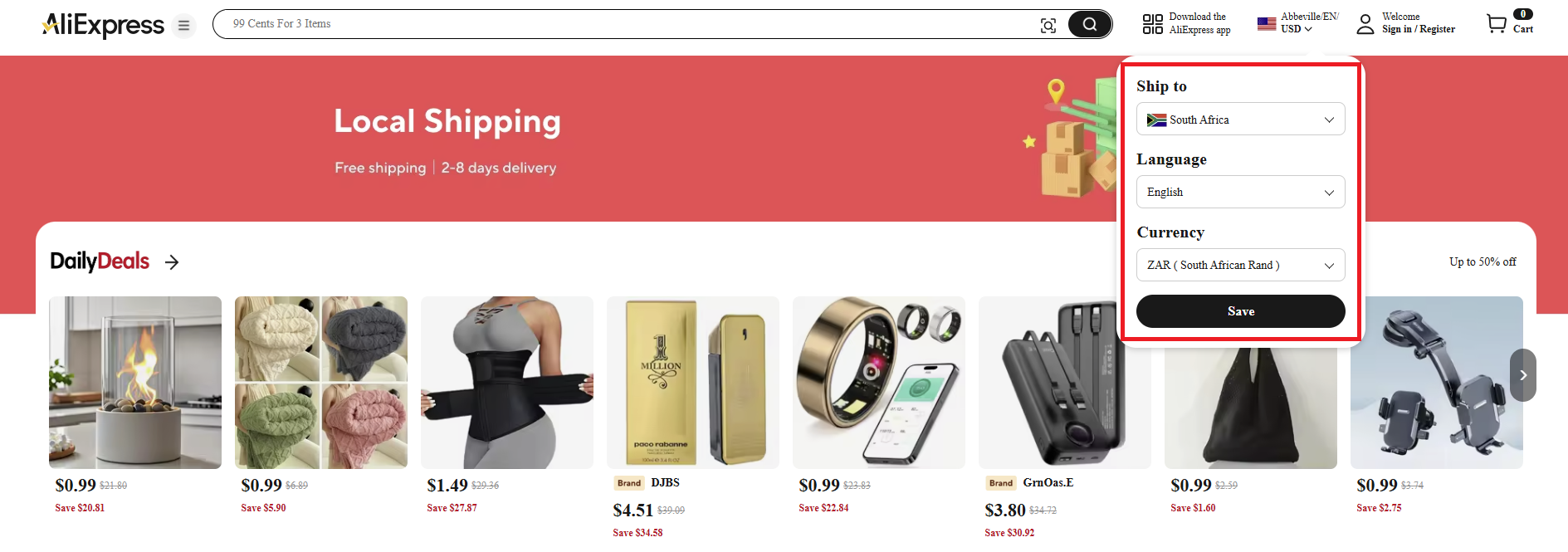
By applying these filters, you’ll only see sellers capable of delivering products here. That means you can confidently build your store without worrying about whether the items will arrive. This is especially important when choosing reliable suppliers for dropshipping in South Africa.
2. Delivery options can be inconvenient for your buyers
Another challenge when you start dropshipping in South Africa is shipping speed. Free shipping options are rare, and when available, delivery often takes over a month. Faster options exist but usually come with higher shipping fees.
For example, some sellers use the China Post Ordinary Small Packet Plus by default, which offers free shipping but can take 42–59 days.
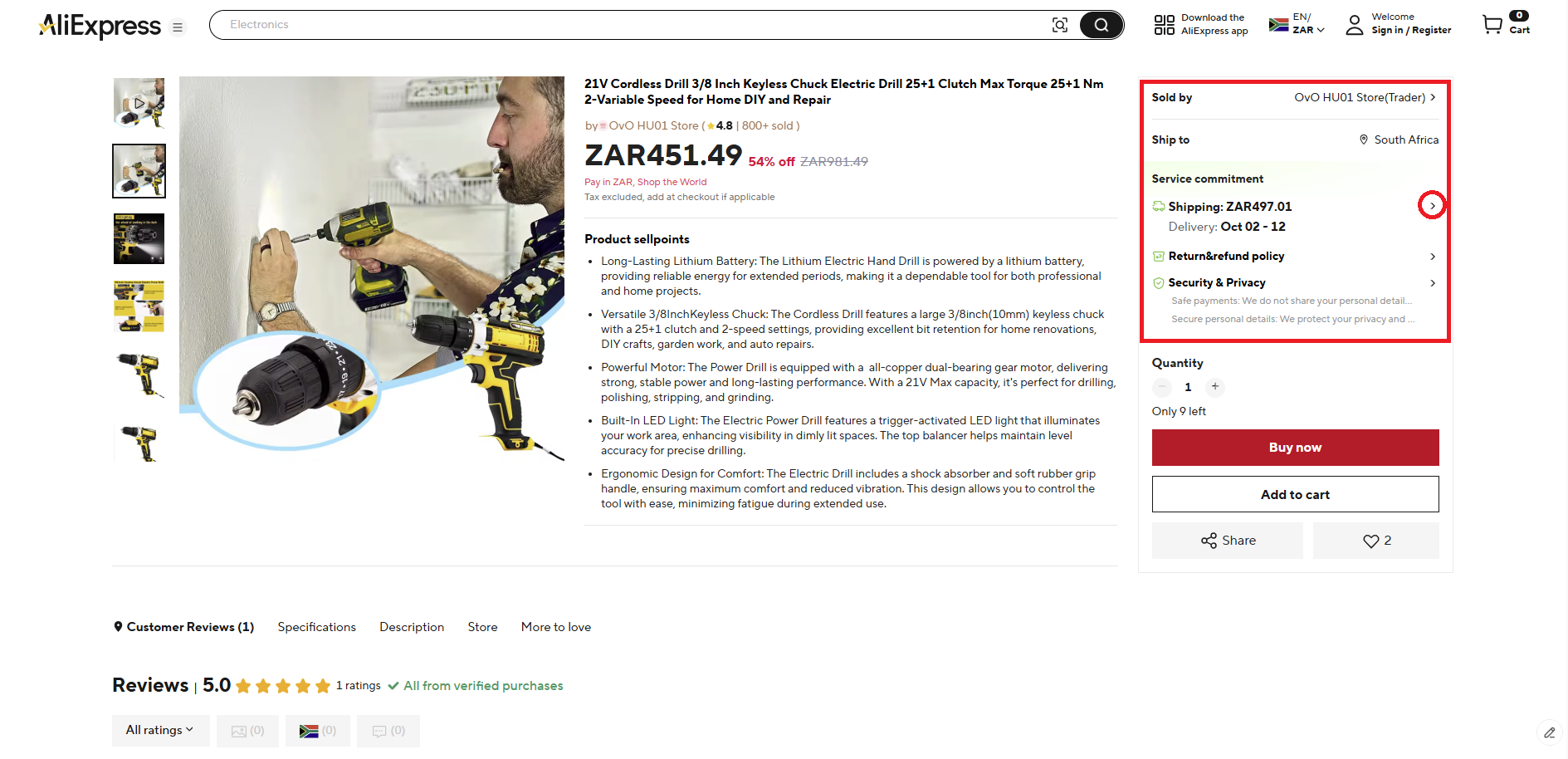
By clicking the small arrow next to the shipping method, you can view alternative options.
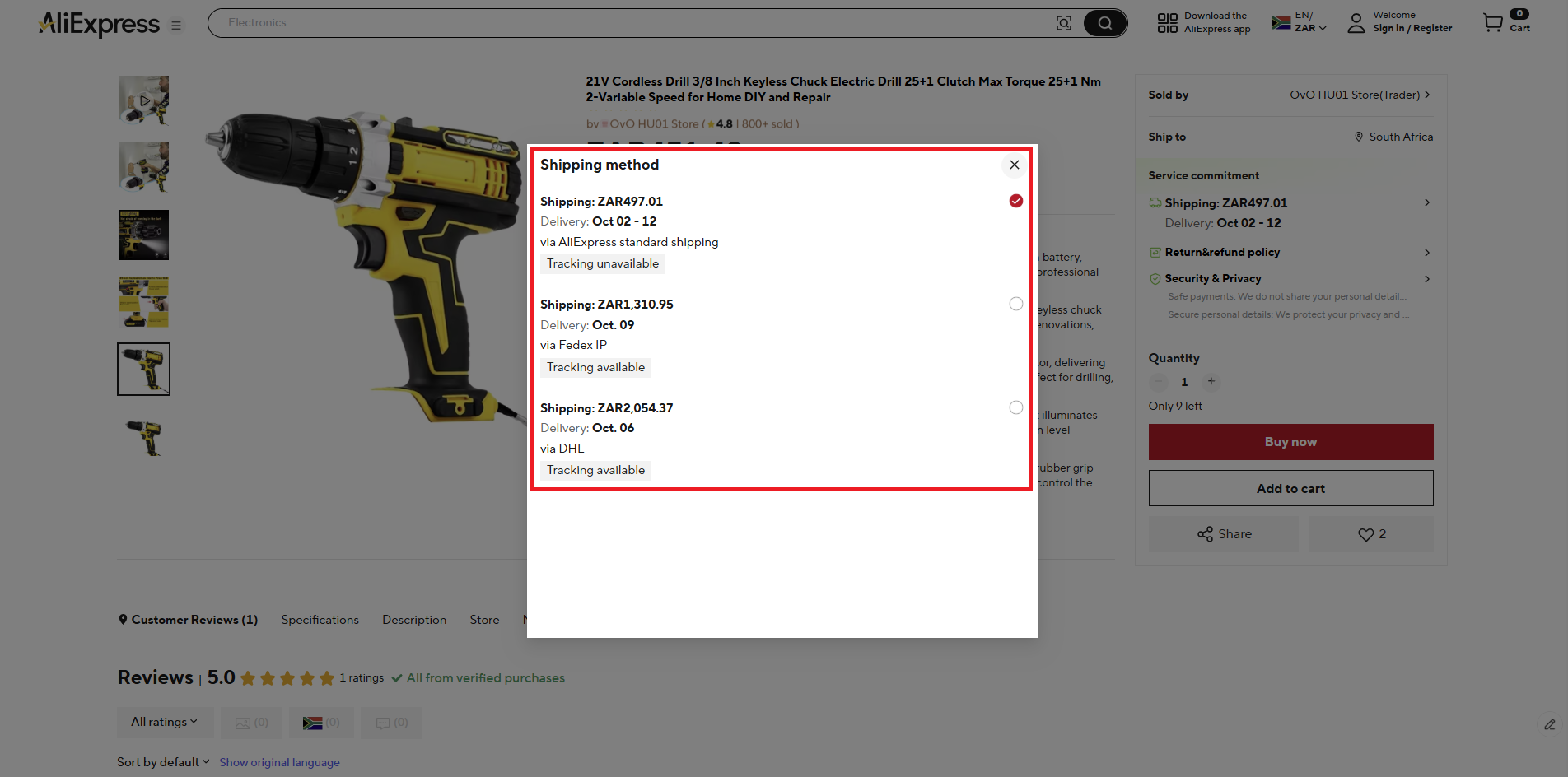
With a little research, you can find better delivery solutions for your customers.
Yes, long delivery isn’t ideal – but sometimes buyers prefer waiting rather than not having access to certain products at all. Many successful entrepreneurs who figured out how does dropshipping work in South Africa highlight that exclusive products with no local alternatives can sell well despite longer wait times.
3. Not all global payment providers work smoothly in South Africa
Payment gateways are another consideration. PayPal, one of the most widely used systems in global eсommerce, technically works in South Africa. However, it comes with limitations: users often report mandatory 30-day withdrawals and the need for a linked credit card.
Fortunately, you are not restricted to PayPal. If your store is built with the AliDropship plugin or WooCommerce, you can integrate various other global and regional payment gateways that work well in South Africa. This flexibility is key to making dropshipping in South Africa accessible to a wide audience.
Overcoming these challenges
So, does dropshipping work in South Africa despite these drawbacks? Absolutely. While there are limitations in shipping and payments, you can work around them with proper planning and by partnering with the best dropshipping suppliers in South Africa.
As an example, one entrepreneur shared on our forum how he decided to do dropshipping in South Africa by targeting local buyers. With persistence, he built a steady income of $80–$150 per month. His story proves that with the right approach, it is possible to grow and profit from a dropshipping business in South Africa.
Dropshipping from South Africa: Pros of overseas markets
If you live in South Africa, it doesn’t mean that you can ONLY sell to local buyers. Thanks to the flexibility of this model, you can easily do dropshipping in South Africa while targeting customers worldwide.
What is dropshipping in South Africa if you go global? Simply put, it’s a business model with no geographic boundaries. Whether you want to sell to Portuguese stay-at-home moms, Japanese students, or Canadian retirees – it’s entirely up to you. This international strategy comes with a number of powerful advantages.
In our opinion, this is the best way to do dropshipping – and here’s why!
1. You can start without any official registration
One of the biggest benefits of dropshipping in South Africa while targeting foreign markets is that you don’t need to formally register a company right away. AliExpress sellers are happy to work with individual entrepreneurs, regardless of location. They don’t require proof of being a company or even ask where you live.
This means you can focus on learning how to start dropshipping in South Africa without dealing with red tape immediately. Many entrepreneurs only register officially when their business grows to a certain scale. For example, one of our clients, Mousslim, decided to register once his monthly profit reached €67,000.
2. No limits on the choice of products
If you decide to target only South African buyers, you are limited to products that can actually be delivered into the country. But when selling to overseas markets, your options expand dramatically.
This is why many store owners who want to start a dropshipping business in South Africa choose international audiences. Instead of worrying about shipping restrictions, they can fill their stores with the products they WANT to sell, not just the products they CAN sell.
3. No geographic boundaries
When you go global, your store doesn’t need to be tied to a specific country. That means you can build unique niche shops that attract fans of certain hobbies or lifestyles across the globe.
Imagine a store for cooking enthusiasts, embroidery fans, or extreme sports lovers. Your target customers could come from anywhere, and you’d still be able to reach them. This is exactly how many people discover the true potential of how does dropshipping work in South Africa – by realizing it works the same way everywhere.
4. Access to richer customer segments
Another big advantage is purchasing power. In some regions, customers have more disposable income and are more likely to spend freely on online shopping.
By targeting wealthier audiences, you can optimize your strategy around impulse purchases and higher-value products. This is often the reason why entrepreneurs exploring how to do dropshipping in South Africa end up selling internationally – because it lets them access markets with higher profit margins.
As you can see, working on a foreign market is just as appealing as focusing on the local market for dropshipping in South Africa. In fact, for many, it’s the perfect strategy: fewer restrictions, bigger opportunities, and access to global audiences.
Dropshipping from South Africa: Cons of foreign markets
At this point, you might be wondering: are there any downsides of running your dropshipping business in South Africa while targeting international markets? The answer is yes – there are several challenges to consider before making the leap.
1. Probable language barrier
What language will you choose for your dropshipping store? How will you communicate with customers? These are vitally important questions.
If you speak one of the globally dominant languages like English, Spanish, Mandarin, Arabic, or Hindustani, you’ll have an easier time running your store. But if you only speak your native language, you might struggle to serve a global audience.
Many entrepreneurs researching how to do dropshipping in South Africa eventually realize that language is one of the key barriers when going international.
2. Unknown customer profile
When targeting buyers outside your home country, you need more than just language knowledge. You must understand customer psychology, cultural preferences, and trusted advertising channels.
That means digging into market research reports and learning about foreign customer behavior. For someone just beginning to start a dropshipping business in South Africa, this can be a time-consuming and sometimes overwhelming task.
3. Unfamiliar legal terms
Legal frameworks also vary from country to country. Some regions restrict certain imports, enforce higher customs duties, or limit product categories.
This is why entrepreneurs who want to start dropshipping in South Africa but sell overseas must study regulations carefully. Tax laws, customs fees, and import restrictions can all affect your pricing and product selection.
Fortunately, in most cases, small packages are not heavily taxed, and banned imports are usually limited to dangerous or restricted goods like drugs, explosives, and weapons – products you wouldn’t be selling anyway.
Overcoming the challenges
So, does dropshipping work in South Africa if you target foreign markets? Absolutely – but you need to prepare for these hurdles. With effort and proper planning, you can still build a profitable store.
For example, one AliDropship forum contributor from South Africa was advised to test the US market. Similarly, our client Pirn from Estonia chose to focus on American customers and now earns $10,000+ monthly. His story proves that whether you want to do dropshipping in South Africa locally or go global, success depends on strategy and persistence.
That’s it! Now you know the pros and cons of both local and foreign approaches to dropshipping in South Africa. We hope this helps you decide which path is right for your own business journey.
Start Dropshipping in South Africa with AliDropship
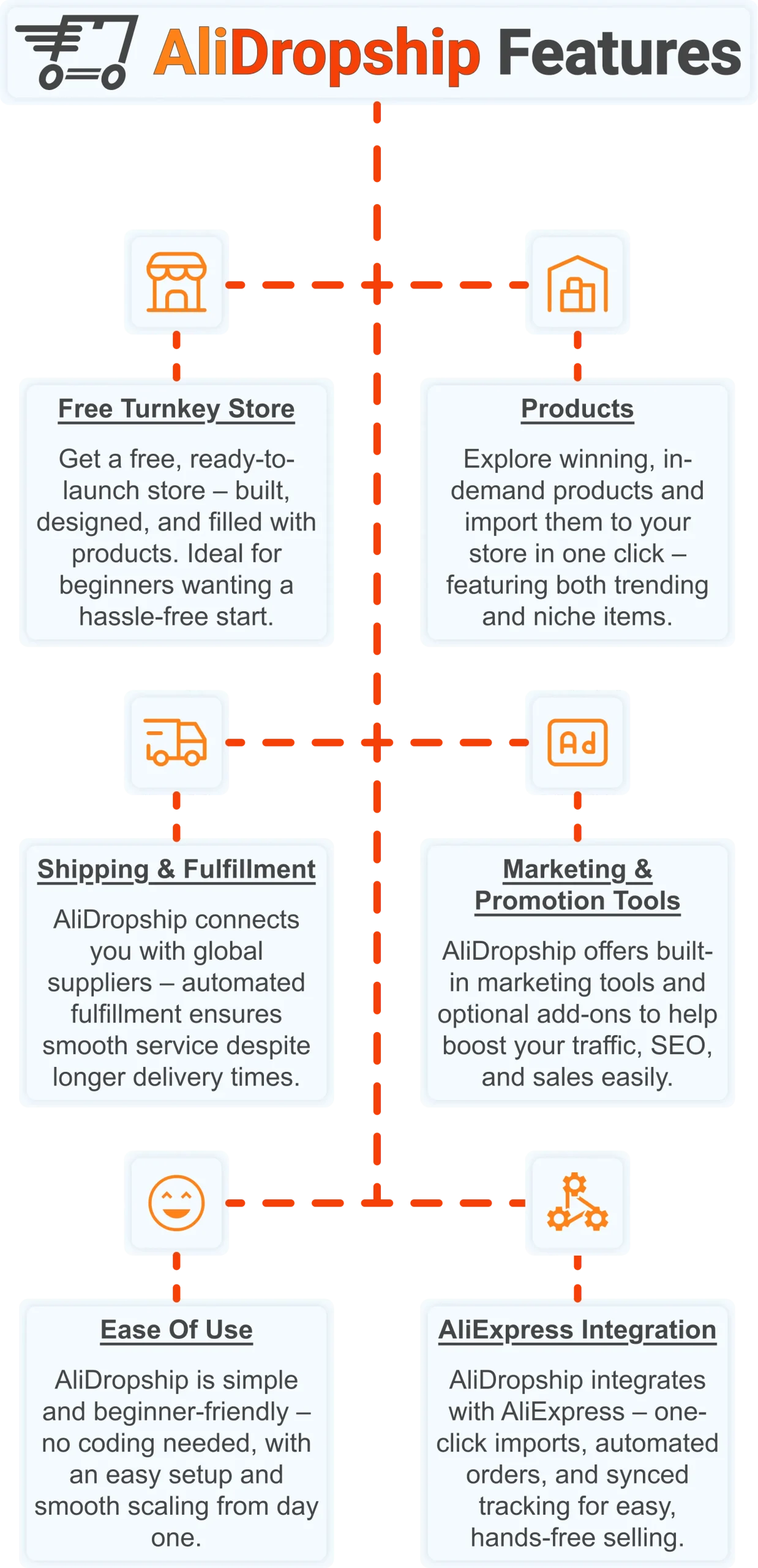
Starting a dropshipping business in South Africa – or anywhere in the world – is much easier when you have the right tools. That’s exactly what the AliDropship offer provides. Instead of spending months figuring out how to build a site, find products, or manage orders, you can launch with a free turnkey store that comes ready to run.
From store setup and product imports to shipping, marketing, and payments, AliDropship covers it all, giving you a hassle-free way to start your dropshipping journey and grow faster.
Free Turnkey Store 🛍️✨
If you are curious about what is dropshipping in South Africa and want a smooth entry, a free turnkey store is the perfect starting point. You get a fully built and designed store, already filled with products, making it ideal for beginners who are learning how to start dropshipping in South Africa.
The store comes optimized to attract customers from day one, saving you time on setup. With a polished, trustworthy look and ready-made design, this foundation allows you to move seamlessly into product selection and focus on growing your dropshipping business in South Africa.
Products 📦🔥
One of the most important steps when learning how to start a dropshipping business in South Africa is choosing the right products. With AliDropship, you can explore winning items and import them in just one click – whether they are trending products or niche-specific items.
Regular updates ensure your store always stays competitive. And by working with the best dropshipping suppliers in South Africa and abroad, you can meet customer demand consistently. Strong products are the core of success in dropshipping in South Africa.
Shipping & Fulfillment 🚚🌍
Many beginners wonder, how does dropshipping work in South Africa when it comes to delivery. With AliDropship, global shipping and automated fulfillment make the process easy. Customers get real-time tracking updates, which helps build trust and confidence in your store.
Whether you choose international providers or trusted suppliers for dropshipping in South Africa, you can be sure orders are processed smoothly. This lets you focus less on logistics and more on driving traffic and sales.
Marketing & Promotion Tools 📣📈
A major part of learning how to do dropshipping in South Africa is mastering marketing. AliDropship equips you with built-in tools for SEO, promotions, and customer retention. From automated email campaigns to social media integration, these features give you the ability to compete with larger stores.
When you combine this with products sourced from dropshipping suppliers in South Africa, you get both credibility and visibility, making it easier to attract buyers and scale.
Ease of Use 🧩👌
If you are still asking, can you do dropshipping in South Africa, the answer is yes – because AliDropship makes it beginner-friendly. No coding is required, and the intuitive dashboard helps you at every stage.
As your dropshipping business in South Africa grows, adding products, features, and campaigns is simple, leaving you free to focus on increasing revenue. The platform is built to support both local sellers and those who want to target international buyers.
AliExpress Integration 🔗🛒
Finally, AliDropship integrates with AliExpress, ensuring automated order processing and real-time syncing. This keeps your inventory and pricing up-to-date and eliminates manual work. Combined with your turnkey setup, smart marketing tools, and reliable dropshipping suppliers in South Africa, this integration ensures long-term growth.
So, if you are wondering, does dropshipping work in South Africa – the answer is absolutely yes. Whether you want to serve local buyers or expand globally, you can confidently start dropshipping in South Africa today with a system that is proven to work.
Conclusion
Dropshipping in South Africa is your gateway to something much bigger. You can start small by serving your local market, where cultural knowledge and easy access to customers give you an edge. But the real game-changer lies in going global. Targeting international buyers gives you access to wealthier markets, unlimited product choices, and the freedom to build niche stores that attract passionate customers worldwide.
The truth is clear: dropshipping in South Africa works – and it works even better when you go beyond borders. This business model is simple, scalable, and open to anyone ready to take action. By choosing the right strategy, doing your research, and working with reliable suppliers, you can turn your idea into a global brand.
Success does not wait. Build your store, test products, and take the leap. Every step brings you closer to financial freedom and a business that is not limited by geography.
The world is your market. The only question is – are you ready to claim it?
🚀 Start your global dropshipping journey today with AliDropship – the ultimate solution to launch, scale, and dominate worldwide.
Starting a business checklist: Your complete dropshipping guide for South Africa
Imagine launching your dropshipping store already knowing exactly what to do first, second, and third… Get the complete, no-guesswork business startup checklist that top earners wish they had on day one.
Phase 1: Planning your dropshipping business
Dropshipping allows you to sell products without holding inventory. When a customer orders, your supplier ships directly to them. You profit from the markup. Low risk, low capital, but requires smart planning.
Know how dropshipping works: you market and sell products, suppliers handle inventory and shipping. Your job is finding customers and managing the customer experience. Profit margins typically range from 15-45%.
Focus on products that solve specific problems or meet passionate interests. Popular niches in SA include fitness equipment, beauty products, home office supplies, and baby products. Avoid oversaturated categories unless you have a unique angle.
Understand that SA consumers prefer Instant EFT and debit cards over credit cards. Mobile shopping is huge (60%+ of traffic). Consider currency fluctuations affecting pricing and whether products are hard to find locally.
Selling locally means faster shipping and easier compliance but smaller market. Selling internationally (US, UK, AU) means larger market but longer shipping times and complex import/export rules. Most SA dropshippers target both.
Outline your target market, product selection, marketing strategy, and financial projections. Include startup costs (typically R5,000-R25,000), expected monthly revenue goals, and 6-month targets.
Before committing, test product demand. Create landing pages for your product ideas and run small Facebook or Google ads (R500-1,000) targeting South African audiences. A 2-3% conversion rate indicates viable demand.
Phase 2: Legal setup (CIPC & SARS)
Getting your legal structure right is non-negotiable. South Africa has specific requirements for online businesses, and compliance protects you from major headaches down the road.
If trading formally, register your business with CIPC. Choose between Sole Proprietorship (cheapest, no liability protection), Private Company (Pty Ltd – recommended, liability protection), or Close Corporation (CC). Online registration costs R125-R500. Visit cipc.co.za.
VAT registration is compulsory if annual turnover exceeds R1 million in any 12-month period. Below R50,000, you cannot register. Between R50,000-R1 million, registration is voluntary but beneficial for reclaiming input VAT. Current VAT rate is 15%. Register within 21 days of exceeding R1 million.
All businesses must register for income tax and file returns annually. Create a SARS eFiling profile at sars.gov.za. You’ll need your ID document and proof of business registration. Keep accurate records of all income and expenses.
Essential for payment gateway integration and separating personal/business finances. You’ll need CIPC registration documents, ID, proof of residence, and initial deposit (typically R100-R1,000). Major banks: Standard Bank, FNB, Nedbank, ABSA, Capitec.
SA’s CPA requires honest product descriptions, clear delivery timelines, visible return/refund policies, and proper customer communication. Your website must display business name, physical address, contact details, and complaint procedures. Non-compliance can result in fines.
Must-have policies: Privacy Policy (POPIA compliance), Terms & Conditions, Shipping Policy, Return/Refund Policy. Use templates but have them reviewed by a South African attorney. Be transparent about international shipping times and customs duties.
Import duties can surprise customers. If using international suppliers, clearly state that customers may be liable for customs charges on their orders. This transparency prevents complaints and chargebacks.
Phase 3: Choosing your market
One of the biggest decisions for SA dropshippers: sell locally, internationally, or both? Each has unique advantages and challenges.
Option A: Selling to South African customers
Option B: Selling to international markets
Many successful SA dropshippers start by testing the US or UK market where English is spoken and the market is huge, while keeping a small selection for local customers. This hedges your bets while you learn.

Phase 4: Setting up your online store
Your platform choice impacts everything from payment processing to supplier integration. Choose wisely for the South African context.
Shopify (R450-R4,500/month): Best for beginners, excellent South African payment gateway integrations (PayFast, Peach Payments), strong app ecosystem. WooCommerce (Free plugin + R100-R300/month hosting): Best for those comfortable with WordPress, integrates with PayFast. Wix (R400-R2,400/month): Budget-friendly, easier than WooCommerce but less powerful than Shopify.
.co.za builds trust with SA customers and costs R50-R250/year through providers like Afrihost, Domains.co.za, or HOSTAFRICA. If targeting international markets, get a .com domain (R150-R250/year).
Use mobile-first design (91% smartphone adoption in SA). Display prices in ZAR prominently. Include Instant EFT as payment option. Show shipping times clearly. Use local imagery and language that resonates. Add trust signals like “South African Business” or CIPC registration number.
Many SA customers have slower internet connections. Compress images, use fast hosting, minimize plugins. Use Google PageSpeed Insights to test. Load times under 3 seconds are critical for conversions.
Required for payment processing and customer trust. Most platforms include free SSL. Verify your site shows “https://” and padlock icon before launching.
Homepage, Product pages (with clear descriptions and shipping info), About Us (build trust by showing you’re SA-based), Contact page, Shipping Policy (mention international shipping times 14-30 days), Return Policy (CPA compliant), Privacy Policy (POPIA compliant), Terms of Service.
Phase 5: Finding reliable suppliers
Your supplier choice directly impacts customer satisfaction. Late deliveries or poor quality will kill your business fast.
Local suppliers offer faster shipping and no import duty issues. Options: Men’s Republic Distributors (electronics), The Dropshipping Store (various categories), local wholesalers willing to dropship. Limited selection but worth checking for your niche.
AliDropship: Automated turnkey dropshipping store, huge catalog of high-quality products, global shipping. AliExpress: Massive selection, low prices, but 14-30+ day shipping to SA. CJ Dropshipping: Better shipping times, quality control. Spocket: US/EU suppliers with faster shipping. Oberlo/AutoDS: Automation tools for Shopify. Always order samples before listing products.
Order multiple samples yourself. Check reviews and ratings (4.5+ stars minimum). Test shipping times to South Africa. Verify they handle returns professionally. Ask about ePacket shipping options for SA. Build relationships with 2-3 backup suppliers per product.
Most international suppliers don’t accept PayFast. You’ll need a credit card or PayPal account for AliExpress orders. Consider virtual cards from services like PayJustNow or getting a business credit card from your SA bank.
Tools like AutoDS, Oberlo, or DSers automatically forward customer orders to suppliers and provide tracking numbers. Essential once you scale beyond 5-10 orders per day. Cost: R150-R1,500/month depending on order volume.
Be honest about shipping times. If using Chinese suppliers, tell customers “14-25 business days” not “3-5 days.” Under-promise and over-deliver. Long shipping times are the #1 complaint in SA dropshipping.
Phase 6: Payment processing & fulfillment
Payment gateways for South African businesses have unique requirements. Choose ones that support local payment methods.
PayFast is SA’s most popular gateway. Accepts credit/debit cards, Instant EFT, Mobicred, SnapScan, Zapper. No monthly fees, only transaction fees (typically 2.9% + R2.00). Integrates with Shopify, WooCommerce, Wix. Approval usually takes 1-3 days. Visit payfast.io.
Peach Payments: Enterprise-grade, multi-currency support. PayGate: Established, higher fees but reliable. Yoco Gateway: Great for card payments. Ozow: Instant EFT specialist. Many SA stores use multiple gateways to offer customers choice.
Mobicred, Payflex, and LayUp are popular in SA. BNPL can increase average order value by 30-50%. Check if your payment gateway supports these or integrate separately.
If VAT registered, your store must calculate and collect 15% VAT. Most platforms have built-in VAT settings. If selling internationally, you typically don’t charge SA VAT but must understand destination country tax rules.
For international suppliers shipping to SA, costs are typically R50-R200 per item. Options: Build into product price and offer “free shipping,” charge flat-rate shipping, or use calculated rates. Test what converts best with your audience.
CPA requires reasonable return rights. With dropshipping, returns are complex. Clearly state: return window (14-30 days), who pays return shipping, refund processing time, non-returnable items. Consider offering store credit instead of refunds to reduce losses.
Start with PayFast – it’s trusted by SA consumers and offers the payment methods they prefer. As you grow and target international customers, add Stripe or PayPal for global transactions.
Phase 7: Marketing & launch
Marketing drives sales. In SA’s competitive ecommerce space, you need smart strategies to stand out.
Track every visitor, their behavior, and conversion paths. Essential for optimizing ads and understanding your audience. Both are free. Configure conversion tracking for purchases.
Use Klaviyo, Mailchimp, or GetResponse. Set up: welcome email series, abandoned cart recovery (crucial for dropshipping), post-purchase follow-ups. Email marketing generates the highest ROI. Offer 10% discount for email signup.
Instagram and Facebook are dominant in SA. TikTok is exploding for younger demographics. Create content showing products in use, customer testimonials, and value-focused posts. Build following before launch. Aim for 500+ followers before spending on ads.
Start with R50-R100/day on Facebook/Instagram ads. Test different audiences, creatives, and messages. Expect 2-3 weeks of learning phase with losses. Don’t scale until you’re profitable. Google Shopping ads work well for product searches. Budget R2,000-R5,000 for initial testing.
SA has many micro-influencers (5K-50K followers) who charge R500-R5,000 per post. Often more cost-effective than ads initially. Choose influencers whose audience matches your target market. Always negotiate affiliate/commission deals.
Use keywords like “buy [product] South Africa” or “best [product] in SA.” Create blog content answering customer questions. Build backlinks from SA websites. Register business on Google My Business if you have a physical address.
SA customers expect responsive communication. Use WhatsApp Business (huge in SA), Facebook Messenger, and email. Respond within 4 hours during business hours. Have templates ready for common questions about shipping, returns, and order tracking.
• Pet Supplies: Grooming tools, beds, and unique toys. • Health and Beauty: Skincare devices, makeup organizers, and massage tools. • Home and Kitchen: Smart gadgets, organization solutions, and unique utensils. • Phone and Tech Accessories: Wireless chargers, phone holders, and portable lighting. • Fitness and Outdoor Gear: Resistance bands, yoga mats, and compact equipment. Success lies in researching current trends within these popular categories to find in-demand products.How to start dropshipping in South Africa?
Who is the most successful dropshipper in South Africa?
What is the most profitable product to sell in South Africa?
How to start dropshipping in SA with no money?
How do you register your dropshipping business in South Africa?
Does dropshipping work in South Africa?
Which product is most sold in dropshipping?
How to start dropshipping for beginners?


Recommended for You