AI Dropshipping In Paraguay: How To Start And Get Paid

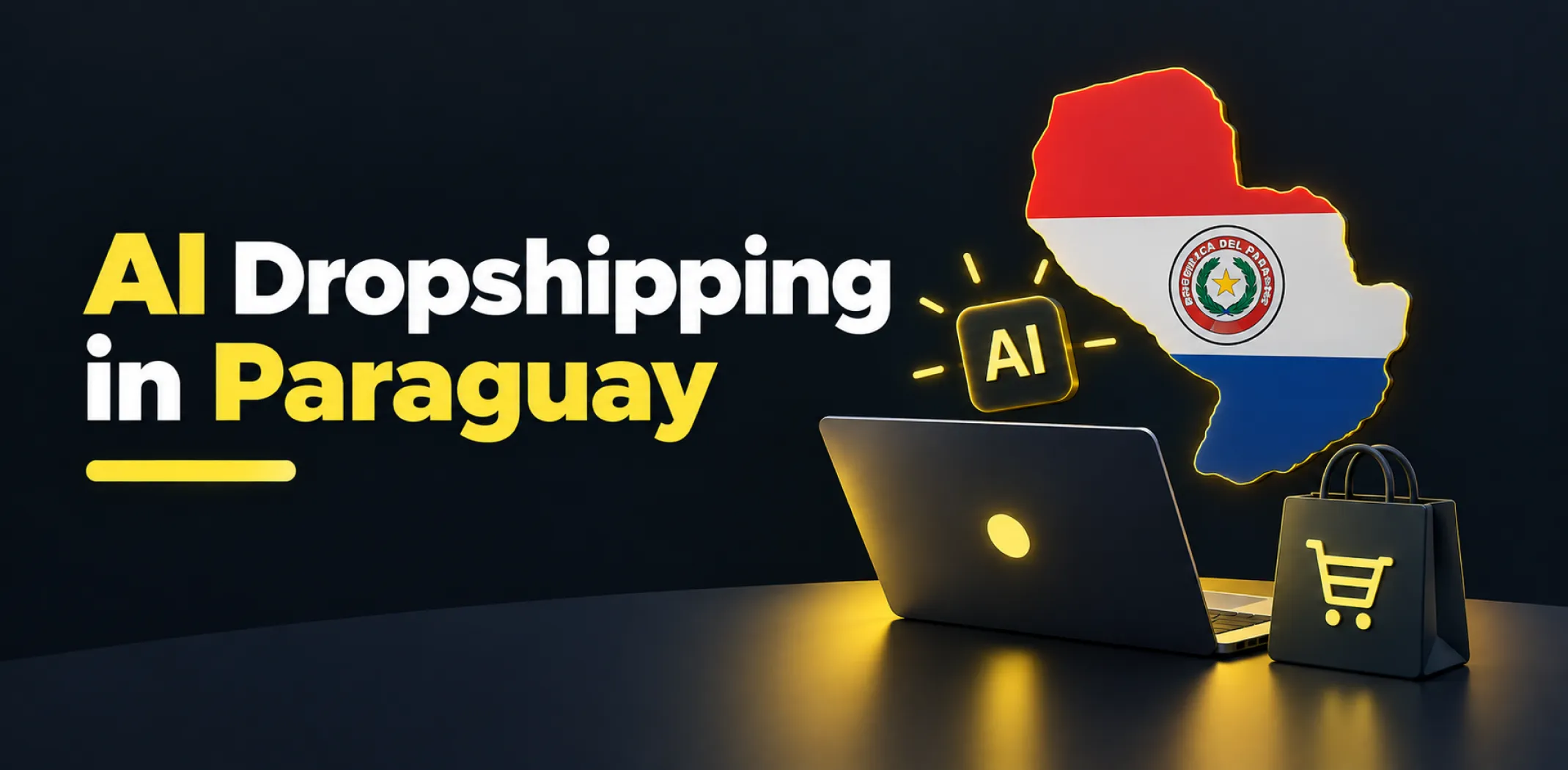
Yes, you can run an AI-powered dropshipping business from Paraguay, though the payout route needed real confirmation before this page could be written. PayPal lets Paraguayan users sign up, send, and receive money, but it does not support withdrawing directly to a Paraguayan bank account, so Payoneer is the provider that actually gets your earnings into local hands.
Starting the AI Dropshipping Fast-Track Bundle costs approximately 232,700 Paraguayan guaraní a month (about 39 US dollars) after a 14-day free trial that already includes a 40-dollar ad credit.
Paraguay also runs one of the more distinctive tax systems in this series: it only taxes income sourced within the country, though whether that reaches an actively run online business is a genuine gray area worth confirming with a local accountant rather than assuming. Last verified: September 16, 2026.
This guide is built specifically for someone selling from Paraguay, not a generic dropshipping checklist. Every number below assumes the current guaraní exchange rate, Payoneer as the payout route, and the digital-products side of AliDropship rather than physical shipping. If you already know the basics of AI dropshipping and just want the Paraguay-specific numbers, jump straight to how you get paid.
Who your customers will be
Selling digital products means your customers are wherever your ads run – typically the United States, United Kingdom, Canada, and Australia, not necessarily Paraguay itself. Paraguay’s own market size, payment habits, and ecommerce maturity do not limit this business.
For a seller based in Paraguay, that matters in a practical way: Paraguay sits four hours behind UTC for most of the year, shifting to three hours behind during its own daylight saving period from October to March – the opposite calendar to countries that observe daylight saving in the Northern Hemisphere summer, so it is worth checking which offset applies before you schedule ad launches around a US or UK audience.
Spanish and Guaraní are Paraguay’s official languages, but AliDropship’s platform, product catalog, and the major ad platforms all run in English, and your customers abroad expect English ad copy regardless of what you speak day to day. The main thing to plan for financially is the guaraní itself, which floats freely, so the conversion rate is worth checking fresh rather than treating it as fixed.
Can you run AI dropshipping from Paraguay
Before you spend anything, run through the six things that actually determine whether this business works from Paraguay. The payout row is the one that needed real digging – confirm the specifics below before you commit a full month of ad spend.
How you get paid in Paraguay
This is the one piece of this page that needed direct confirmation rather than assumption. PayPal lets you open an account in Paraguay and send or receive money, but it does not support withdrawing directly to a Paraguayan bank account – you would need an international account or a linked card outside Paraguay to actually access the funds.
Payoneer closes that gap: it supports bank withdrawal to Paraguay directly, which makes it the payout provider that actually works for a seller based here.
Money typically reaches your Payoneer balance within minutes to a day of a sale, and a withdrawal to a Paraguayan bank account usually clears within one to three business days. Between Payoneer’s card-payment fee and its currency conversion spread, expect to lose roughly 2 to 4 percent of each payout.
The guaraní floats freely against the dollar rather than being pegged or managed. As of September 2026, 1 US dollar converts to approximately 5,966 guaraní, and that figure has moved by single-digit percentages over the past year, so it is worth checking fresh each time you plan around a specific payout.
On a 39-dollar digital product sale at a 60 percent margin, a seller in Paraguay receives approximately 135,400 guaraní (about 22.70 dollars) after Payoneer’s card and conversion fees. That is the number to build your expectations around, not the 60 percent margin figure on its own.
Paraguay does not cap how much legitimate income you can move through Payoneer to a local bank account. You do not need a business bank account to receive payouts, though opening one becomes worth it once you register formally, since a dedicated account keeps your tax filing simpler once you have a RUC.
How AI dropshipping works
AI dropshipping breaks into three layers, and each one does something specific for a seller based in Paraguay.
AI configures the store: pick a niche, and the platform builds a live storefront around it, no coding and no design decisions to agonize over. AI stocks it with digital products: your store launches with more than 60 tested digital products already loaded from AliDropship’s own catalog, so there is no product research phase before you can start selling.
AI runs the ads: campaigns across Google, Instagram, TikTok, and Amazon are written, launched, and optimized by AI, which matters in Paraguay specifically because all three major ad platforms are fundable here with a standard international card – there is no local ad-account restriction to work around.
Because the products are digital, there is no shipping from Paraguay, no customs, no stock, and no failed deliveries. Orders are fulfilled the moment they are placed, wherever the customer is. Read more about how the model works on the AI dropshipping hub.
What it costs to start in Paraguay
Here is what a realistic first month looks like in both currencies, using the September 2026 rate of about 5,966 guaraní per dollar. Unlike Nigeria or Ghana, opening a RUC (Paraguay’s taxpayer registration) as an individual generally carries no significant government fee, so month one is close to the subscription cost alone.
Tax and legal requirements in Paraguay
Paraguay runs a territorial tax system: only income sourced within Paraguay falls under its personal income tax (IRP), while genuinely foreign-sourced income sits outside it entirely.
This is a real feature of Paraguay’s tax code, not a loophole, but it comes with a catch worth taking seriously: whether income from a business you actively run day to day from inside Paraguay counts as foreign-sourced or Paraguay-sourced is a nuanced legal question, not an automatic exemption, and it depends on how your activity is structured rather than simply where your customers happen to be.
The practical path most small sellers use sidesteps that ambiguity: register a RUC (Registro Único de Contribuyente) with Paraguay’s tax authority and opt into the IRE SIMPLE regime, a flat 3 percent on gross revenue for businesses and sole proprietors earning under roughly 270,000 US dollars a year, with no net-profit calculation required.
Paraguay’s standard VAT (IVA) is 10 percent, but exported digital services are generally exempt from VAT invoicing, which covers a seller whose customers are outside Paraguay.
Business registration is not required to make your first sale, but a RUC becomes necessary once you are earning real income and need to file under IRE SIMPLE or IRP. Given the genuine nuance in how Paraguay’s territorial system treats an actively run online business, this is one area worth a short conversation with a local accountant (contador) before you scale, rather than assuming either the best-case or worst-case reading applies to you.
Here is the rule sellers in Paraguay most often miss on top of the local rules: if your ads reach customers in the European Union or the United Kingdom, VAT applies from your very first sale to a consumer there, regardless of how Paraguay treats the income.
Non-EU sellers register once through the Non-Union OSS scheme in any single EU member state and file one quarterly return covering all 27 countries; UK sales need a separate UK VAT registration.
What AI does and does not solve for Paraguay sellers
AI handles the parts that used to take the most time: it configures your store layout, selects and loads the digital products, writes ad copy and creative, optimizes campaigns as they run, writes product descriptions, and sends follow-up emails. That covers store setup, product selection, ads, and content end to end.
What it does not handle, for a seller in Paraguay specifically: setting up Payoneer rather than relying on PayPal alone is a one-time step you have to complete yourself, since AI cannot open a payout account on your behalf. Payoneer’s card and conversion fees still apply to every sale, and no automation removes that percentage.
Working out whether your income counts as Paraguay-sourced or foreign-sourced, and registering a RUC once you are earning real money, is also on you – this is exactly the kind of judgment call a local accountant is worth paying for. None of these are logistics problems, since there is no physical inventory here – they are payment and paperwork problems, and they are the honest reason this is not a fully hands-off business.
Getting started from Paraguay
Step 1: Open a Payoneer account. Do this before your trial so you have a working payout route confirmed, since PayPal alone will not let you withdraw to a Paraguayan bank account.
Step 2: Start the 14-day free trial. Sign up for the AI Dropshipping Fast-Track Bundle, connect your Payoneer account for payouts, and let AI configure your store around a niche.
Step 3: Fund your ad accounts and register once you are earning. Use an international card to launch your first AI-managed campaign with the 40-dollar credit, then open a RUC and talk to a local accountant about IRE SIMPLE once real income is coming in.
That is the complete picture for a seller based in Paraguay: Payoneer for payouts since PayPal cannot withdraw locally, a guaraní that floats freely, and a territorial tax system whose exact reach for an actively run online business is worth confirming rather than assuming. Everything above assumes you are starting from zero – no existing store, no products sourced, nothing built yet.
If you are also weighing a market where Payoneer is the practical payout route for a different reason, AI dropshipping in Nigeria and AI dropshipping in Ghana cover markets where PayPal is not available at all.
Can I do AI dropshipping from Paraguay?
How do I get paid as a dropshipper in Paraguay?
Do I need to register a business in Paraguay to sell digital products?
Do I pay tax on digital product sales in Paraguay?
Can I sell to customers outside Paraguay?