AI Dropshipping In Germany: How To Start And Get Paid


Yes – you can run an AI dropshipping business from Germany, and the payout side is as clean as it gets: PayPal, Stripe, and Wise all deposit directly into a German bank account in euros. The one step other markets in this series don’t ask for up front is Gewerbeanmeldung – a trade registration required before your first sale, though it costs only about €15 to €65 and can be done the same day.
Startup cost is close to zero beyond that: the platform is free for 14 days, then runs about €34 a month, with no VAT to charge until your revenue passes Germany’s small-business threshold.
Who your customers will be
Selling digital products means your customers are wherever your ads run – typically the US, UK, Canada, and Australia, not necessarily Germany itself. Germany’s own market size, payment habits, and ecommerce maturity do not limit this business.
For a Germany-based seller, this is closer to the UK’s position than to Australia’s or Malaysia’s: the time zone gap to the US is real but modest, and Germany’s own market sits among the four core countries these ads are built to reach, alongside the US, UK, Canada, and Australia.
You already have access to English-language ad tools and a euro cost base that keeps your expenses stable, while your revenue in US dollars converts at a rate that moves independently of the euro.
Can you run AI dropshipping from Germany?
Run every requirement through the checklist below before committing any time or ad budget. Germany clears the five operational gates without a single caveat. Business registration is the exception – it is required up front here, not after a revenue threshold, though it costs very little and takes a day.
How you get paid in Germany
Three payout providers work cleanly from Germany: PayPal, Stripe, and Wise. All three connect directly to a German bank account and settle in euros, typically within one to three business days of a payout request, with no per-transfer fee from the provider itself beyond the currency conversion built into the exchange rate.
The only real cost is currency conversion, since AliDropship’s subscription and product sales settle in US dollars while a German bank account holds euros. PayPal and similar processors apply a conversion spread of roughly 2 to 3 percent above the wholesale exchange rate when they auto-convert a USD payout into EUR.
Germany has no capital controls: money moves in and out freely, with no withdrawal limit tied to a card or bank account.
On a $39 digital product sale at a 60% margin, a seller in Germany receives approximately €20 after payout and conversion fees, based on a rate of roughly 1 USD to 0.88 EUR (last checked September 22, 2026).
No separate business bank account is strictly required to receive PayPal or Wise payouts, though most banks and the tax office will expect one once you have completed your trade registration.
How AI dropshipping works
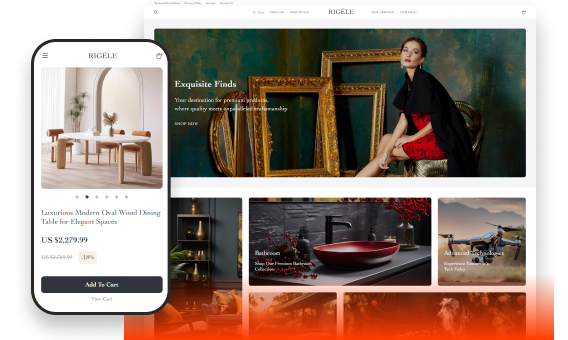
AI dropshipping through AliDropship runs on three layers working together. AI configures the store – layout, pages, and checkout are set up automatically, so there is no template shopping or plugin troubleshooting on your end. AI stocks it with digital products – 60+ tested items are pre-loaded across several niches at launch, all fitting the same US, UK, Canadian, and Australian audiences your ads will actually reach.
AI runs the ads – campaigns launch and optimize across Google, Instagram, TikTok, and Amazon, and since Meta, TikTok, and Google Ads all bill German cards without restriction, nothing about running this from Germany slows that process down.
Because the products are digital, there is no shipping from Germany, no customs, no stock, and no failed deliveries. Orders are fulfilled the moment they are placed, wherever the customer is. See the full breakdown of how AI dropshipping works for more on each layer.
What it costs to start in Germany
Every cost below is stated in US dollars first, since that is how AliDropship bills, with the euro equivalent alongside it at today’s rate of roughly 1 USD to 0.88 EUR (last checked September 22, 2026). German-issued cards handle the recurring USD billing without any special setup.
Tax and legal requirements in Germany
This is general information, not tax advice, and German tax rules can change – confirm anything time-sensitive with your local Finanzamt or a Steuerberater before you file.
Germany requires Gewerbeanmeldung – trade registration at your local Gewerbeamt – before your first sale, since reselling digital products is classed as a Gewerbe rather than a Freiberufler activity. It costs roughly €15 to €65 depending on the city and is usually processed the same day, after which the Finanzamt sends you a tax questionnaire to complete online through ELSTER.
Whether you charge VAT on your sales at all depends on the Kleinunternehmer (small-business) rule under §19 UStG: if your revenue stayed under €25,000 last year and is forecast to stay under €100,000 this year, you do not charge VAT on invoices, though you also cannot reclaim VAT on expenses. Cross either figure and standard German VAT, currently 19 percent, applies going forward.
Selling to customers elsewhere in the EU works differently here than it does for sellers based outside the EU covered elsewhere in this series. Instead of a nil threshold, an EU-wide combined threshold of €10,000 a year applies to your cross-border sales to consumers in every other EU country added together.
Below that figure, you simply charge German VAT on those sales as usual. Cross it, and the destination country’s VAT rate applies instead, reported centrally through Germany’s One-Stop-Shop (OSS) return rather than by registering separately in each country.
UK sales are the exception, not the EU rule: since Brexit, the UK is a non-EU country for VAT purposes, so a German seller with even one UK customer faces the same nil-threshold obligation that a non-EU seller does, and would register with HMRC to charge UK VAT at its standard 20 percent rate from that first sale.
What AI does and does not solve for Germany sellers
AI handles the parts of this business that used to take the most time: store setup, product selection from the catalog, ad copy and creative, campaign optimization, product descriptions, and follow-up email.
It does not handle three things that stay on you as a Germany-based seller. It will not complete your Gewerbeanmeldung before you start – that has to happen first, and only you can file it.
It will not track whether you are approaching the €25,000/€100,000 Kleinunternehmer limits or the €10,000 EU-wide OSS threshold, or handle either registration if you cross them. And it will not register you for UK VAT if a UK customer buys something – that filing is yours to complete.
Getting started from Germany
1. Complete your Gewerbeanmeldung first. File the GewA 1 form at your local Gewerbeamt, in person or online – it usually costs €15 to €65 and is processed the same day.
2. Claim your 14-day free trial. Your store, catalog, and checkout are configured automatically once your trade registration is in hand.
3. Turn on ads and connect your payout method. Link PayPal, Stripe, or Wise so sales settle straight into your German bank account, and let the $40 ad credit cover your first campaigns across Meta, TikTok, or Google.
Getting started from Germany puts one quick, cheap step ahead of everything else – Gewerbeanmeldung – but nothing past that point is genuinely harder than the payouts-and-ads gate every country in this series has to clear.
The parts worth real attention are the ones covered above: the trade registration itself, the Kleinunternehmer thresholds that decide whether you charge VAT at all, the €10,000 EU-wide OSS threshold that works differently here than it does for non-EU sellers, and the nil-threshold VAT obligation that still applies the moment a UK customer buys something.
None of those are blockers. They are just the things worth knowing before you turn ads on.
Can I do AI dropshipping from Germany?
How do I get paid as a dropshipper in Germany?
Do I need to register a business in Germany to sell digital products?
Do I pay tax on digital product sales in Germany?
Can I sell to customers outside Germany?


Recommended for You