SEO In The Age Of AI: How To Make Your Offiro Store Visible, Trusted And Future-Proof

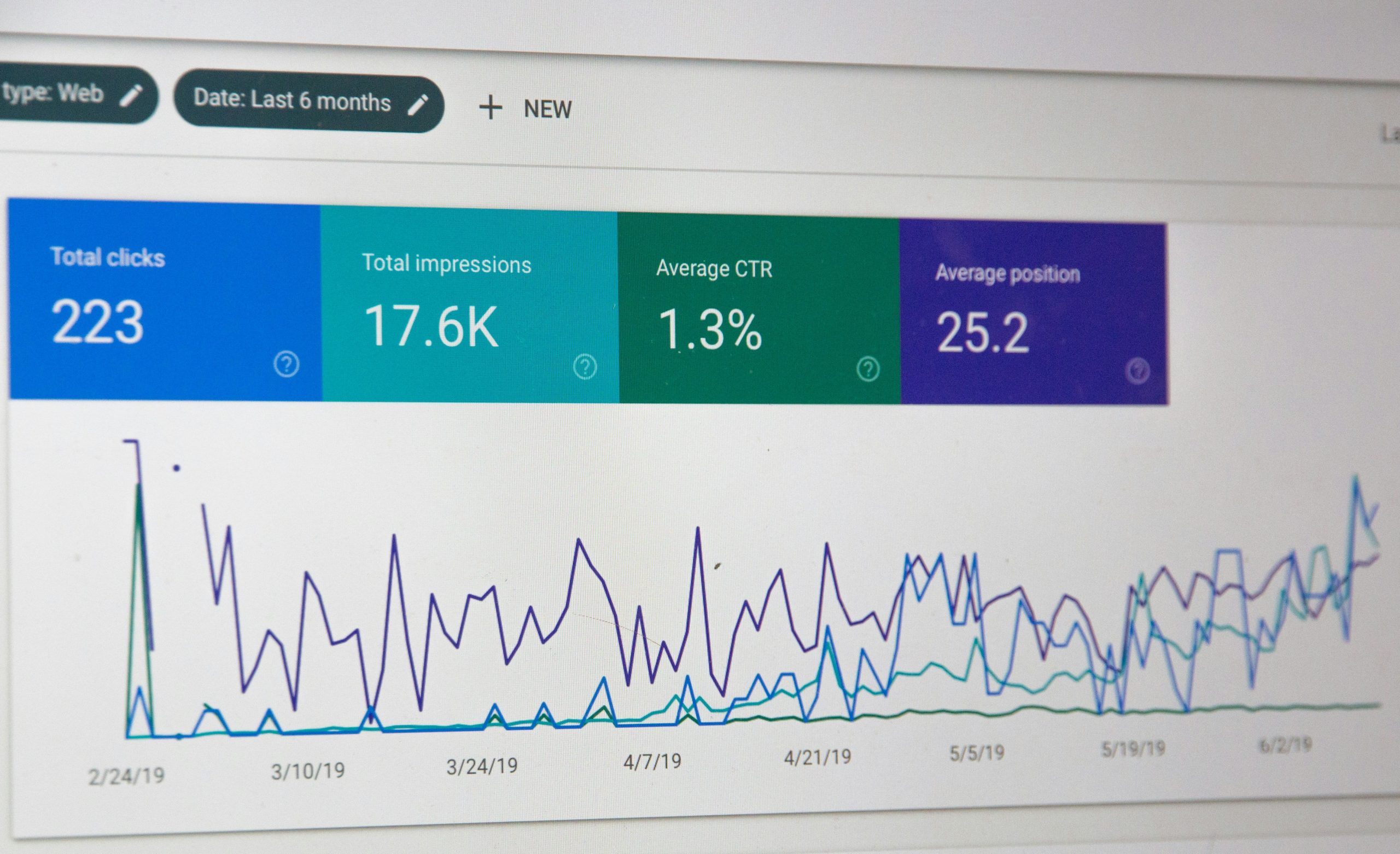
Imagine today’s internet as a colossal shopping mall: endless corridors, countless storefronts, each competing for attention. Some stand right at the entrance, drawing in crowds. Others may have an incredible brand, irresistible discounts, even game-changing product ideas, but they’re tucked away somewhere at the back of the top floor. Customers rarely get that far because they tend to buy everything they need (and quite a bit they don’t) before they even reach it.
That’s the challenge most ecommerce entrepreneurs face. You may have a well-designed store, competitive pricing, solid logistics, and a strong marketing concept, yet still struggle to get seen. To change that, you need to position your online store where people naturally notice it: at the entrance, right where customers start their shopping journey.
That’s exactly what SEO (Search Engine Optimization) does. When done properly, it helps your store move to the “ground floor” of the digital mall: closer to search results, closer to buyers, and ultimately, closer to profit. But, like getting premium retail space, it doesn’t happen automatically. It takes knowledge, consistency, and adaptability, especially now, as artificial intelligence is transforming how search works.
In this article, we’ll dive into SEO specifically for ecommerce stores powered by Offiro. We’ll explain what SEO really is, how it differs from other marketing tools, what makes it effective, and how modern AI technologies are rewriting the playbook. If you’re looking to build visibility that lasts, this guide is your starting point.
SEO for ecommerce in simple terms
We’ve already mentioned that SEO stands for Search Engine Optimization, but what does this actually mean in practice?
At its core, SEO is a strategy: a set of actions aimed at placing your store as high as possible in search results. Whether someone searches for “eco-friendly scarf» or “gift ideas for granny”, your objective is to make sure your store appears among the first links they see. The higher your ranking, the more organic visitors you attract and the more potential customers you convert. This applies to all major search engines: Google, Bing, Yandex and others. While their algorithms differ, the core principles remain largely consistent.
Here’s the good news: modern SEO is built around the exact same things your customers expect from an ecommerce website.
Search engines reward websites that are:
- Fast — ideally loading within a couple of seconds
- Easy to navigate — clear structure, logical menu, no confusion
- Mobile-friendly — responsive across all devices
- Valuable — offering informative content and product pages that help buyers make confident decisions
- Relevant — matching user search intent with accurate product listings and well-structured content
- Trustworthy — secure, transparent, and demonstrating reliability through clear policies, reviews, and overall credibility
In other words, when you optimize your store for search engines, you’re also making it more convenient, useful, and reliable for real customers. Effective SEO equals better user experience and that’s what leads both to higher rankings and sustainable growth for your ecommerce website.
How SEO differs from other marketing tools
Although SEO often involves highly technical work (such as optimizing loading speeds, rewriting product descriptions, fixing redirects, or removing duplicate pages) it is still very much a part of digital marketing. That’s because it delivers the same core outcomes as other marketing channels.
When implemented correctly, SEO helps your ecommerce website:
- Bring in targeted traffic: people find your store because they’ve been actively searching for exactly what you offer
- Increase sales: organic visitors usually come with clear buying intent, which often results in higher conversion rates
- Build brand recognition: seeing your website rank among the top results builds trust, just like noticing one store crowded with customers while another one stays empty
- Improve visibility: when your store appears ahead of competitors, the customer’s decision becomes significantly easier
However, SEO stands apart from other tools in a key way: it doesn’t engage with customers directly.
Many SEO improvements are invisible from the outside. You may spend hours or even days fixing technical issues or reorganizing page structure, yet your storefront looks exactly the same to visitors. Unlike social media or paid ads, SEO works silently behind the scenes.
The trade-off is worth it. SEO takes time to deliver results, but once it starts working, it brings traffic to your ecommerce website organically, meaning you don’t pay per visitor. And unlike ads, which disappear as soon as your budget runs out, or social media content, which loses effect if you stop posting for a week, SEO continues to work with minimal ongoing effort.
Can your ecommerce website function without SEO? Technically speaking, yes. But going back to our earlier metaphor, it would be like opening a shop in a back alley without signage. People may stumble upon it by accident or only visit if you personally guide them there. In today’s competitive market, that usually translates into lost profit and unnecessary advantage for your competitors.
What makes SEO work: the fundamentals
To understand how SEO impacts your ecommerce website, it helps to first understand how search engines themselves operate. You don’t need to dive into every technical detail; if you do, you might well make a career out of it and forget about running your store altogether. But here’s what matters to you as an entrepreneur.
Search engines use special programs called crawlers (like something straight out of a sci-fi movie) that continuously scan the internet. They visit every website they can access, check the pages, collect data, and store it in a massive database called the search index.
When someone enters a query, the search engine analyzes what information would answer that question best. It goes through its index and displays results starting from the page that seems most relevant according to its internal logic. This process is known as ranking.
Search engines use thousands of factors to determine which page should appear first, which tenth, and which hundredth. And the exact formula behind these rankings is not publicly known: only the engineers at Google (or other search engine companies) fully understand it.
However, years of experience in SEO have helped identify some of the key criteria:
- Relevance — How well the page’s content matches the user’s request and their intent
- Content quality — Is the information unique, complete, accurate, and helpful?
- Technical performance — How fast does the page load? Does it display correctly? Is it mobile-friendly?
- Authority — The number and quality of websites linking to your page. Much like academic citations, the more credible sources that “recommend” your page, the more trustworthy it appears.
- Behavioral signals — How long users stay on your page, whether they explore other pages, or return later. If many users leave within seconds (“bounce”), search engines assume the page didn’t meet their expectations.
This is where SEO comes into play. Its role is to help your store align with these criteria as closely as possible.
And here’s something important to remember: these rules are constantly evolving. Tactics that worked five years ago may be ineffective today, and in some cases, they can even damage your rankings if they’re considered outdated or manipulative.
That’s why SEO is less of a one-time effort and more of an adaptive strategy that evolves together with technology, user behavior, and market trends.
The three pillars of SEO for ecommerce websites
SEO isn’t a single tool or action, it’s an ongoing process built from dozens of improvements, tweaks and strategic decisions. To better understand how it works, we can divide it into three key areas. Each plays a crucial role in ranking success and all three must work in harmony.
1. On-page (internal) SEO
This area covers everything within your store: its structure, content, and how it communicates with both users and search engines. It is the core of your SEO strategy, and without it, other efforts lose effectiveness.
Key elements include:
- Creating a semantic core
A collection of search queries users type when looking for your products.
Practical effect: You understand which pages to create and what content to provide. - Store structure optimization
Logical page hierarchy, intuitive navigation, coherent URLs. Each page should answer a specific query.
Practical effect: Users easily find what they need, while search engines effectively scan and index your site. - Content creation
Content must be unique, valuable and fully cover the topic. The best content answers all potential questions.
Practical effect: Users stay longer, interact more, and search engines see your site as credible. - Meta tag optimization (Title & Description)
Clear, informative, and appealing snippets shown in search results.
Practical effect: Higher CTR means users choose your result more often. - Internal linking
Connects pages logically, directing users (and crawlers) through your content.
Practical effect: Smooth navigation and transfer of authority from popular pages to strategic ones (e.g., from blog to product pages). - Image optimization
Compressing files and using alt tags.
Practical effect: Faster page loading and additional traffic from image search.
2. Off-page (external) SEO
This direction includes all actions taken outside your store that influence its reputation and authority. Search engines view external validation as a strong indicator of trust.
Core activities:
- Backlink acquisition
Getting mentioned on reputable websites. This could be through app listings, guest posts or industry platforms.
Practical effect: Higher rankings in competitive queries where content alone isn’t enough. - Crowd marketing
Mentions on forums, review websites and comments as long as they are natural and helpful.
Practical effect: Extra traffic and stronger popularity signals to search engines. - Review management
Encouraging customers to share their feedback.
Practical effect: Boosts credibility both for users and algorithms. - Brand mentions & PR
Coverage on social media, YouTube or industry publications.
Practical effect: Improves brand recognition and assists search engines in detecting brand relevance.
3. Technical SEO
It may not be visually noticeable, but it’s critical. Technical optimization ensures that crawlers can access, understand and properly evaluate your site.
Key components:
- Improving loading speed
Using caching, CDN, image compression, etc. Ideally under 3 seconds.
Practical effect: Better rankings and lower bounce rate. - Mobile optimization
Since Google switched to Mobile-First indexing in 2021, this is non-negotiable.
Practical effect: Higher visibility and sustained performance on mobile devices. - Fixing technical errors
Removing duplicates, repairing broken links, cleaning up unnecessary scripts.
Practical effect: More efficient crawling and cleaner index. - robots.txt configuration
Tells search engines which pages to scan or ignore.
Practical effect: Prevents indexing of non-essential pages. - sitemap.xml creation
A structured map of every page in your store.
Practical effect: Helps crawlers index your site faster and more accurately. - SSL certificate setup (HTTPS)
Required by search engines and essential for secure browsing.
Practical effect: Increased user trust and compliance with search ranking factors.
All three areas must work together
Think of SEO as building a house:
- On-page SEO is the foundation
- Off-page SEO is the reputation of the people living in it
- Technical SEO is the plumbing, wiring and stability
If any one of them is missing, the structure becomes weak.
Only by combining all three can your store consistently rank high and compete effectively.
Offiro-powered ecommerce websites already come built with SEO fundamentals in mind. The technical optimization is fully integrated from the start (including fast loading speeds, mobile-first design and SSL certificates), and the structure of product pages is created according to proven SEO principles. This gives entrepreneurs a significant head start: instead of fixing basic issues, you can immediately move on to expanding your content, building SEO clusters, and strengthening your off-page strategy.
How AI Is transforming SEO right now
Starting in 2025, major search engines began integrating AI Overview (or similar AI-generated responses) directly into search results. This change fundamentally reshaped the SEO landscape for ecommerce websites. Suddenly, the traditional goal of “getting into the Top 10” was no longer enough and even paid ads began to lose effectiveness.
Why? Because AI now provides users with an answer before they even decide whether to visit any website.
Instead of simply competing for top positions, websites now compete to become the primary source AI uses to generate its response. This shift redefined what visibility means in search.
What changed with AI-powered search
- CTR dropped significantly
Users no longer need to click through to your store: they often get all essential information directly in the AI response. - “Zero-click” results became the new prize
If the AI uses your content as its source, your name (or brand) becomes visible without any user interaction, but without adequate optimization, even high-ranking pages may never get clicked. - Search queries evolved further
The rise of AI encouraged users to ask precise, conversational, and highly specific questions, even more detailed than when voice search was introduced.
Two outcomes for entrepreneurs
| 🔴 New Risk | 🟢 New Opportunity |
| Your store may lose traffic because users get what they need before ever reaching you. Lower-ranked pages (below positions 3–5) became nearly invisible. | If your content is selected as a trusted data source for AI responses, you gain instant visibility and high credibility even without a click. |
In essence, AI has raised the bar. SEO is less about appearing in results and more about being trusted enough to power AI responses. And while that may seem challenging, with the right strategy, it opens the door to faster recognition and stronger authority than ever before.
How to adapt your ecommerce websites for AI-driven SEO
To be chosen as a trusted source for AI-generated responses, your content must be well-optimized and stand out as clear, relevant and authoritative. AI systems prioritize content that is both human-friendly and technically structured in a way algorithms can easily interpret.
Here’s how to prepare your store for this new era.
1. Structure your content for clarity
Make it easy for AI (and visitors) to identify the core ideas of your page.
- Use proper heading hierarchy: H1 → H2 → H3 → H4, if needed
- Break down complex parts using bulleted or numbered lists
- Highlight key ideas in bold to make them instantly noticeable
Why it matters: A clear structure helps AI quickly interpret your content and extract the most relevant sections for its response.
2. Write in natural language and include FAQs
AI often pulls information from content that reads like it answers a user’s question directly.
- Add FAQ sections: use real questions from search suggestions and customer inquiries
- Avoid overly complex language unless technically required
- Write for people first: AI tends to mirror natural, user-centric content
Your goal: Match the way users ask questions so clearly that your content becomes the perfect answer.
3. Maximize E-E-A-T (Experience, Expertise, Authoritativeness, Trustworthiness)
AI is trained to prioritize content created by qualified experts.
Include:
- Author name and credentials (where applicable)
- References to reliable sources, statistics, research
- Real examples and practical advice
- Up-to-date information: older content quickly loses value in AI responses
If your content looks trustworthy to people, it also tends to look trustworthy to machines.
4. Ensure semantic completeness and depth
AI understands connections between topics. The broader and more context-rich your content is, the more likely it is to be selected as a response source.
- Explore topics comprehensively, including related aspects
- Use keywords, synonyms and topic clusters
- Simplify explanations: complex concepts should be easy to digest
- Build article clusters around major themes (e.g., “Dropshipping basics” → linked articles about logistics, marketing, pricing, SEO)
Think holistically: a well-rounded content ecosystem performs better than isolated pages.
Offiro stores also have an advantage here: they are inherently designed to fit modern search and AI standards. Their clean structure, optimized product pages, clear categorization and mobile-first design help AI models easily interpret and index the store’s content. And with integrated tools for content creation, product updates and analytics, you can continuously improve semantic depth and E-E-A-T, which means your store remains relevant not only to search engines today, but also to AI systems driving tomorrow’s results.
Final thoughts
In today’s digital marketplace, visibility is everything. Your ecommerce website may have a strong concept, great products and a clear brand voice, but without effective SEO, it risks staying unnoticed. As we’ve discussed, optimizing your store for search engines is not a single action, but a continuous strategy based on technical refinement, content quality and authority-building. And now, with AI shaping how people search and how answers are delivered, the rules have changed yet again.
These changes work in favor of entrepreneurs who are willing to build transparently, focus on user experience and keep their content valuable, structured and relevant. SEO today is about crafting ecommerce websites that people trust and search engines confidently recommend.
This is where Offiro stores give you a major head start. They come technically optimized from day one, with fast loading speeds, mobile-first architecture, and secure SSL connections. Their page structure is built to match search logic, and their clean design helps AI systems interpret content correctly. That means you can jump straight to growth: refining content, expanding your reach, and building authority.
SEO never truly ends and that’s actually a good thing. Every improvement you make has the potential to boost your visibility, strengthen your brand and generate long-term organic traffic without increasing advertising costs. With the right foundation, tools and support, this ongoing process turns into a sustainable advantage rather than a burden.
With Offiro, you’re not just starting an online store. Instead, you’re launching it with a platform built for search, prepared for AI and ready for consistent growth. All that’s left is to give it your vision, your voice and your strategy.