What Is Print On Demand And Can You Make Money With It?

The global print on demand market is on track to exceed $39 billion by 2030 – and right now, thousands of sellers are already building real income selling custom products without ever touching inventory. If you have been wondering whether a print on demand business is worth starting, you are asking exactly the right question.
Quick Answer: Print on demand is a business model where you design custom products and a third-party supplier prints and ships them only when a customer places an order. You never hold stock, never pack boxes, and never pay for products that do not sell.
The appeal is obvious: near-zero startup cost, no inventory risk, and the freedom to test dozens of product ideas without committing to bulk orders. But like any model, print on demand has real income ceilings and specific conditions that separate sellers making $100 a month from those making $3,000+. This guide covers exactly how print on demand works, which products and platforms actually deliver, what realistic earnings look like across effort levels, and how the model compares to broader ecommerce alternatives in 2026.
Before diving into platforms and products, it helps to understand what print on demand actually involves – and why the timing in 2026 creates a real window for new sellers to gain traction quickly.

What is print on demand?
Print on demand (POD) is a fulfillment method where products – typically apparel, accessories, or home decor – are manufactured only after a customer places an order. You upload your designs to a print on demand platform or connect a supplier to your own store, set your retail prices, and the supplier handles printing, packaging, and shipping directly to your buyer. No warehouse, no minimum order quantities, no upfront stock investment.
If a product does not sell, you simply remove the listing. If one design takes off, you scale without worrying about inventory. This is what makes print on demand for beginners so accessible – the cost of testing an idea is essentially zero beyond the time spent designing.
In 2026, the model has matured significantly. Print quality across leading suppliers has improved, fulfillment times have shortened, and buyer appetite for personalized and niche products continues to grow. Demand for identity-driven items – breed-specific pet products, occupation-themed mugs, city skyline posters, hobby-specific apparel – consistently outperforms generic mass-market designs.
Why this works in 2026: Consumer behavior is shifting toward personalization and relevance. Generic products compete on price; niche print on demand products compete on meaning, which gives small sellers a genuine edge over large retailers who cannot easily serve micro-communities.
Understanding the earnings picture is the next essential step – and it is more nuanced than most beginner guides admit.
How much can you realistically earn with print on demand?
Print on demand income varies enormously depending on where you sell, what you sell, and how consistently you promote. Passive income from an unmaintained Redbubble account looks very different from a well-marketed Etsy shop or an independent Shopify store with targeted ads running. Here is a realistic breakdown by method.
Marketplace sellers on Redbubble earn royalties of 10–20% per sale, which caps monthly income unless you have hundreds of active, well-tagged designs with consistent organic traffic. Etsy gives you more pricing control and direct customer access, making it the most practical starting point for part-time print on demand sellers. An independent store with a dedicated fulfillment partner gives you the highest ceiling but demands active marketing investment.
One note on the higher figures: The $5,000–$15,000/month range reflects sellers treating this as a full-time business, investing in professional design quality, running data-driven ad campaigns, and building a recognizable brand over 12–18 months. Month-one realistic expectations sit closer to $0–$100 for most beginners.
Most beginners who stay consistent for 90 days start seeing regular sales between $50 and $300/month. After six months of focused work on one niche – building listings, improving mockups, responding to what sells – $500–$1,000/month is achievable part-time. The print on demand profit margin per item is modest, which means volume and repeat customers matter more than in higher-ticket models.
Knowing the earning potential is one thing. Knowing which products actually drive those numbers is another entirely.
Best print on demand products to sell in 2026
Not all print on demand products convert equally. Some categories have tight margins that shrink further once you factor in fulfillment costs. Others carry high perceived value and strong gifting appeal that support premium pricing. Here is a breakdown of the categories consistently performing well across Etsy, Amazon, and independent stores.
Apparel and wearables
T-shirts
T-shirts are the backbone of print on demand. They are universally understood, easy to design for, and available in a wide range of base products across Printful and Printify. Unisex styles from Bella+Canvas and Gildan are the most popular base options. Profit margins typically run $8–$18 per shirt depending on retail price and supplier. Niche-specific designs – hobby-based, profession-based, humor-based – consistently outperform generic graphic tees because they speak directly to a defined audience.
Earning potential: $8–$18 per sale, with margins improving as you move toward premium base products and higher retail pricing.
Hoodies and sweatshirts
Hoodies carry a significantly higher retail price – typically $45–$75 – which means larger absolute profit per sale even at similar margin percentages. Seasonal demand peaks in autumn and winter, but evergreen niches like sports, fandoms, and cozy lifestyle aesthetics sustain steady sales year-round. Production costs are higher than t-shirts, making supplier selection and pricing strategy more important at this category level.
Earning potential: $12–$28 per sale depending on base product choice and retail positioning.
Hats and accessories
Embroidered hats have grown steadily since 2022 and now represent a reliable niche category for print on demand sellers. Caps work particularly well in outdoor activity niches – hunting, fishing, hiking, farming – where buyers strongly identify with the lifestyle. Accessories like tote bags, socks, and beanies round out a catalog without requiring heavy design effort and respond well to seasonal promotions around holidays.
Earning potential: $6–$15 per item, with embroidered hats at the higher end of that range.
Home decor and lifestyle products
Mugs
Mugs are one of the highest-converting print on demand products on Etsy and Amazon. They are gift-friendly, year-round sellers with a large design surface suited to both humor and illustration. Standard 11oz mugs retail for $15–$22 with fulfillment costs around $7–$10. Personalized mugs – name-based, relationship-based, or custom-message variants – command premium pricing of $25–$35 and have significantly higher conversion rates because buyers perceive them as made specifically for them.
Earning potential: $5–$20 per mug, scaling higher with personalization options and premium sizing.
Posters and wall art
Wall art carries strong year-round demand and particularly high gifting momentum during the holiday season. Minimalist typography prints, city maps, and illustrated quotes are perennial bestsellers. Print on demand sites like Printful offer framed and canvas options that support much higher retail pricing – a framed 18×24 poster can retail for $45–$70 with fulfillment costs of $15–$25, leaving a solid margin at scale. Watercolor-style illustration and line art tend to perform best in home decor niches where buyers look for something distinctive rather than mass-produced.
Earning potential: $10–$40 per print, scaling significantly higher for large framed or canvas formats.
Phone cases
Phone cases are a high-volume, lower-margin product. Individual profit per sale typically runs $3–$8, which means volume and repeat traffic matter most here. The advantage is that phone case buyers often purchase impulsively based on design appeal, making them well-suited to paid social campaigns. The main ongoing challenge is keeping your catalog updated with new device releases – outdated models mean dead listings.
Earning potential: $3–$8 per case, best suited to high-traffic stores or targeted ad campaigns on Instagram and TikTok.
Custom pet products
Pet-themed products – custom pet portrait mugs, breed-specific apparel, personalized pet name pillows – are among the fastest-growing categories in print on demand. Pet owners consistently over-index on purchases related to their animals, especially as gifts for other pet owners. The personalization angle (uploading a photo of the buyer’s own pet) adds perceived value that justifies premium pricing. Platforms including Printful and Gelato offer photo upload product workflows that make fulfillment straightforward for this category.
Earning potential: $15–$40 per custom pet item, with portrait-based products at the top of that range.
Now that you know which products deliver results, it is worth understanding how print on demand stacks up against the broader dropshipping model that many sellers eventually graduate into.
Print on demand vs dropshipping: how do they actually compare?
Both print on demand and traditional dropshipping are inventory-free models, but they differ significantly in how they work, what skills they require, and what growth ceilings they offer. If you are deciding which direction to pursue, or considering combining both, this breakdown will help.
For sellers who enjoy creative work and want to build a recognizable brand around a tight niche, print on demand is a compelling entry point. For sellers who want access to a broader product catalog without the design production requirement, dropshipping typically offers higher per-item margins and greater flexibility. Many experienced ecommerce operators run both models in parallel – using print on demand for branded merchandise while dropshipping a wider range of in-demand products.
Tips for improving your print on demand profit margin
One of the most common frustrations for new sellers is the gap between gross revenue and actual take-home income. Once you subtract fulfillment costs, platform fees, and any ad spend, margins can feel razor-thin. These practices consistently help widen that gap for sellers at every experience level.
Choose your niche before choosing your products
Generic designs compete with thousands of listings on price and visibility. Niche designs – targeted at a specific community, identity, or interest group – benefit from lower competition and buyers who are more willing to pay a premium. A “Golden Retriever mom” mug outperforms a generic “dog lover” mug because it addresses a specific person. Spend time validating your niche on Etsy search, Reddit communities, and Facebook Groups before committing to a design direction.
Price strategically, not just competitively
A common beginner mistake is anchoring prices at the bottom of the market to attract volume. This erodes margin and signals low quality to buyers who associate price with trust. Test pricing your items 15–25% above the average listing in your niche and compensate with stronger product photography, clearer descriptions, and a cohesive brand presentation. Many Etsy shoppers actively avoid the cheapest option in a search result for exactly this reason.
Use mockup quality as a conversion tool
Print on demand product listings live or die by how they look. A lifestyle mockup of a t-shirt worn in a natural setting converts measurably better than a plain ghost mannequin shot. Tools like Placeit and Smartmockups offer lifestyle templates that require no photography skills. Investing 30 minutes per product in mockup quality can improve conversion rates by 20–40% over default supplier images – which translates directly into higher revenue from the same traffic.
Expand into bundles and upsells
Single-item orders cap your average order value. Once you have a working product catalog, create bundles – two mugs for $38, a matching tee and tote bag set, a three-print wall art collection – that increase per-transaction revenue without adding proportional effort. Print on demand sites like Printify support multi-product orders fulfilled in a single shipment, making bundling operationally practical even at low volumes.
Test designs organically before scaling ad spend
Running paid ads to an untested design is one of the fastest ways to lose money in print on demand. Before committing a budget, validate your design through organic channels first. Post it in relevant Facebook Groups, share it on niche subreddits, or run a small Pinterest campaign at $5–$10/day to gauge engagement. Only move into paid scaling on designs that have already shown measurable organic interest or a strong click-through rate. This approach typically reduces wasted ad spend by 60–70% compared to launching cold campaigns.
How to get started based on your situation
Print on demand is not a single approach that fits everyone equally. The right starting point depends on where you are, how much time you can commit, and what income goal you are working toward. Here is an honest breakdown by profile.
Complete beginner
If you have no design experience and no existing audience, start with Printify connected to an Etsy shop. Etsy has built-in organic traffic and an algorithm that actively rewards new listings in active niches. Use Canva’s free tier for your first designs and focus on a single niche from the start. List 15–20 products within your first 30 days. Expect your first sale within 2–4 weeks if your niche research is solid. Target income: $50–$200 in month three, growing toward $300–$500 by month six with consistent effort.
Intermediate / part-time seller
If you already have some ecommerce or marketing experience, consider building an independent store on Shopify using Printful as your fulfillment partner. You control pricing, branding, and your customer list. Combine organic social content on Pinterest and Instagram with targeted promotions during peak gifting seasons. A focused niche store with consistent effort can reach $500–$1,500/month within six months and $2,000+/month within a year with a refined ad strategy.
Advanced / full-time goal
If your goal is to replace a full-time income, treat print on demand as a brand-building exercise rather than a listing exercise. Invest in professional design quality – either developing your own skills or outsourcing through platforms like Fiverr or 99designs. Run data-driven ad campaigns, build an email list from day one, and diversify into traditional dropshipping alongside your POD catalog to expand your revenue base. Realistic timeline to $3,000–$5,000/month: 12–18 months of full-time focused effort with smart reinvestment of early profits.
Not sure where to start
If you are still unsure which direction fits, run one low-cost experiment first: create a free Printify account, connect it to Etsy, and list your first five products using Canva this week. The goal is not to make money immediately – it is to understand the workflow firsthand. Once you have experienced the mechanics of uploading a design, setting a price, and watching a listing go live, you will have a much clearer sense of whether the print on demand model matches your skills and goals, or whether a broader ecommerce setup is the better fit.
Legal and ethical considerations for print on demand sellers
The low barrier to entry in print on demand has unfortunately attracted sellers who cut corners legally and ethically. Understanding where those lines are protects your store from account suspensions, DMCA takedowns, and potential legal action – all of which can wipe out months of work overnight.
What to avoid absolutely
Copyright infringement: Using logos, characters, or artwork you do not own is the most common and most costly mistake in print on demand. Characters from major IP holders like Disney and Marvel are heavily monitored across Etsy, Redbubble, and Merch by Amazon. Even if another seller appears to have a similar listing, that does not mean it is legal – platforms act swiftly on takedown requests and can permanently suspend repeat offenders.
Trademark violations: Phrases like “This Is The Way,” “Super Mom,” and many sports-related slogans are registered trademarks. The USPTO trademark database is publicly searchable – check it before adding any text-based phrase to a design. Receiving a cease-and-desist notice or having a store suspended is a real operational risk, not a theoretical one.
Fake reviews: Purchasing reviews or incentivizing buyers to leave positive feedback without disclosure violates both platform terms of service and, in some jurisdictions, consumer protection law. Review manipulation is increasingly detected by platform algorithms, and accounts flagged for it face permanent bans.
What to do instead
Key principle: Original designs built around themes, emotions, humor, and aesthetics – rather than borrowed IP – are both legally safe and more distinctive in the marketplace.
If you want to reference pop culture, look into platforms that hold formal licensing agreements with specific IP holders, or use established fan art platforms that have documented content policies and takedown procedures in place. For your own original designs, consider registering them with the Copyright Office – it costs relatively little and gives you legal standing if another seller copies your work. Building a print on demand business on original creative work is slower initially but far more sustainable long-term.
Sellers who build on solid legal and ethical foundations do not just avoid risk – they build brand equity that compound over time, which is exactly what the most successful print on demand businesses have in common.
AliDropship: Your complete all-in-one solution for starting dropshipping in 2026
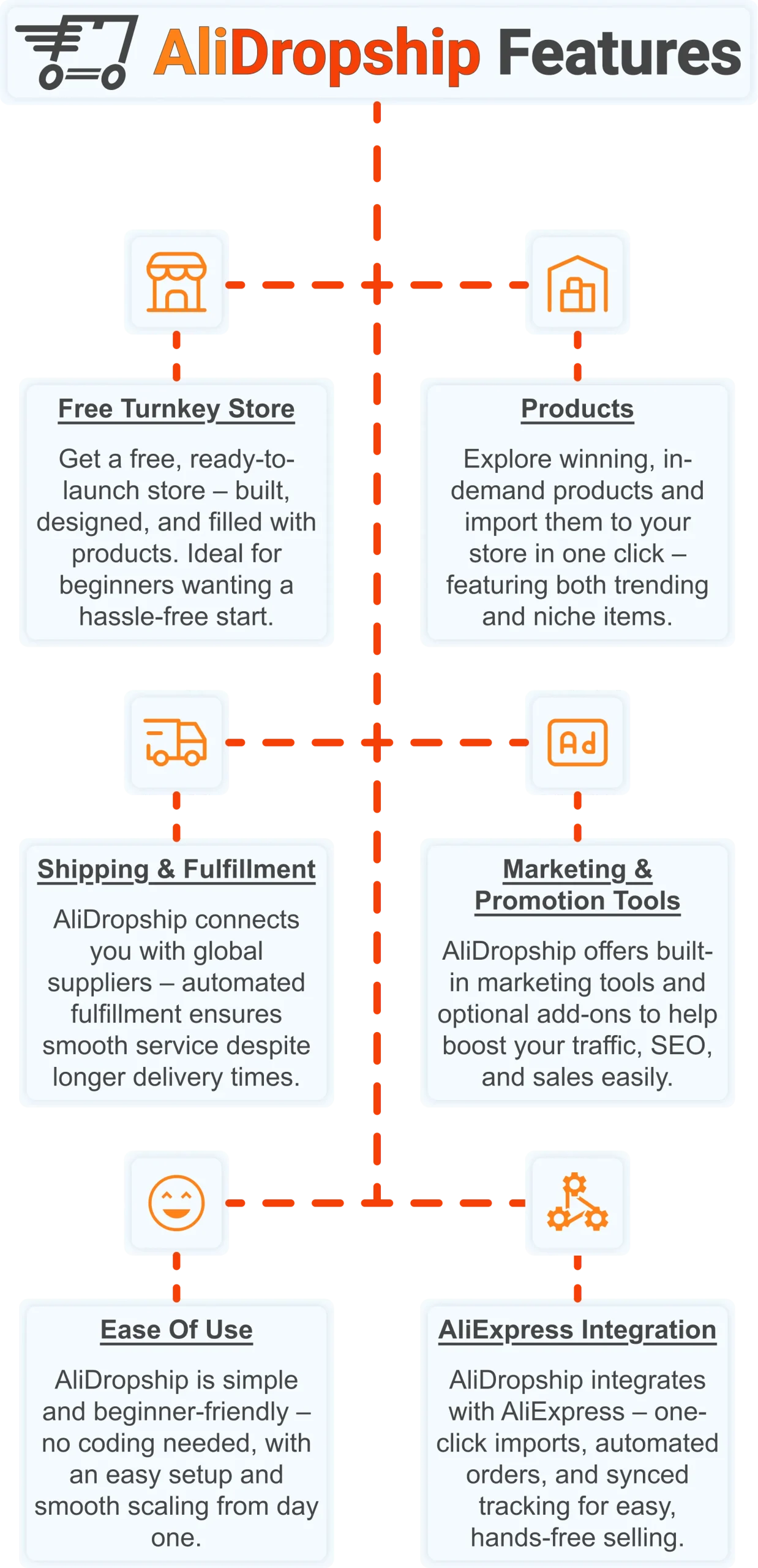
If you want the simplest possible way to start dropshipping – especially if you’re brand new – AliDropship remains one of the most beginner-friendly tools available in 2026. It brings together store creation, product imports, automation, and marketing into a single streamlined system designed to help you launch quickly and grow confidently.
Free turnkey store 🛍️
Get a free turnkey store – built, designed, and filled with products. Ideal for beginners wanting a hassle-free start, the store comes fully optimized to attract customers right away, saving you time on setup. Plus, it includes professional design elements to give your business a polished, trustworthy look from day one. This ready-made foundation makes it easy to move seamlessly into product selection.
Products 📦
Once your store is set up, you can explore winning, in-demand products and import them in one click – featuring both trending and niche items. This wide selection lets you cater to diverse customer interests and test what works best. Regular updates ensure you always have fresh products, keeping your store competitive and relevant. With great products in place, smooth shipping becomes the next essential step.
Shipping & fulfillment 🚚
AliDropship connects you with global suppliers, and automated fulfillment ensures seamless order processing despite international delivery times. Customers receive real-time tracking updates, which builds confidence and trust in your store. Once shipping is handled reliably, you can focus on promoting your store and attracting traffic.
Marketing & promotion tools 📣
To maximize sales, AliDropship offers built-in marketing tools and optional add-ons that help boost traffic, SEO, and conversions. From email campaigns and discounts to social media integration, these tools empower you to reach and retain customers without needing prior marketing experience. With promotion strategies in place, managing your business becomes simpler and more efficient.
Ease of use 👌
AliDropship is beginner-friendly – no coding needed, with an intuitive dashboard that guides you through every step. Easy setup and smooth scaling let you expand your store without stress. As your business grows, adding new features, products, and marketing campaigns remains hassle-free, giving you more time to focus on sales.
AliExpress integration 🛒
Finally, AliDropship integrates seamlessly with AliExpress, enabling one-click imports, automated orders, and synced tracking. Your inventory stays up-to-date with the latest products and prices, while automated order processing frees you from manual tasks. Combined with the turnkey setup, reliable shipping, and built-in marketing tools, this integration ensures your dropshipping business is fully equipped for growth and success.
Print on demand is a solid starting point, but dropshipping with AliDropship gives you a wider product catalog, stronger margins, and a complete business infrastructure from day one. Get your free turnkey store and start selling today.
What is print on demand and how does it work?
Which print on demand sites are best for beginners?
How much can you earn from a print on demand business?
What is the difference between print on demand and dropshipping?
How long does it take to make money with print on demand?