Best Low-Cost High-Profit Business Ideas To Start Today

Starting a profitable business no longer requires a big investment. In fact, some of the most lucrative business models running today started with under $100 – and a few started with nothing at all. The challenge is not the money. The challenge is knowing which low-cost business ideas with high profit are actually worth your time in 2026.
This guide breaks it all down honestly. You will find realistic earning ranges, a clear comparison of effort vs. reward, and a focused look at the two models that consistently outperform the rest for beginner entrepreneurs: dropshipping and digital products. No hype, no vague promises – just a practical roadmap to help you pick the right starting point.
Quick Answer: The best low-cost business ideas with high profit in 2026 include dropshipping, selling digital products, freelancing, print-on-demand, and affiliate marketing. Of these, dropshipping and digital products offer the strongest combination of low startup cost, scalability, and long-term earning potential.
Before diving into the full list, it helps to understand what separates a genuinely high-profit low-cost business from one that just looks that way on paper. Profit margin matters more than revenue. A business making $5,000 a month with $4,800 in expenses is far less valuable than one making $3,000 with $400 in costs. Keep that lens on as you read through each option below.

What are low-cost business ideas with high profit?
A low-cost high-profit business is one where the gap between what you spend to operate and what you earn is large – ideally from day one or within the first few months. These businesses typically share a few traits: minimal physical overhead, no large inventory requirements, skills or assets that can be reused repeatedly, and the ability to scale without proportionally increasing costs.
In 2026, the clearest examples of this model live online. Digital delivery eliminates warehousing. Automation reduces labor. Global marketplaces eliminate the need for a physical storefront. This is why online business models dominate any serious list of low-cost ideas with high margins – and why two of them, dropshipping and digital products, deserve extra attention in this article.
The defining characteristic is leverage. You invest time or a small amount of money once, and that investment keeps generating returns without requiring the same effort every single time. That is the core of every genuinely profitable low-cost business idea on this list.
How much can you realistically earn?
Earnings depend heavily on the model, your effort level, and how quickly you learn. The table below gives an honest overview of what each major category can realistically produce – not the ceiling figures you see in YouTube thumbnails, but the ranges real people operating at different levels actually report.
These ranges reflect real-world performance across beginner to intermediate operators. The upper figures assume consistent effort over 60–90 days, not overnight results. Full-time income – typically $3,000–$5,000/month – is achievable in most of these models within 6–12 months if you treat it like a real business rather than a side experiment.
One note on the ceiling figures: The high end of every range above requires sustained daily effort, ongoing product or content updates, and some reinvestment of early profits. These are not set-and-forget numbers.
The best low-cost business ideas with high profit in 2026
The models below are ranked by their combination of startup cost, profit margin, scalability, and beginner accessibility. Each one can be started with under $200 – most with under $50. The two strongest options are covered in the most depth for good reason: they consistently outperform everything else for people starting from scratch.
Dropshipping and ecommerce
Dropshipping is the process of selling physical products online without holding any inventory. When a customer places an order in your store, the supplier ships directly to them. You never touch the product. Your job is to build the store, choose the right products, drive traffic, and handle customer service. The supplier handles the rest.
This model has been running profitably for well over a decade, and it remains one of the most accessible low-cost business ideas with high profit available today. Startup costs can be as low as $0 if you use a platform that provides a ready-built store – which is exactly what AliDropship offers.
Why dropshipping still works in 2026
Global ecommerce revenue crossed $6.3 trillion in 2024 and continues to grow. Consumers are more comfortable buying online than ever, and niche stores outperform general retailers because they attract buyers with specific intent. A focused store selling, say, home gym equipment or eco-friendly pet products targets customers who already know what they want – which translates to higher conversion rates and better profit margins per order.
Why this works in 2026: Supplier networks have matured significantly. Shipping times from global suppliers have shortened, and consumer trust in online-only stores is at an all-time high – both critical factors for dropshipping profitability.
Earning potential: $500–$5,000+/month within 60–90 days of consistent effort, depending on niche and traffic strategy.
How to get started with dropshipping
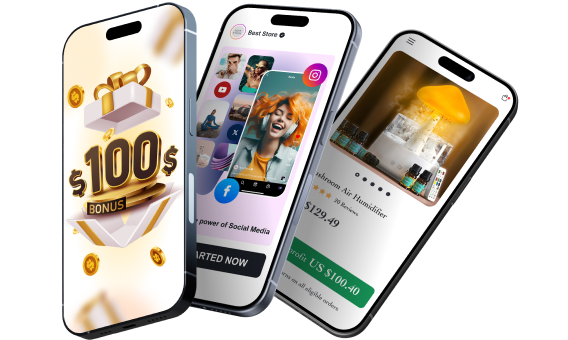
The fastest way to start is to use a platform that handles the technical setup for you. AliDropship gives you a free turnkey store – already built, designed, and stocked with products. You also receive a $100 voucher toward your first order or promotional spend. That means you can go from zero to a fully operational ecommerce store without writing a single line of code and without a significant upfront investment.
From there, your focus shifts to three things: choosing the right niche, optimizing your product listings, and driving traffic through SEO, social media, or paid ads. Each of these is learnable, and AliDropship provides built-in tools to help with all three.
What profit margins look like in dropshipping
Margins in dropshipping typically run between 15% and 45%, depending on the niche and supplier. High-margin niches – home decor, fitness accessories, beauty tools, and pet products – regularly hit the upper end of that range. A store doing $3,000/month in revenue at a 30% margin nets $900/month in profit from a business that required almost no startup capital. As you scale, that math compounds significantly.
Selling digital products
Digital products are files or content that are created once and sold repeatedly with no production cost per sale. This includes ebooks, templates, courses, printables, presets, stock photos, guides, and software tools. Because there is nothing to manufacture or ship, profit margins on digital products are exceptionally high – often 80–95% after platform fees.
The appeal of digital products as a low-cost high-profit business is the leverage: you do the work once and the product earns indefinitely. A well-positioned ebook or Notion template can generate sales for years without any additional effort beyond initial marketing.
Best digital products to sell in 2026
Not all digital products are equal in terms of demand. The ones consistently performing well in 2026 include:
- Notion and productivity templates – High demand from remote workers and students. Low creation time. Sell for $5–$30 per download.
- Ebooks and guides – Evergreen information products in niches like personal finance, fitness, and parenting. Margins near 100% after platform fees.
- Canva templates – Social media kits, resume templates, and pitch decks. Strong recurring demand from small business owners.
- Online courses – Higher creation effort but also the highest individual sale price. A beginner course on a practical skill can sell for $50–$200+.
- Stock photos and video footage – Passive income from a library that grows over time. Platforms like Adobe Stock and Shutterstock pay royalties per download.
How to get started selling digital products
You can launch a digital product store with virtually zero upfront cost. Platforms like Gumroad and Payhip let you list and sell immediately for free. If you want your own branded storefront – which converts better and builds long-term credibility – AliDropship now supports digital product stores, giving you 1,000 ready-made digital products to sell from day one without creating anything yourself.
Earning potential: $300–$4,000+/month, with the upper range achievable by creators who build an audience or run targeted ads to evergreen product listings.
Freelancing and service businesses
Freelancing is the lowest-barrier entry point on this list. If you have a marketable skill – writing, design, web development, video editing, social media management, SEO – you can start earning within days. Platforms like Upwork, Fiverr, and Toptal connect you with paying clients without any upfront cost beyond your time.
The trade-off is that freelancing is active income. Your earnings are directly tied to the hours you work, which creates a ceiling. Most full-time freelancers earn between $2,000 and $6,000/month, but scaling beyond that requires either raising rates significantly or building an agency model with subcontractors.
Earning potential: $400–$3,000+/month for solo operators, depending on skill, niche, and rate. High-demand skills like UX design, copywriting, and paid ads management consistently command $50–$150/hour.
Print-on-demand
Print-on-demand (POD) works similarly to dropshipping: a supplier prints and ships products only when a customer orders them. You design the product – a t-shirt, mug, tote bag, or poster – upload it to a platform like Printful or Printify, and earn a margin on every sale. No inventory, no upfront stock costs.
Margins in POD are lower than in dropshipping – typically 15–25% – because the base cost of custom printing is higher than bulk-manufactured goods. That said, it is an excellent low-cost entry point for creatives who want to monetize original designs without any technical complexity.
Earning potential: $100–$1,500/month for most operators. Sellers with strong design portfolios and social media audiences can exceed this, but POD works best as a supplementary income stream rather than a standalone full-time business for most people.
Affiliate marketing
Affiliate marketing means earning a commission by promoting other companies’ products or services. You share a unique link – through a blog, YouTube channel, newsletter, or social media account – and earn a percentage of every sale made through that link. Commission rates range from 3–5% on physical products (Amazon Associates) to 30–50% on digital products and SaaS tools.
The startup cost is essentially zero, but the time investment is significant. Building the kind of content library or audience that generates consistent affiliate income typically takes 6–18 months. Once established, however, it can generate genuinely passive recurring income with minimal ongoing effort.
Earning potential: $200–$3,000+/month once content is indexed and ranking. Early months are typically low-earning while content accumulates authority.
How to choose the right low-cost high-profit business for you
The right model depends on what you are starting with – your time, skills, risk tolerance, and income timeline. Here is how to map each reader profile to the best fit.
Complete beginner with no prior business experience
If you are starting from zero, dropshipping via AliDropship is the clearest path. The store is built for you, the products are already imported, and the platform guides you through every setup step. You do not need coding skills, design experience, or a large starting budget. The only requirement is a willingness to learn the basics of product selection and traffic generation – both of which AliDropship supports with built-in tools and community resources.
Intermediate – part-time with some online experience
If you already have some familiarity with content creation, social media, or basic web tools, digital products are a strong second option alongside dropshipping. You can launch both in parallel: a dropshipping store generates transaction-based income while a digital product listing builds a passive revenue stream that grows over time. The combination covers short-term earnings and long-term compounding.
Advanced – full-time income goal within 12 months
If your goal is to replace a full-time income within 12 months, focus exclusively on dropshipping or digital products and treat it like a business from day one. That means daily product research, regular traffic testing, reinvesting early profits into paid advertising, and optimizing conversion rates systematically. Operators who do this consistently report reaching $3,000–$5,000/month within 6–12 months.
Freelancing can accelerate the timeline by providing cash flow in the early months while your store gains traction – a hybrid approach that many successful ecommerce entrepreneurs used when starting out.
Legal and ethical considerations
Every business model on this list operates within a clear legal framework – but there are practices associated with each that cross ethical or legal lines. Knowing what to avoid protects both your business and your reputation.
What to avoid absolutely
In dropshipping, avoid selling counterfeit goods or products that infringe on trademarks. This is a common beginner mistake when sourcing aggressively from unknown suppliers. Always verify that the products you list are genuinely branded or legitimately unbranded – not knockoffs using another company’s logo or packaging.
In digital products, avoid reselling PLR (private label rights) content without meaningful transformation. Platforms like Etsy and Gumroad actively remove listings that are low-effort content farms. Create original products or genuinely add value to licensed material before listing it.
In affiliate marketing, always disclose affiliate relationships in your content. The FTC requires this in the United States, and most major affiliate programs require it contractually. Non-disclosure is not just unethical – it can result in account bans and legal liability.
Key principle: Build every business on the assumption that your customers, your platform, and regulators can see everything you do. That standard eliminates most shortcuts that would eventually hurt you anyway.
Business registration and taxes
Once your chosen model is generating consistent income – typically above $500–$1,000/month – it is worth formalizing the business. In the US, an LLC provides personal liability protection and is straightforward to set up for under $200 in most states. Consult a local accountant or use a service like LegalZoom to handle the paperwork. Tax obligations vary by country and business structure, so getting professional advice early prevents larger problems later.
Tips for maximizing profit from a low-cost online business
Choosing the right model is step one. Executing it profitably is step two. These principles apply regardless of which low-cost high-profit business you choose.
Start narrow, then expand
The most common beginner mistake across all of these models is starting too broad. A general online store is harder to rank, harder to advertise, and harder to build a loyal customer base for than a focused niche store. Start with a specific niche – outdoor camping gear, minimalist home office products, yoga accessories – establish traction, then expand the product range once you have proof of demand.
Treat profit margins as your primary metric, not revenue
A store doing $10,000/month in revenue sounds impressive. A store doing $4,000/month with a 50% margin is more profitable. Always calculate your true cost of goods sold, platform fees, payment processing, and advertising spend before celebrating a revenue milestone. Net profit is the only number that matters.
Reinvest early profits into traffic
The businesses that scale fastest are the ones that reinvest aggressively in their first profitable months. Even $100–$200/month in targeted Facebook or Google ads can significantly accelerate the growth of a dropshipping store or digital product listing. Use organic traffic methods (SEO, social media) to build sustainable long-term reach, and paid traffic to test and scale what already works.
Use automation wherever possible
The difference between a business and a job is automation. In dropshipping, automated fulfillment means orders are processed and tracked without manual intervention. In digital products, automated delivery means customers receive their files instantly without you doing anything. The more you systematize, the more your time is freed for growth activities – content creation, product research, and marketing strategy.
Build a customer list from day one
An email list is the highest-return asset in any online business. Even a small list of 500–1,000 engaged subscribers can generate $500–$2,000/month in sales through regular promotions, new product launches, and cart abandonment sequences. Collect emails from your first visitor, not your thousandth.
AliDropship: Your complete all-in-one solution for starting dropshipping in 2026
If you want the simplest possible way to start dropshipping – especially if you are brand new – AliDropship remains one of the most beginner-friendly tools available in 2026. It brings together store creation, product imports, automation, and marketing into a single streamlined system designed to help you launch quickly and grow confidently.
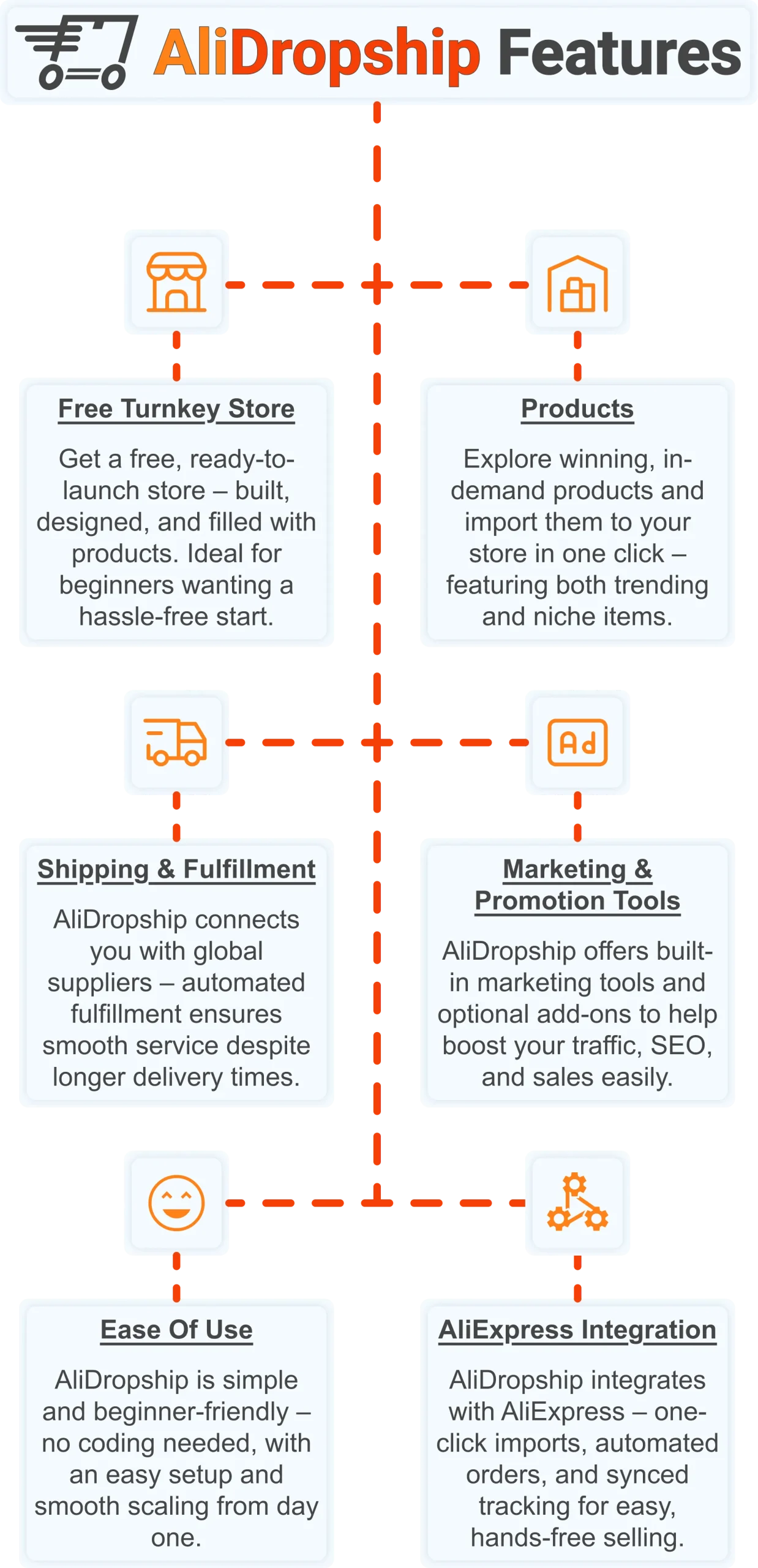
Free turnkey store 🛍️
Get a free turnkey store – built, designed, and filled with products. Ideal for beginners wanting a hassle-free start, the store comes fully optimized to attract customers right away, saving you time on setup. Plus, it includes professional design elements to give your business a polished, trustworthy look from day one. This ready-made foundation makes it easy to move seamlessly into product selection.
Products 📦
Once your store is set up, you can explore winning, in-demand products and import them in one click – featuring both trending and niche items. This wide selection lets you cater to diverse customer interests and test what works best. Regular updates ensure you always have fresh products, keeping your store competitive and relevant. With great products in place, smooth shipping becomes the next essential step.
Shipping & fulfillment 🚚
AliDropship connects you with global suppliers, and automated fulfillment ensures seamless order processing despite international delivery times. Customers receive real-time tracking updates, which builds confidence and trust in your store. Once shipping is handled reliably, you can focus on promoting your store and attracting traffic.
Marketing & promotion tools 📣
To maximize sales, AliDropship offers built-in marketing tools and optional add-ons that help boost traffic, SEO, and conversions. From email campaigns and discounts to social media integration, these tools empower you to reach and retain customers without needing prior marketing experience. With promotion strategies in place, managing your business becomes simpler and more efficient.
Ease of use 👌
AliDropship is beginner-friendly – no coding needed, with an intuitive dashboard that guides you through every step. Easy setup and smooth scaling let you expand your store without stress. As your business grows, adding new features, products, and marketing campaigns remains hassle-free, giving you more time to focus on sales.
AliExpress integration 🛒
Finally, AliDropship integrates seamlessly with AliExpress, enabling one-click imports, automated orders, and synced tracking. Your inventory stays up-to-date with the latest products and prices, while automated order processing frees you from manual tasks. Combined with the turnkey setup, reliable shipping, and built-in marketing tools, this integration ensures your dropshipping business is fully equipped for growth and success.
Of all the low-cost business ideas with high profit available in 2026, dropshipping through AliDropship gives you the fastest path from zero to a fully operational online store. Claim your free turnkey store today and take your first real step toward building a profitable ecommerce business.
What are the best low-cost business ideas with high profit?
Can I start a profitable online business with no money?
Is dropshipping still profitable in 2026?
How much does it cost to start selling digital products?
How long does it take to make money from a low-cost online business?