

Technical SEO

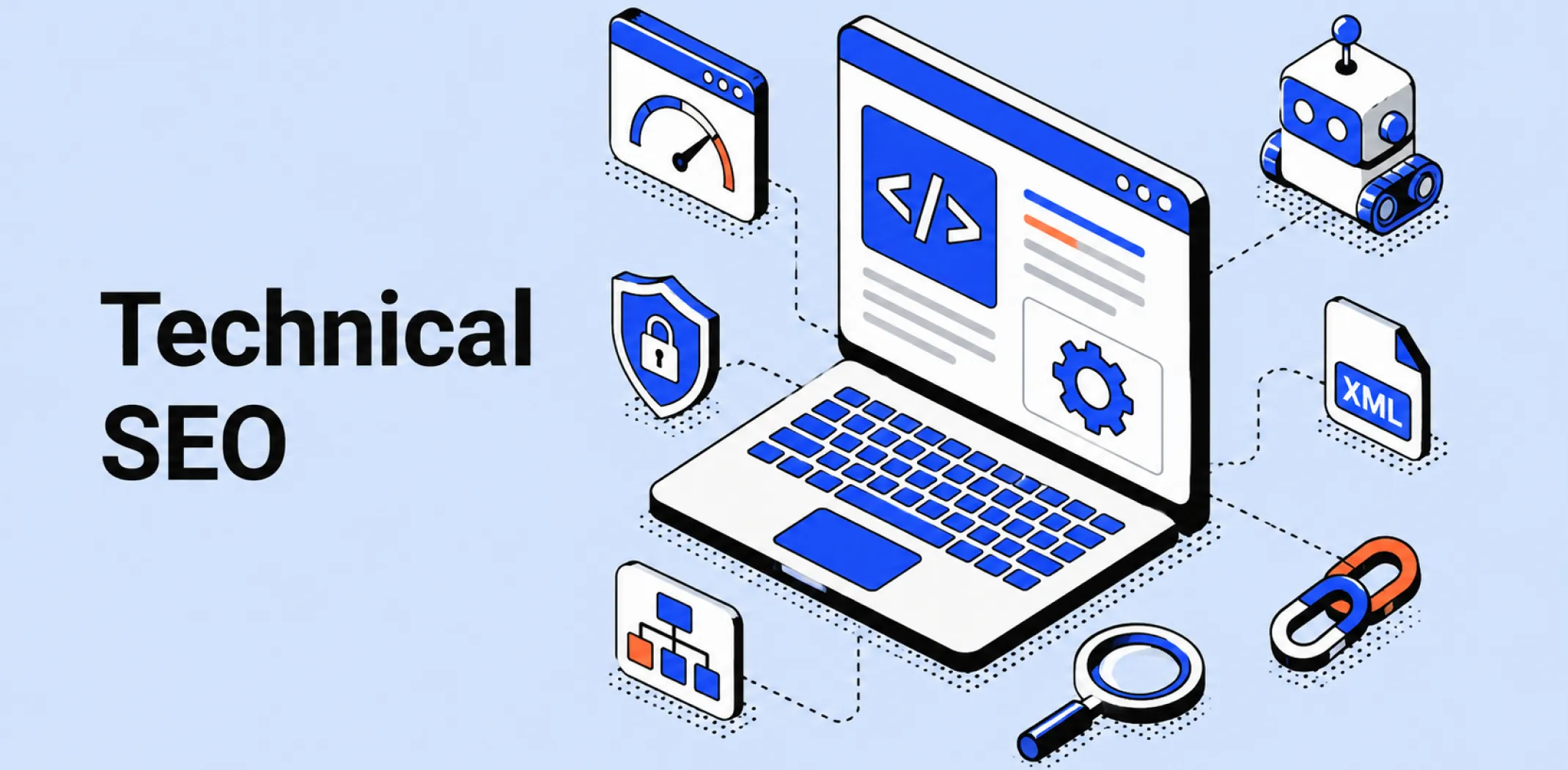
Technical SEO is the practice of optimizing a website’s underlying code and infrastructure so that search engines can crawl, index, and rank its pages effectively.
Technical SEO differs from on-page SEO, which focuses on content and keywords, and off-page SEO, which centers on backlinks and external signals. It instead addresses the mechanical foundation that lets search engines reach and process a site in the first place, covering areas such as site speed, mobile responsiveness, secure connections, clean URL structures, XML sitemaps, robots.txt directives, and structured data markup.
For online stores, technical SEO becomes especially important as product catalogs grow, since search engines must efficiently crawl thousands of product and category pages without wasting resources on duplicate or low-value URLs. A well-structured ecommerce site relies on technical SEO alongside a broader ecommerce SEO strategy to keep new listings indexed and existing pages accessible as the catalog changes.
How technical SEO works
- A site owner or SEO specialist runs a crawl of the website using tools that simulate how search engine bots navigate the site.
- The crawl results are audited for errors such as broken links, duplicate content, missing metadata, and slow-loading pages.
- Identified issues are prioritized and fixed, often starting with problems that block indexing entirely, such as blocked robots.txt directives or missing sitemaps.
- Page speed and mobile responsiveness are improved through image compression, caching, and code minification.
- Structured data markup is added to help search engines understand page content and qualify for rich results.
- Search console tools are used to monitor indexing status and confirm that fixes have been applied correctly.
Example
An online store selling home goods notices that new product pages take several weeks to appear in search results. A technical SEO audit, following a process similar to a SEO ecommerce checklist, reveals that the sitemap has not been updated automatically and that several category pages return duplicate content signals. After the store owner submits an updated sitemap and adds canonical tags, new listings begin appearing in search results within days, and organic traffic to product pages increases as search engines index the catalog more efficiently.
Related terms
- Ecommerce — the broader digital retail category where technical SEO issues directly affect product visibility and rankings.
- WooCommerce — a widely used ecommerce platform where technical SEO settings and plugins are commonly configured.
- Landing page — a page type that must be checked in technical SEO audits to confirm it loads quickly and is properly indexed.
- Conversion funnel — the customer journey that technical SEO supports by ensuring pages load and rank well at every stage.
Frequently asked questions
What is the difference between technical SEO and on-page SEO?
Technical SEO focuses on a site’s infrastructure and crawlability, while on-page SEO focuses on content, keywords, and page-level relevance for search terms.
Does technical SEO matter for small ecommerce stores?
Yes; even small stores benefit from fast loading times, mobile compatibility, and clean site structure, since these factors affect whether search engines can index and rank pages at all.
What tools are used to audit technical SEO?
Common tools include Google Search Console, Screaming Frog, and PageSpeed Insights, which identify crawl errors, indexing issues, and site speed problems.
How often should a technical SEO audit be performed?
Most sites benefit from a full audit every few months, with ongoing monitoring through search console tools to catch new issues as the site changes.
AliDropship: An all-in-one platform for starting dropshipping in 2026
AliDropship is a dropshipping platform that covers store creation, product imports, order automation, and marketing within a single system. It is designed for users with no prior ecommerce experience, though it also supports scaling for more established stores.
🛍️ Free turnkey store
New users receive a free pre-built store – set up, designed, and stocked with products. The store includes a ready-to-use product catalogue and a standard storefront design. It also comes with hosting, a domain, SSL, and payment systems already set up and included.
📦 Products
The platform provides access to a product catalogue covering both trending and niche items, with one-click import to your store. The catalogue is updated regularly to reflect current market availability. Products can be browsed, filtered, and added without leaving the platform.
🚚 Shipping & fulfillment
AliDropship provides access to a vast catalogue of products from global suppliers and handles order fulfillment automatically once a purchase is made. Customers receive tracking information directly, and orders are processed without manual intervention from the store owner.
📣 Marketing & promotion tools
The platform includes built-in marketing tools covering email campaigns, discount management, SEO settings, and social media integration. These are available within the dashboard and do not require third-party subscriptions for basic use.
👌 Ease of use
AliDropship requires no coding knowledge. The dashboard contains all the necessary tools for managing your store, products, and orders in one place. Additional features and products can be added as the store grows without rebuilding the existing setup.
What is technical SEO?
What is the difference between technical SEO and on page SEO?
How does site speed affect technical SEO?
What tools are commonly used for a technical SEO audit?
How often should technical SEO be checked?
Are you ready to become an owner
of a profitable online business?
Free Dropshipping Guide