

Product Listing

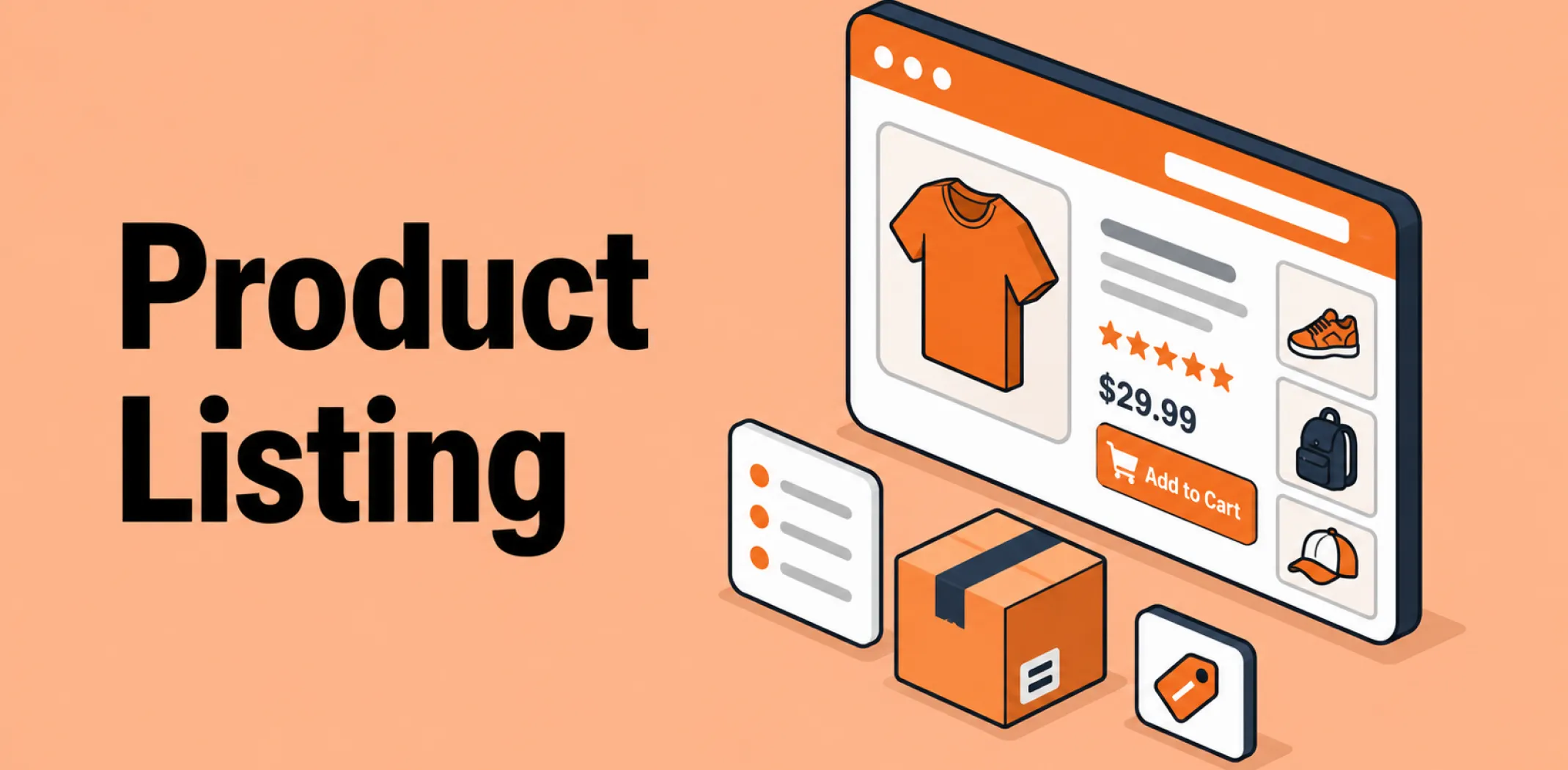
A product listing is a page or entry on an ecommerce platform or marketplace that presents a single product for sale, containing the information a buyer needs to evaluate and purchase it.
At minimum, a product listing includes a title, price, images, and a description. In practice, listings on competitive marketplaces and independent stores typically include additional elements: variant selectors (size, color, material), shipping estimates, customer reviews, stock status, and return policies.
Each of these components influences whether a visitor converts to a buyer. In dropshipping, the product listing is the seller’s primary point of control – since the seller does not manufacture or warehouse the goods, the listing is where differentiation occurs through copy, imagery, and product positioning.
A listing exists on a spectrum from minimal to optimized. A bare listing may contain only supplier-provided content, while an optimized listing is tailored to search intent, platform algorithms, and the store’s target audience.
The quality of a listing directly affects its visibility in search results and its ability to generate sales, making listing optimization a core discipline in ecommerce. Sellers who rely on unedited supplier content typically face lower conversion rates and weaker search rankings than those who rewrite and enrich their listings.
Example
A dropshipping store imports a portable phone stand from a supplier on AliExpress. Rather than publishing the supplier’s original title and generic images, the store owner rewrites the listing with a keyword-focused title (“Foldable Desk Phone Stand – Adjustable, Non-Slip, Universal Fit”), replaces stock photos with styled product images, and adds a description addressing common buyer questions about compatibility and build quality. The listing also includes a variant selector for two available colors and a clear statement of the estimated delivery window. The result is a listing that competes on search relevance and buyer confidence rather than price alone.
Key characteristics
- Title: The product name as it appears in search results and at the top of the listing page; titles affect both discoverability and first impressions, making keyword inclusion and clarity equally important.
- Images: Visual assets that allow buyers to assess the product before purchase; high-quality images from multiple angles reduce uncertainty and are among the strongest drivers of conversion.
- Description: A written explanation of the product’s features, use cases, and specifications; effective descriptions address likely buyer questions and are written for the target customer, not copied from a supplier data sheet.
- Pricing: The retail price displayed to the buyer, which in dropshipping reflects the seller’s markup over the supplier’s cost; pricing must account for platform fees, shipping, and desired overhead costs.
- Variants: Options within a single listing that correspond to different product configurations; variants are linked to individual SKUs so the correct item is ordered when a specific option is selected.
Related terms
- Product positioning — the strategy of differentiating a product in the market; positioning decisions shape how a listing is written and what audience it targets.
- Product advertising — paid or organic promotion of a specific product; advertising drives traffic to a listing and amplifies its reach beyond organic search.
- Conversion funnel — the sequence of steps a visitor takes from discovery to purchase; the product listing is typically the central stage where purchase decisions are made or abandoned.
- Niche market — a defined segment of buyers with specific needs; listing copy and imagery should be tailored to the niche the store targets.
- Landing page — a standalone page optimized for a single conversion goal; in some dropshipping setups, a custom landing page replaces or supplements the standard product listing.
Frequently asked questions
What is the difference between a product listing and a product page?
The terms are often used interchangeably, but a product listing typically refers to the entry as it appears within a catalogue or search results on a platform, while a product page refers to the full dedicated URL a buyer lands on. In practice, both contain the same core elements and serve the same purpose.
How does a product listing affect SEO?
Search engines index listing titles, descriptions, and structured data (such as price and availability) when crawling ecommerce sites. Listings with relevant keywords, complete specifications, and original copy tend to rank higher than those with thin or duplicated content.
For dropshippers, rewriting supplier-provided descriptions is one of the most direct ways to improve organic visibility. Guides such as ecommerce SEO cover this in more detail.
Can a single product listing cover multiple variants?
Yes. Most ecommerce platforms support variant listings, where a single listing URL contains selectable options – such as size or color – each mapped to its own SKU and stock status. This keeps the catalogue clean and consolidates reviews and traffic to a single page rather than splitting them across multiple listings.
What makes a product listing high-converting?
High-converting listings typically combine a clear, benefit-focused title; professional images that show the product in context; a description that pre-empts buyer objections; transparent pricing and shipping terms; and social proof such as reviews or ratings. No single element determines conversion – the listing works as a whole.
AliDropship: An all-in-one platform for starting dropshipping in 2026
AliDropship is a dropshipping platform that covers store creation, product imports, order automation, and marketing within a single system. It is designed for users with no prior ecommerce experience, though it also supports scaling for more established stores.
🛍️ Free turnkey store
New users receive a free pre-built store – set up, designed, and stocked with products. The store includes a ready-to-use product catalogue and a standard storefront design. It also comes with hosting, a domain, SSL, and payment systems already set up and included.
📦 Products
The platform provides access to a product catalogue covering both trending and niche items, with one-click import to your store. The catalogue is updated regularly to reflect current market availability. Products can be browsed, filtered, and added without leaving the platform.
🚚 Shipping & fulfillment
AliDropship provides access to a vast catalogue of products from global suppliers and handles order fulfillment automatically once a purchase is made. Customers receive tracking information directly, and orders are processed without manual intervention from the store owner.
📣 Marketing & promotion tools
The platform includes built-in marketing tools covering email campaigns, discount management, SEO settings, and social media integration. These are available within the dashboard and do not require third-party subscriptions for basic use.
👌 Ease of use
AliDropship requires no coding knowledge. The dashboard contains all the necessary tools for managing your store, products, and orders in one place. Additional features and products can be added as the store grows without rebuilding the existing setup.
What is the difference between a product listing and a product page?
How does a product listing affect SEO?
Can a single product listing cover multiple variants?
What makes a product listing high-converting?
Are you ready to become an owner
of a profitable online business?
Free Dropshipping Guide