

Pinterest Shopping

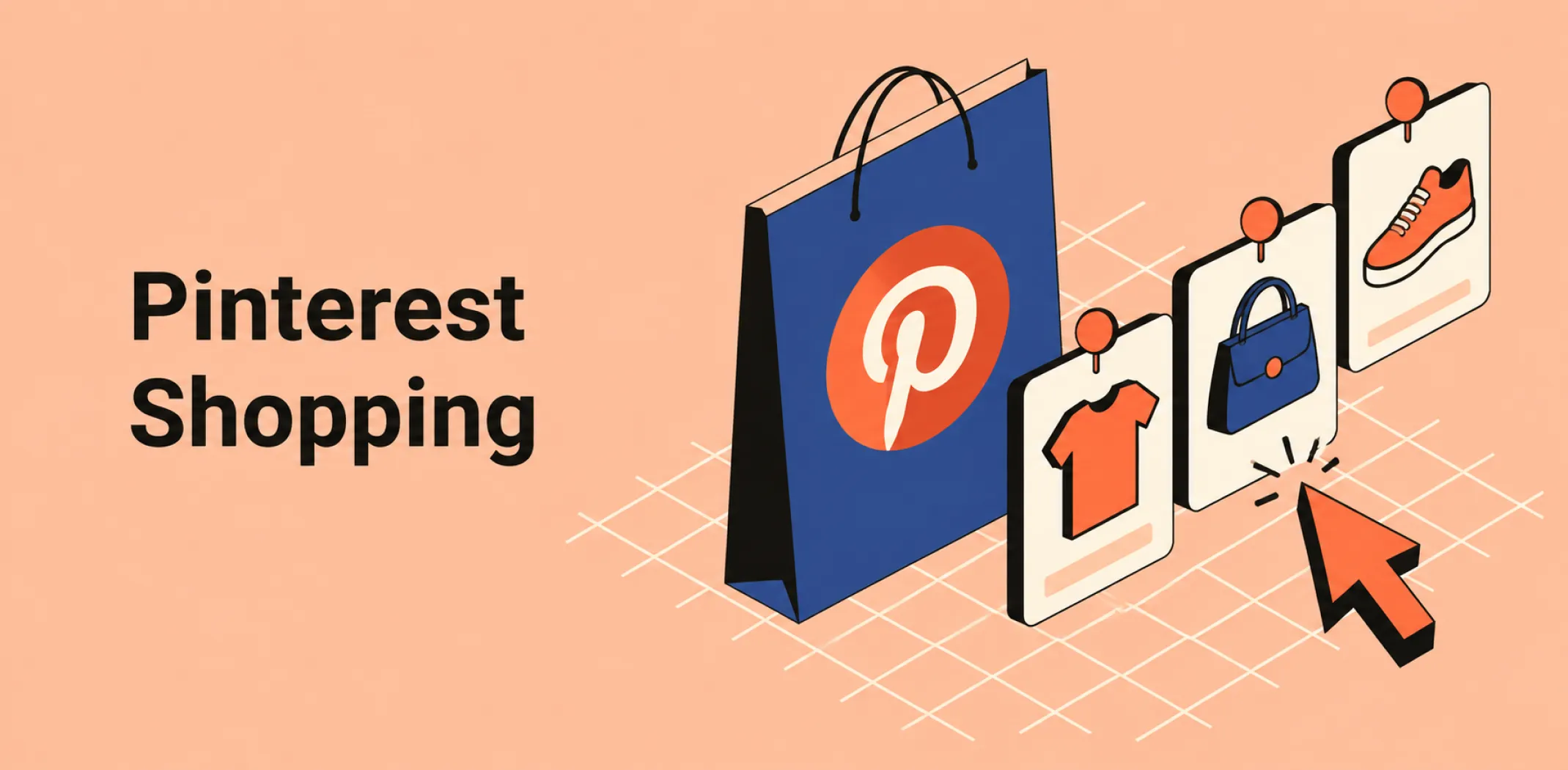
Pinterest Shopping is a set of features that turn Pins into shoppable listings by attaching live pricing, availability, and a link back to the retailer, so a shopper can move from discovering an idea to buying the product.
The feature relies on a product catalogue, usually synced from an ecommerce platform such as WooCommerce, which powers Product Pins and Shopping Ads across search results, boards, and the visual search tool.
Pinterest Shopping differs from Instagram Shopping, Facebook Shop, and TikTok Shop in that checkout typically happens off-platform: tapping a Product Pin usually redirects the shopper to the seller’s own website rather than completing the purchase inside the app. It fits earlier in the customer journey, closer to inspiration and planning than to impulse purchase.
How Pinterest Shopping works
- A business connects a product catalogue to Pinterest through a verified Pinterest Business account.
- Pinterest converts catalogue items into Product Pins, adding price and availability to matching images.
- A user searches or browses and finds a Product Pin among organic results, boards, or Shopping Ads.
- The user taps the Pin to see the price, retailer name, and a link to the product page.
- Tapping through sends the user to the retailer’s website to complete checkout, since Pinterest does not process the payment itself in most regions.
Example
A furniture brand uploads its catalogue to Pinterest Business and a photo of a $180 accent chair becomes a Product Pin showing price and stock. A user planning a living room redesign searches for accent chairs and saves the Pin to a board. Days later the user taps the Pin, is redirected to the brand’s website, and completes the purchase there as part of the site’s usual order fulfillment process rather than inside the Pinterest app.
Key characteristics
- Catalogue dependent: Product Pins pull price, image, and stock from a linked catalogue, so an outdated feed shows incorrect information to shoppers.
- Off-platform checkout: Most purchases complete on the retailer’s own website after a shopper taps through, rather than inside Pinterest itself.
- Discovery oriented: Pinterest Shopping surfaces products during planning and idea gathering, so the path to purchase is often longer than on video-first platforms.
- Visual search integration: Shoppers can search using an image, such as a photo of a room or an outfit, to surface visually similar shoppable Pins.
Related terms
- Instagram Shopping – a comparable shopping feature that, unlike Pinterest, often supports checkout inside the app.
- Facebook Shop – a persistent storefront tab that shares the same Meta Commerce Manager infrastructure used by Instagram Shopping.
- TikTok Shop – a video and LIVE-native shopping feature with in-app checkout, contrasting with Pinterest’s off-platform model.
- Conversion funnel – the path a shopper follows from discovering a Product Pin to completing a purchase on the retailer’s site.
- WooCommerce – one of the store platforms commonly synced to power a Pinterest Shopping catalogue.
Frequently asked questions
What is needed to set up Pinterest Shopping?
A business needs a verified Pinterest Business account and a connected product catalogue before its images can become Product Pins.
Is Pinterest Shopping free to use?
Yes, publishing Product Pins on Pinterest is free, though the business is still responsible for standard payment processing on its own website.
What is the difference between a Product Pin and a Shopping Ad?
Product Pins are created from a catalogue feed and can appear organically, while Shopping Ads are paid placements built on that same catalogue data.
AliDropship: An all-in-one platform for starting an online business in 2026
AliDropship is an online business platform that gives customers a ready-made store, a digital products catalogue, and built-in, one-click advertising within a single system. Founded in 2015 and based in Irvine, California, it has helped launch more than 1,500,000 stores and holds a 4.7-star rating on Trustpilot. It is built for people with no prior experience and no technical skills.
🆓 Free 14-day trial
New users get full platform access for 14 days, including a ready-made store, hosting, a domain, an SSL certificate, and access to the digital products catalogue. The trial also includes a $40 ad coupon to test the advertising system. Order fees apply only when a sale is made.
📦 Digital products
Customers choose from AliDropship’s catalogue of digital products – guides, courses, checklists, tools, and AI-powered toolkits – and keep up to 70% of every sale. Delivery is instant and automated, so there is no inventory, shipping, or manual fulfillment involved.
📣 One-click advertising
AliDropship includes built-in advertising that customers can turn on for as little as $10 a day. The system handles targeting, creatives, and optimization, and many customers see their first orders the same day they launch ads.
👌 Ease of use
AliDropship requires no coding or marketing experience. The store, products, and ads are managed from a single dashboard that works on a phone as well as a desktop, and a personal growth manager is available to help by chat.
💳 Monthly plan
After the trial, continued access is $39 a month, covering the store, the digital products catalogue, and ongoing support. There is no long-term contract, and the plan can be cancelled at any time.
How many people use Pinterest Shopping?
Can a small business use Pinterest Shopping?
What products are not allowed on Pinterest Shopping?
Does Pinterest Shopping support checkout inside the app?
Does Pinterest Shopping charge a commission?
Are you ready to become an owner
of a profitable online business?
Free Dropshipping Guide