

MOQ

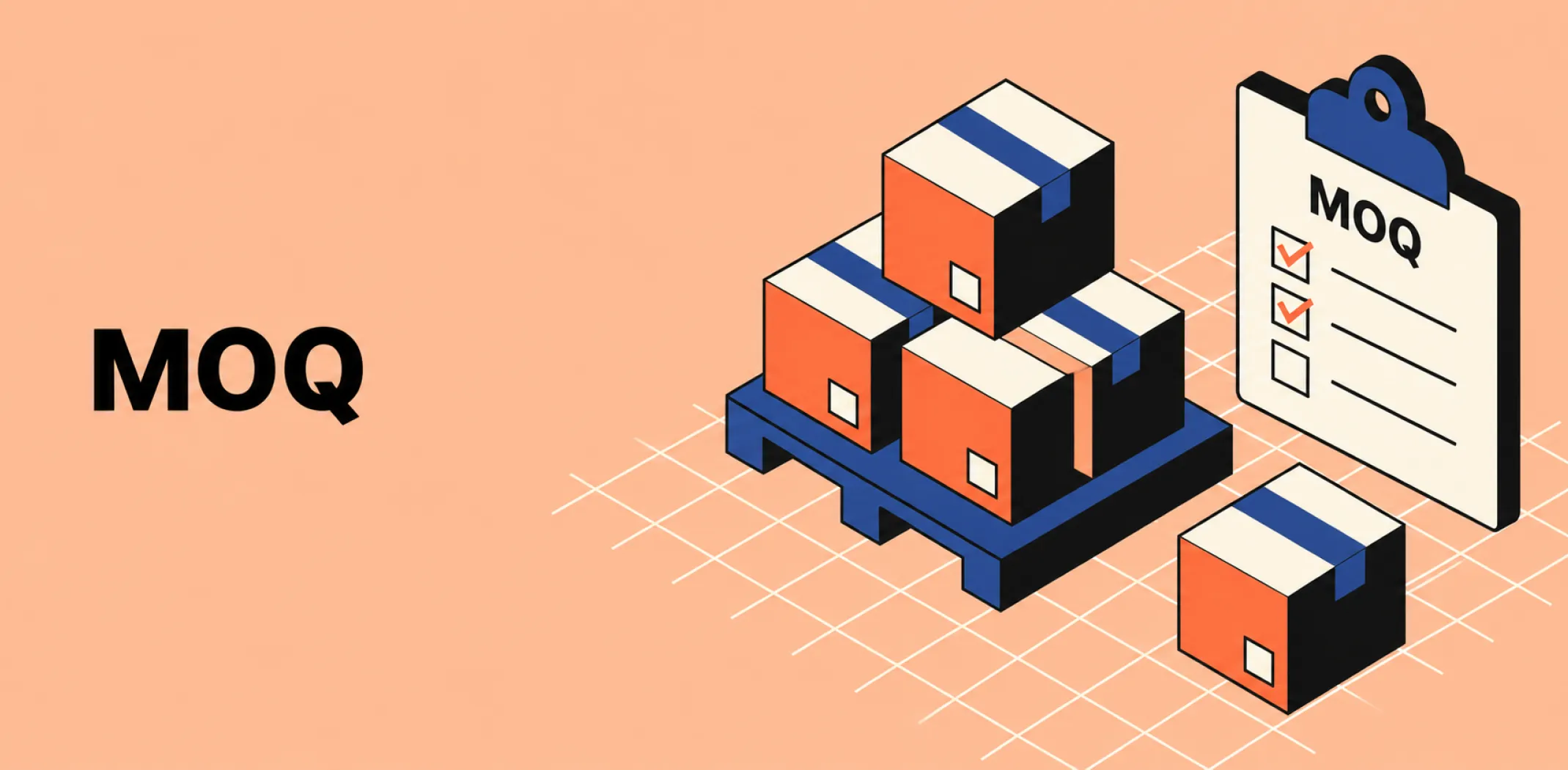
MOQ, or minimum order quantity, is the smallest number of units a supplier requires a buyer to purchase in a single order.
Suppliers set MOQs to ensure production runs are economically viable and to cover the fixed costs associated with manufacturing, packaging, or shipping a batch of goods.
MOQs vary widely by supplier, product type, and industry: a factory producing custom apparel may require hundreds of units per style, while a wholesale distributor stocking standard consumer goods might set a minimum as low as a single case pack. For ecommerce sellers, the MOQ determines how much capital must be committed before a product can be listed for sale.
In standard dropshipping, MOQ is effectively one unit – the supplier ships individual orders on behalf of the store as each sale occurs, so the seller never holds stock and faces no minimum commitment. MOQ becomes a relevant constraint when a seller moves toward bulk purchasing, private label sourcing, or OEM and ODM manufacturing arrangements, where the supplier requires a committed production run before fulfilling the order.
Example
A store owner wants to source a custom-printed tote bag from a factory on Alibaba. The factory sets an MOQ of 200 units at $4.50 per unit, requiring a minimum spend of $900 before production begins. The store owner must decide whether projected sales volumes justify that upfront commitment. A second supplier offers the same product with an MOQ of 50 units at $6.00 per unit – a higher per-unit cost but a lower total commitment of $300, which reduces financial risk at the expense of margin.
Key characteristics
- Supplier-set threshold: MOQ is determined by the manufacturer or distributor, not the buyer, and is typically linked to production economics or logistics efficiency.
- Capital commitment: Meeting an MOQ requires paying for goods before they are sold, which ties up working capital and increases financial risk for the buyer.
- Per-unit cost relationship: Higher MOQs generally correspond to lower per-unit prices, since the supplier achieves greater economies of scale across a larger production run.
- Negotiability: MOQs are often negotiable, particularly for buyers with established supplier relationships or willingness to pay a premium per unit in exchange for a reduced minimum.
- Inapplicable in standard dropshipping: When a supplier ships individual customer orders directly, no minimum purchase applies to the store owner, making MOQ a non-issue in that fulfillment model.
Related terms
- Supplier – the manufacturer or distributor that sets and enforces the minimum order quantity.
- Wholesale – a bulk purchasing model in which MOQs are a standard feature of supplier pricing structures.
- Warehousing – the storage infrastructure required when a seller purchases above the MOQ and holds inventory before fulfilment.
- Overhead costs – the fixed and variable expenses that MOQ-based purchasing adds to a business, including storage, insurance, and tied-up capital.
- Order fulfillment – the process of picking, packing, and shipping inventory that has been purchased in bulk to meet a supplier MOQ.
Frequently asked questions
What does MOQ mean in dropshipping?
In standard dropshipping, MOQ is largely irrelevant because the supplier ships one unit at a time as individual customer orders arrive. The term becomes significant when a dropshipper transitions to bulk buying, private label sourcing, or OEM manufacturing, where the supplier requires a committed minimum purchase before production or shipment begins.
Can you negotiate a lower MOQ with a supplier?
Yes, MOQs are frequently negotiable. Suppliers may agree to a lower minimum in exchange for a higher per-unit price, a long-term purchase agreement, or an upfront payment. Buyers sourcing through platforms such as Alibaba often negotiate MOQs directly with manufacturers before placing an initial order.
Why do suppliers set minimum order quantities?
Suppliers set MOQs to ensure each production run covers its fixed costs – including setup, raw materials, labour, and packaging – at a price point that maintains profitability. Producing fewer units than the minimum would result in a loss or require charging a price the market would not support.
How does MOQ affect profit margin?
Meeting a high MOQ typically lowers the per-unit cost, which improves gross margin on each sale. However, it also increases the total capital at risk: if units do not sell, the upfront spend is not recovered. Sellers must weigh the margin benefit of a lower per-unit cost against the inventory and cash flow risk of committing to a large batch. For further context on is dropshipping profitable, see the linked article.
AliDropship: An all-in-one platform for starting an online business in 2026
AliDropship is an online business platform that gives customers a ready-made store, a digital products catalogue, and built-in, one-click advertising within a single system. Founded in 2015 and based in Irvine, California, it has helped launch more than 1,500,000 stores and holds a 4.7-star rating on Trustpilot. It is built for people with no prior experience and no technical skills.
🆓 Free 14-day trial
New users get full platform access for 14 days, including a ready-made store, hosting, a domain, an SSL certificate, and access to the digital products catalogue. The trial also includes a $40 ad coupon to test the advertising system. Order fees apply only when a sale is made.
📦 Digital products
Customers choose from AliDropship’s catalogue of digital products – guides, courses, checklists, tools, and AI-powered toolkits – and keep up to 70% of every sale. Delivery is instant and automated, so there is no inventory, shipping, or manual fulfillment involved.
📣 One-click advertising
AliDropship includes built-in advertising that customers can turn on for as little as $10 a day. The system handles targeting, creatives, and optimization, and many customers see their first orders the same day they launch ads.
👌 Ease of use
AliDropship requires no coding or marketing experience. The store, products, and ads are managed from a single dashboard that works on a phone as well as a desktop, and a personal growth manager is available to help by chat.
💳 Monthly plan
After the trial, continued access is $39 a month, covering the store, the digital products catalogue, and ongoing support. There is no long-term contract, and the plan can be cancelled at any time.
What does MOQ mean in dropshipping?
Can you negotiate a lower MOQ with a supplier?
Why do suppliers set minimum order quantities?
How does MOQ affect profit margin?
Are you ready to become an owner
of a profitable online business?
Free Dropshipping Guide