Affiliate Marketing For Beginners: Income, Tips And Results


Every week, thousands of people search for how to make money with affiliate marketing – and for good reason. The model is genuinely appealing: no product creation, no inventory, no customer service. You promote someone else’s offer, someone clicks your link, they buy, and you earn a cut. Simple enough in theory. But the reality of affiliate marketing income in 2026 is more nuanced than most guides let on, and understanding that gap between the pitch and the reality is exactly what separates the people who actually earn from those who give up after 90 days.
Quick Answer: Affiliate marketing is a performance-based earning model where you promote products for a commission. Most beginners earn $200–$800 per month after 6–12 months of consistent effort, while experienced marketers in high-value niches can earn $3,000–$15,000+ monthly. Results depend heavily on niche, traffic quality, and conversion strategy.
Whether you are brand new and looking for a beginner-friendly breakdown, comparing affiliate marketing vs dropshipping, or trying to build genuine passive income affiliate marketing streams, this guide gives you a straight answer at every step – including what the ceiling actually looks like and what a smarter path to online income could be.

Affiliate marketing sits at an interesting crossroads in 2026. Content creation tools are better than ever, social media reach is strong for niche creators, and affiliate programs have expanded across nearly every product category imaginable. At the same time, competition has intensified and many popular niches are already saturated with content. Getting in with a clear strategy still works – but signing up for a program and posting links without a plan is not that strategy.
What is affiliate marketing?
Affiliate marketing is a revenue-sharing model where you – the affiliate – earn a commission every time someone purchases a product or service through your unique referral link. The merchant handles everything: product creation, delivery, customer service, and payment processing. Your job is to drive qualified traffic to their offer.
The three parties involved are the merchant (the brand or product owner), the affiliate (you), and the customer. Some programs also involve an affiliate network as a middleman – platforms like ShareASale, CJ Affiliate, or ClickBank that aggregate offers from hundreds of merchants in one place, making it easier to find and join programs without negotiating terms individually.
In practice, how to start affiliate marketing comes down to four steps: choose a niche, build an audience or traffic channel, join relevant affiliate programs, and produce content that converts. Those steps sound straightforward, but each one has meaningful depth. A poorly chosen niche can mean years of effort for minimal return. A well-chosen niche with the right program structure can yield meaningful affiliate marketing income well before the 12-month mark.
In 2026, affiliate marketing is thriving partly because of how deeply review-and-recommendation content is embedded into consumer behavior. People research purchases through blogs, YouTube, Reddit, and social platforms before buying – and affiliate content sits right in the middle of that journey. Brands depend on affiliates to deliver warm, purchase-ready traffic, which is why commission budgets have grown significantly across software, finance, and physical products.
How much can you realistically earn from affiliate marketing?
This is the question every beginner asks – and most guides either dodge it or answer with cherry-picked success stories. The table below uses real ranges based on channel, effort level, and niche to give you a grounded picture.
The table covers the five main traffic channels affiliates use in 2026 and their realistic earning ranges. Blog content and email have the strongest passive income affiliate marketing characteristics – they build over time and continue earning without constant new effort. YouTube compounds well but demands consistent video production. Social media can spike quickly but rarely delivers predictable monthly income on its own.
One note on the higher figures: The upper ends of these ranges – $5,000, $8,000, $10,000 – represent experienced affiliates with established audiences in high-commission niches like software, finance, and health. For most people starting out, a realistic 6–12 month target is $200–$800 per month with 10–15 hours of weekly effort. Full-time affiliate marketing income in the $2,000–$5,000 range typically takes 18–24 months of sustained work and audience building.
The model works best when you treat it like a business, not a shortcut. Affiliates who document their strategy, build email lists from day one, and focus on one primary traffic channel consistently outperform those who try everything at once and master nothing. Commission rates also vary widely – Amazon Associates pays 1–10% depending on category, while software and SaaS programs regularly offer 20–50% recurring commissions. Where you focus your effort determines your ceiling more than almost anything else.
How to start affiliate marketing: channels and programs
Getting started with affiliate marketing means making two clear decisions up front: which channel you will use to reach your audience, and which affiliate programs you will promote. Getting both right is what separates affiliates who build sustainable income from those who spend months producing content that earns almost nothing.
Choosing your content channel
Blog and SEO content
A content blog targeting long-tail search queries is still one of the most reliable affiliate marketing platforms in 2026. The model is straightforward: you write product reviews, comparison articles, and buyer’s guides optimized for search, then embed affiliate links naturally in the content. Readers arrive with high purchase intent, which translates to better conversion rates than social traffic.
The trade-off is time. Most SEO-focused affiliate blogs take 6–12 months before Google organic traffic becomes meaningful, and that window requires consistent publishing – typically 2–4 articles per week. Domain authority matters too: a new site competing for “best credit card rewards” is fighting years-old authority sites. Narrow niches with lower competition offer a much faster path for beginners.
Earning potential: $200–$5,000+/month depending on niche, keyword difficulty, and commission rates.
YouTube affiliate marketing
YouTube is one of the strongest channels for affiliate marketing income in high-trust niches like tech, fitness, finance, and software. Reviews, tutorials, and comparisons convert well because viewers can see the product in action before buying. Description links with clear calls to action are the standard format, and many creators supplement affiliate income with AdSense revenue and brand deals.
The barrier is video production. Quality expectations have risen significantly – most successful affiliates post 1–2 videos per week and typically see meaningful growth after 50–100 videos. The payoff when it works is significant: a well-placed affiliate link in a video with 200,000 views can generate thousands of dollars in a single week.
Earning potential: $500–$8,000+/month once a channel reaches 10,000+ engaged subscribers in a commercial niche.
Social media and email lists
TikTok, Instagram, and Pinterest all support affiliate marketing, though the model differs from blog or YouTube. Short-form content drives discovery but has lower purchase intent than search-driven channels. The best approach for social-first affiliates is using social to grow an email list, then monetizing that list through higher-trust newsletter content – a structure that supports genuine passive income affiliate marketing over time.
Email is the most underrated affiliate channel for beginners. A list of 5,000 engaged subscribers in a focused niche can outperform a blog with 50,000 monthly visitors, because the relationship is direct and trust is higher. Building the list takes work – a lead magnet, a nurture sequence, and regular useful content – but once established, a single promotional email can generate $500–$2,000 in commissions within 24 hours.
Earning potential: $100–$3,000/month from social alone; $500–$10,000+/month combined with a strong email list.
The best affiliate programs to join
Amazon Associates
Amazon Associates is the default starting point for most beginners – almost everyone trusts Amazon, conversion rates are high because of Prime and one-click checkout, and the product catalog covers virtually every niche. The downside is commission rates, which range from 1% (electronics) to 10% (luxury beauty), with most categories sitting at 3–4%. Cookie duration is also only 24 hours, limiting your earning window on delayed purchases.
Why this works in 2026: Amazon Prime membership continues to grow globally, and the checkout trust factor means affiliates earn across a wide range of products the visitor picks up – not just the item they originally clicked on.
ShareASale
ShareASale is one of the largest affiliate networks in the US, with over 30,000 merchant programs across fashion, home goods, software, finance, and more. Commission rates are set by individual merchants and vary widely – some pay 5%, others pay 30–50% on digital products. The platform is beginner-friendly and pays reliably, with a $50 minimum payout via check or direct deposit.
Earning potential: Varies by merchant; niche software and subscription programs within ShareASale regularly generate $30–$150 per conversion.
CJ Affiliate
CJ Affiliate (formerly Commission Junction) hosts programs from major brands including Lowe’s, Overstock, Grammarly, and hundreds of others. It sits a tier above ShareASale in terms of advertiser reputation and scale, though it has a stricter application process – brands can reject affiliates with low-traffic sites. For established creators with existing audiences, CJ is one of the most lucrative affiliate networks available.
Why this works in 2026: CJ’s real-time reporting and cross-device tracking are among the best in the industry, making it easier to optimize campaigns based on actual conversion data rather than guesswork.
ClickBank
ClickBank focuses primarily on digital products – courses, ebooks, software, and subscription programs – and its commission rates reflect that. Many programs pay 40–75% commissions, with some offering recurring revenue on subscription products. The marketplace is open to all affiliates with no approval barrier, making it genuinely accessible for beginners. The challenge is quality control: ClickBank hosts both excellent programs and low-quality offers, so vetting products before promoting them is essential.
Earning potential: $30–$200+ per sale in high-commission niches, with recurring commissions providing a reliable passive income affiliate marketing base over time.
With your program selection in place, the next key decision for most new affiliates is understanding how affiliate marketing stacks up against other online income models – particularly dropshipping, which has grown significantly alongside it.
Affiliate marketing vs dropshipping: which model earns more?
This is one of the most searched comparisons in the online income space, and the honest answer is: it depends on what you are optimizing for. Both models have real advantages and real limitations. Understanding the difference helps you make a smarter decision for your situation in 2026.
The core difference in the affiliate marketing vs dropshipping debate comes down to ownership and margin. With affiliate marketing, you earn a percentage of someone else’s sale – and that merchant can change their commission rate, close the program, or go out of business at any time. With dropshipping, you own the store, set the prices, and build a real business asset. Both models can generate meaningful income, but dropshipping gives you substantially more control over your ceiling and your brand.
Tips to grow your affiliate marketing income faster
Most affiliates plateau early because they spread their effort across too many channels, niches, or programs at once. These five tips reflect what consistently works – not theory, but the patterns behind affiliates who reach full-time income within 18–24 months of starting.
Focus on buyer intent keywords first
Not all content drives conversions equally. Articles targeting queries like “best [product] for [use case]” or “[product] review 2026” convert far better than general informational content. New affiliates should fill their content calendar with buyer intent queries first, then broaden into top-of-funnel content once conversion-ready articles are ranking. One article ranking on page one for a high-intent keyword can outperform 20 generic articles with no purchase context.
Build your email list from day one
The most common mistake in affiliate marketing for beginners is treating email as an afterthought. An email list gives you direct access to your audience independent of algorithm changes, platform rules, or search engine updates. Even a basic lead magnet – a checklist, a short guide, a curated resource list – can convert 2–5% of visitors into subscribers. A list of 2,000 engaged subscribers in a niche with $50+ average order values can generate $500–$1,500 per promotional send.
Promote products you have actually used
Authenticity is increasingly detectable – and rewarded. Readers who trust your recommendations buy more, return more often, and share your content more widely. Affiliates who promote products they have genuinely used and can speak to honestly build audiences that convert at 2–3x the rate of affiliates who simply push whatever pays the highest commission. This matters most in health, finance, and software niches where purchase decisions carry higher stakes.
Track your conversions at the link level
Most beginner affiliates know which articles get traffic but not which specific links or placements actually drive conversions. Using UTM parameters or the tracking features inside your affiliate network dashboard, you can identify exactly which calls to action, link positions, and content formats generate sales. A single optimization – moving a link from the bottom of an article to within the first 200 words – can increase conversions by 30–60% with no new content required.
Diversify your affiliate programs strategically
Relying on a single affiliate program is one of the biggest risks in the business. Amazon has cut commissions multiple times since 2017 – each time without warning and with immediate effect. Successful affiliate marketers spread income across 3–5 programs: a high-volume low-commission program like Amazon, a mid-tier recurring program like a SaaS tool, and a high-ticket program in finance or premium services. This structure protects your affiliate marketing income from the risk of any single program changing its terms.
Legal and ethical considerations in affiliate marketing
Affiliate marketing is a legitimate business model, but it operates within a regulatory framework that many beginners overlook – and that regulators are increasingly enforcing. Getting this right protects your business, your audience, and your long-term credibility.
Key principle: The FTC requires clear disclosure whenever you earn a commission from a product recommendation. This means stating it at the top of any article, video description, or social post that contains affiliate links – not buried in a footer and not placed after the links have already appeared.
Beyond disclosure, the most common ethical mistakes in affiliate marketing for beginners include: promoting products without genuine knowledge of them, exaggerating income claims to drive clicks, and failing to update old reviews when products change significantly. These practices might boost short-term clicks but consistently damage the trust that makes affiliate businesses durable.
What to avoid absolutely:
- Cookie stuffing or link cloaking techniques that violate program terms of service
- Fake reviews or manufactured social proof
- Incentivized clicks that distort conversion data
- Promoting high-commission offers you know to be low quality
What to do instead: write honest comparison content that includes real downsides, disclose your affiliate relationship clearly and prominently, and only recommend products you would genuinely point a trusted friend toward. Affiliates who build on this foundation have content that earns for years – not just until the next algorithm update catches up with short-cut tactics.
Ethical affiliate marketing is ultimately about alignment between your content, your audience’s needs, and the products you recommend. When those three things line up, commissions become a natural result of genuine value – not a shortcut around it.
How to choose your approach by reader profile
Not everyone should start with the same affiliate marketing strategy. The right starting point depends on the time you have available, the assets you already bring to the table, and what you are ultimately trying to build. Here is a practical breakdown by reader profile.
Complete beginner
If you are starting from zero – no audience, no website, no email list – the most practical approach is to pick one niche, start a simple blog or TikTok channel, and focus exclusively on buyer intent content for your first 90 days. Join Amazon Associates for immediate access to a trusted program and begin building your email list from the very first post. Expect 6–9 months before meaningful affiliate marketing income appears. The upside: the learning curve is manageable, costs are minimal, and you are building a genuine asset from the ground up.
Intermediate / part-time affiliate marketer
If you already have a blog, YouTube channel, or social following but your affiliate revenue is inconsistent, the issue is usually conversion rate rather than traffic volume. Audit your top-trafficked content and identify which articles have buyer intent but no affiliate links, which links are placed too low on the page, and which programs offer weak commissions for your category. Often, switching 2–3 programs for better-paying alternatives in the same niche can increase affiliate marketing income by 40–80% with no new content required.
Advanced / full-time income goal
If your goal is $5,000–$15,000 per month from affiliate marketing income, you are looking at a combination of high-commission programs (SaaS, finance, premium courses), a strong email list of 10,000+ subscribers, and either significant organic search traffic or a paid ads strategy that converts profitably. At this level, treating affiliate marketing as a media business – with content pipelines, an editorial calendar, and a dedicated email strategy – is what separates the people who hit those numbers from those who plateau at $1,000–$2,000.
It is also worth noting that at the advanced level, many full-time affiliates diversify into owning their own products or stores. Building your own ecommerce store alongside affiliate channels creates income that you fully control – no commission rate changes, no program closures, and no dependency on a merchant’s decisions about your earnings.
Whether you are at the beginner, intermediate, or advanced stage, the common thread among affiliates who break through to full-time income is treating the work like a business – not a side project. Clear goals, consistent content, and smart program selection make the difference between earning $200 a month and earning $2,000.
AliDropship: Your complete all-in-one solution for starting dropshipping in 2026
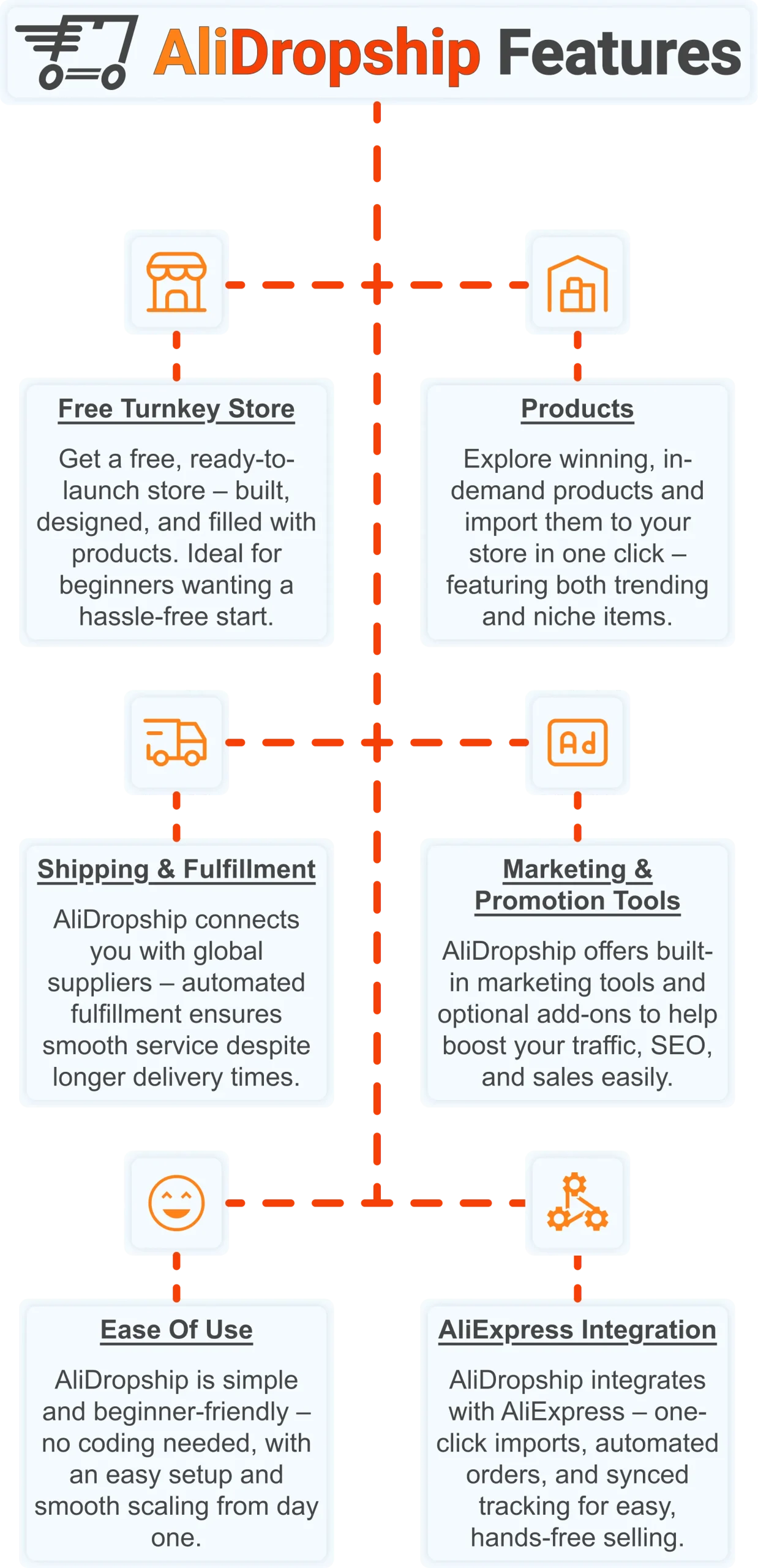
If you want the simplest possible way to start dropshipping – especially if you’re brand new – AliDropship remains one of the most beginner-friendly tools available in 2026. It brings together store creation, product imports, automation, and marketing into a single streamlined system designed to help you launch quickly and grow confidently.
Free turnkey store 🛍️
Get a free turnkey store – built, designed, and filled with products. Ideal for beginners wanting a hassle-free start, the store comes fully optimized to attract customers right away, saving you time on setup. Plus, it includes professional design elements to give your business a polished, trustworthy look from day one. This ready-made foundation makes it easy to move seamlessly into product selection.
Products 📦
Once your store is set up, you can explore winning, in-demand products and import them in one click – featuring both trending and niche items. This wide selection lets you cater to diverse customer interests and test what works best. Regular updates ensure you always have fresh products, keeping your store competitive and relevant. With great products in place, smooth shipping becomes the next essential step.
Shipping & fulfillment 🚚
AliDropship connects you with global suppliers, and automated fulfillment ensures seamless order processing despite international delivery times. Customers receive real-time tracking updates, which builds confidence and trust in your store. Once shipping is handled reliably, you can focus on promoting your store and attracting traffic.
Marketing & promotion tools 📣
To maximize sales, AliDropship offers built-in marketing tools and optional add-ons that help boost traffic, SEO, and conversions. From email campaigns and discounts to social media integration, these tools empower you to reach and retain customers without needing prior marketing experience. With promotion strategies in place, managing your business becomes simpler and more efficient.
Ease of use 👌
AliDropship is beginner-friendly – no coding needed, with an intuitive dashboard that guides you through every step. Easy setup and smooth scaling let you expand your store without stress. As your business grows, adding new features, products, and marketing campaigns remains hassle-free, giving you more time to focus on sales.
AliExpress integration 🛒
Finally, AliDropship integrates seamlessly with AliExpress, enabling one-click imports, automated orders, and synced tracking. Your inventory stays up-to-date with the latest products and prices, while automated order processing frees you from manual tasks. Combined with the turnkey setup, reliable shipping, and built-in marketing tools, this integration ensures your dropshipping business is fully equipped for growth and success.
Affiliate marketing is a proven income path – but with AliDropship, you can build a business you fully own and scale without commission caps. Get your free turnkey store and start building real ecommerce income today.
What is affiliate marketing and how does it work?
How much affiliate marketing income can a beginner realistically expect?
How do you start affiliate marketing with no prior experience?
What is the main difference between affiliate marketing vs dropshipping?
Is passive income from affiliate marketing realistic?